পাঠৰ সাৰাংশ (Summary):
"যোগাযোগ আৰু শিক্ষণ-শিকন" পাঠটোৱে শিক্ষাদান প্ৰক্ৰিয়াত যোগাযোগৰ অপৰিহাৰ্য ভূমিকাক সামৰি লৈছে। ইয়াত যোগাযোগৰ ধাৰণা, প্ৰকৃতি, প্ৰকাৰ আৰু নীতিসমূহৰ বিষয়ে বিস্তৃতভাৱে আলোচনা কৰা হৈছে। শ্ৰেণীকোঠাৰ যোগাযোগ কেনেকৈ ফলপ্ৰসূ কৰিব পাৰি আৰু ইয়াৰ প্ৰধান অন্তৰায়সমূহ কি কি, সেয়া পাঠটোৰ অন্যতম মূল বিষয়। ইয়াৰ লগতে, আধুনিক শিক্ষাত তথ্য আৰু যোগাযোগ প্ৰযুক্তিৰ (ICT) প্ৰয়োগৰ ওপৰত বিশেষ গুৰুত্ব আৰোপ কৰা হৈছে। শিক্ষণ সমল হিচাপে প্ৰক্ষেপিত আৰু অপ্ৰক্ষেপিত সামগ্ৰীৰ ব্যৱহাৰ, ই-শিকন (E-learning), EDUSAT, INFLIBNET আৰু শিক্ষাৰ ক্ষেত্ৰত ছচিয়েল মিডিয়াৰ ভূমিকা ইয়াত অন্তৰ্ভুক্ত কৰা হৈছে। সামগ্ৰিকভাৱে, এই পাঠটোৱে পৰম্পৰাগত পদ্ধতি আৰু আধুনিক প্ৰযুক্তিৰ সংমিশ্ৰণেৰে শিক্ষণ-শিকন প্ৰক্ৰিয়াটোক কেনেকৈ অধিক জীৱন্ত আৰু কাৰ্যকৰী কৰিব পাৰি, তাৰ এক স্পষ্ট ধাৰণা প্ৰদান কৰে।
অতি চমু প্ৰশ্নোত্তৰ :
প্ৰশ্ন ১: ইংৰাজী 'Communication' শব্দটো কোনটো লেটিন শব্দৰ পৰা উৎপত্তি হৈছে?
উত্তৰ: ইংৰাজী 'Communication' শব্দটো লেটিন শব্দ 'Communis' (যাৰ অৰ্থ হ'ল উমৈহতীয়া বা Common) ৰ পৰা আহিছে।
প্ৰশ্ন ২: যোগাযোগ প্ৰক্ৰিয়াত 'সংকেতকৰণ' (Encoding) বুলিলে কি বুজায়?
উত্তৰ: প্ৰেৰকে মনৰ ভাব বা বাৰ্তাটোক আনৰ বোধগম্য কৰিবলৈ উপযুক্ত শব্দ, চিহ্ন বা ইংগিতলৈ ৰূপান্তৰ কৰা কাৰ্যকেই সংকেতকৰণ বোলে।
প্ৰশ্ন ৩: মৌখিক যোগাযোগৰ এটা প্ৰধান ভাগ উল্লেখ কৰা।
উত্তৰ: মৌখিক যোগাযোগৰ এটা প্ৰধান ভাগ হ’ল কথিত বা মুখেৰে উচ্চাৰিত যোগাযোগ (যেনে— কথা-বতৰা, ভাষণ ইত্যাদি)।
প্ৰশ্ন ৪: অমৌখিক যোগাযোগ (Non-verbal Communication) কি?
উত্তৰ: শব্দ বা ভাষাৰ ব্যৱহাৰ নকৰাকৈ কেৱল শাৰীৰিক অংগী-ভংগী, চকুৰ চাৱনি বা মুখমণ্ডলৰ প্ৰকাশভংগীৰ জৰিয়তে কৰা ভাবৰ আদান-প্ৰদানক অমৌখিক যোগাযোগ বোলে।
প্ৰশ্ন ৫: শ্ৰেণীকোঠাৰ যোগাযোগৰ মূল চালিকা শক্তি কোন?
উত্তৰ: শ্ৰেণীকোঠাৰ যোগাযোগৰ মূল চালিকা শক্তি বা নিয়ন্ত্ৰক হ’ল শিক্ষকজন।
প্ৰশ্ন ৬: শ্ৰেণীকোঠাৰ ক্ৰিয়া-প্ৰতিক্ৰিয়া বিশ্লেষণৰ সৈতে জড়িত এগৰাকী প্ৰখ্যাত শিক্ষাবিদৰ নাম লিখা।
উত্তৰ: শ্ৰেণীকোঠাৰ ক্ৰিয়া-প্ৰতিক্ৰিয়া বিশ্লেষণৰ (Interaction Analysis) সৈতে জড়িত এগৰাকী প্ৰখ্যাত শিক্ষাবিদ হ’ল নেড এ. ফ্লেণ্ডাৰ্ছ (Ned A. Flanders)।
প্ৰশ্ন ৭: শিক্ষণ-শিকন প্ৰক্ৰিয়াত 'ICT' ৰ সম্পূৰ্ণ ৰূপটো কি?
উত্তৰ: 'ICT' ৰ সম্পূৰ্ণ ৰূপটো হ’ল— Information and Communication Technology (তথ্য আৰু যোগাযোগ প্ৰযুক্তি)।
প্ৰশ্ন ৮: অপ্ৰক্ষেপিত সমল (Non-projected resource) ৰ এটা সাধাৰণ উদাহৰণ দিয়া।
উত্তৰ: শ্ৰেণীকোঠাত বহুলভাৱে ব্যৱহৃত ক’লা বোৰ্ড (Blackboard) বা পাঠ্যপুথি হ’ল অপ্ৰক্ষেপিত সমলৰ উদাহৰণ।
প্ৰশ্ন ৯: প্ৰক্ষেপিত সমল (Projected resource) বুলিলে কি বুজা?
উত্তৰ: যিবোৰ শিক্ষণ সমলক পোহৰৰ প্ৰক্ষেপণৰ দ্বাৰা পৰ্দাত প্ৰদৰ্শন কৰি শিক্ষাৰ্থীক দেখুওৱা হয়, সেইবোৰক প্ৰক্ষেপিত সমল বোলে (যেনে— অভাৰহেড প্ৰজেক্টৰ)।
প্ৰশ্ন ১০: ভাৰতৰ প্ৰথমখন কেৱল শিক্ষাৰ বাবে উৎসৰ্গিত উপগ্ৰহটোৰ নাম কি?
উত্তৰ: ভাৰতৰ প্ৰথমখন কেৱল শিক্ষাৰ বাবে উৎসৰ্গিত উপগ্ৰহটো হ’ল 'এদুছাট' (EDUSAT), যাক GSAT-3 বুলিও জনা যায়।
প্ৰশ্ন ১১: EDUSAT উপগ্ৰহটো ভাৰতীয় মহাকাশ গৱেষণা সংস্থাই (ISRO) কেতিয়া মহাকাশত স্থাপন কৰিছিল?
উত্তৰ: EDUSAT উপগ্ৰহটো ২০০৪ চনৰ ২০ ছেপ্টেম্বৰ তাৰিখে শ্ৰীহৰিকোটাৰ সতীশ ধৱন মহাকাশ কেন্দ্ৰৰ পৰা সফলতাৰে উৎক্ষেপণ কৰা হৈছিল।
প্ৰশ্ন ১২: INFLIBNET ৰ সম্পূৰ্ণ নামটো লিখা।
উত্তৰ: INFLIBNET ৰ সম্পূৰ্ণ নামটো হ’ল— Information and Library Network Centre (তথ্য আৰু গ্ৰন্থাগাৰ নেটৱৰ্ক কেন্দ্ৰ)।
প্ৰশ্ন ১৩: INFLIBNET ৰ মূল কাৰ্যালয় ভাৰতৰ ক’ত অৱস্থিত?
উত্তৰ: INFLIBNET ৰ মূল কাৰ্যালয় গুজৰাটৰ গান্ধীনগৰত অৱস্থিত।
প্ৰশ্ন ১৪: ই-শিকন (E-learning) শব্দটোৱে কি সূচায়?
উত্তৰ: ই-শিকন বা ইলেক্ট্ৰনিক শিকনে ইণ্টাৰনেট আৰু ডিজিটেল প্ৰযুক্তিৰ মাধ্যমত ঘৰত বহিয়েই জ্ঞান আৰু দক্ষতা অৰ্জন কৰা প্ৰক্ৰিয়াক সূচায়।
প্ৰশ্ন ১৫: শিক্ষাৰ প্ৰসাৰত ব্যৱহৃত এটা জনপ্ৰিয় ছচিয়েল মিডিয়া প্লেটফৰ্মৰ নাম লিখা।
উত্তৰ: শিক্ষাৰ প্ৰসাৰত ব্যৱহৃত এটা জনপ্ৰিয় ছচিয়েল মিডিয়া প্লেটফৰ্ম হ’ল 'ইউটিউব' (YouTube), য’ত শিক্ষামূলক ভিডিঅ’ৰ জৰিয়তে জ্ঞান আহৰণ কৰিব পাৰি।
চমু প্ৰশ্নোত্তৰ :
প্ৰশ্ন ১: যোগাযোগ প্ৰক্ৰিয়াৰ দুটা প্ৰধান বৈশিষ্ট্য উল্লেখ কৰা।
উত্তৰ: যোগাযোগ প্ৰক্ৰিয়াৰ দুটা প্ৰধান বৈশিষ্ট্য হ’ল—
১/ ই এক দ্বি-মুখী প্ৰক্ৰিয়া, য’ত প্ৰেৰক আৰু গ্ৰাহক দুয়োৰে সক্ৰিয় অংশগ্ৰহণৰ প্ৰয়োজন হয়।
২/ ইয়াৰ মূল উদ্দেশ্য হ’ল পাৰস্পৰিক বুজাবুজি আৰু তথ্য বা ভাবৰ বিনিময় কৰা।
প্ৰশ্ন ২: আনুষ্ঠানিক আৰু অনানুষ্ঠানিক যোগাযোগৰ মাজৰ দুটা পাৰ্থক্য লিখা।
উত্তৰ:
আনুষ্ঠানিক যোগাযোগ: এই যোগাযোগ প্ৰক্ৰিয়া নিৰ্দিষ্ট নিয়ম, শৃংখলা আৰু প্ৰতিষ্ঠানিক স্তৰ অনুসৰি পৰিচালিত হয় (যেনে— কাৰ্যালয়ৰ জাননী)।
অনানুষ্ঠানিক যোগাযোগ: ই কোনো সামাজিক বা ব্যক্তিগত সম্পৰ্কৰ ওপৰত ভিত্তি কৰি স্বতঃস্ফূৰ্তভাৱে গঢ়ি উঠে আৰু ইয়াত কোনো কঠিন নিয়ম নাথাকে (যেনে— বন্ধুৰ সৈতে কথা পতা)।
প্ৰশ্ন ৩: ফলপ্ৰসূ যোগাযোগৰ বাবে প্ৰয়োজনীয় '7 Cs' নীতিৰ যিকোনো দুটা নীতি উল্লেখ কৰা।
উত্তৰ: ফলপ্ৰসূ যোগাযোগৰ দুটা গুৰুত্বপূৰ্ণ নীতি হ’ল—
১/ স্পষ্টতা (Clarity): প্ৰেৰকৰ বাৰ্তাটো সম্পূৰ্ণ স্পষ্ট আৰু সহজ-সৰল হ’ব লাগে যাতে গ্ৰাহকে সহজে বুজি পায়।
২/ সংক্ষিপ্ততা (Conciseness): বাৰ্তাটো দীঘলীয়া নকৰি প্ৰয়োজনীয় কথাখিনি চমু আৰু অৰ্থপূৰ্ণভাৱে প্ৰকাশ কৰিব লাগে।
প্ৰশ্ন ৪: শ্ৰেণীকোঠাৰ যোগাযোগ বুলিলে কি বুজা?
উত্তৰ: শ্ৰেণীকোঠাৰ এক নিয়ন্ত্ৰিত পৰিৱেশত নিৰ্দিষ্ট শিক্ষণ লক্ষ্যত উপনীত হ’বলৈ শিক্ষক আৰু শিক্ষাৰ্থীৰ মাজত যি জ্ঞান, ধাৰণা, অভিজ্ঞতা আৰু তথ্যৰ আদান-প্ৰদান ঘটে, তাকেই শ্ৰেণীকোঠাৰ যোগাযোগ বোলে।
প্ৰশ্ন ৫: প্ৰভাৱশালী বা ফলপ্ৰসূ শ্ৰেণীকোঠাৰ যোগাযোগৰ দুটা লক্ষণ লিখা।
উত্তৰ: প্ৰভাৱশালী শ্ৰেণীকোঠাৰ যোগাযোগৰ দুটা লক্ষণ হ’ল—
১/ শিক্ষাৰ্থীৰ সক্ৰিয় অংশগ্ৰহণ আৰু স্বতঃস্ফূৰ্ত সঁহাৰি (Feedback)।
২/ শিক্ষক আৰু শিক্ষাৰ্থীৰ মাজত গঢ়ি উঠা এক সৌহাৰ্দ্যপূৰ্ণ তথা ভয়মুক্ত মনস্তাত্ত্বিক পৰিৱেশ।
প্ৰশ্ন ৬: শ্ৰেণীকোঠাৰ যোগাযোগত সৃষ্টি হোৱা দুটা ভৌতিক অন্তৰায় (Physical Barriers) উল্লেখ কৰা।
উত্তৰ: শ্ৰেণীকোঠাৰ যোগাযোগত ব্যাঘাত জন্মোৱা দুটা ভৌতিক অন্তৰায় হ’ল—
১/ শ্ৰেণীকোঠাৰ বাহিৰৰ পৰা অহা অত্যধিক হুলস্থূল বা শব্দ প্ৰদূষণ।
২/ শ্ৰেণীকোঠাত পৰ্যাপ্ত পোহৰ আৰু বায়ু চলাচলৰ সু-ব্যৱস্থা নথকা।
প্ৰশ্ন ৭: শ্ৰেণীকোঠাৰ যোগাযোগৰ মনস্তাত্ত্বিক অন্তৰায় (Psychological Barriers) কেনেকৈ সৃষ্টি হয়?
উত্তৰ: যেতিয়া এজন শিক্ষাৰ্থীৰ মনত শিক্ষকজনৰ প্ৰতি ভয় বা অপ্ৰীতিমূলক ভাব থাকে, অথবা শিক্ষাৰ্থীজন মানসিক দুশ্চিন্তা, মনোযোগহীনতা আৰু হীনমন্যতাত ভোগে, তেতিয়া শ্ৰেণীকোঠাৰ যোগাযোগত মনস্তাত্ত্বিক অন্তৰায়ৰ সৃষ্টি হয়।
প্ৰশ্ন ৮: শিক্ষণ-শিকন প্ৰক্ৰিয়াত তথ্য আৰু যোগাযোগ প্ৰযুক্তি (ICT) ব্যৱহাৰৰ দুটা গুৰুত্ব লিখা।
উত্তৰ: ICT ব্যৱহাৰৰ দুটা গুৰুত্ব হ’ল—
১/ ই জটিল আৰু অমূৰ্ত শৈক্ষিক ধাৰণাবোৰক দৃশ্য-শ্ৰাব্য মাধ্যমৰ জৰিয়তে সৰল আৰু আকৰ্ষণীয় কৰি তোলে।
২/ ই শিক্ষাৰ্থীক নিজৰ গতি অনুসৰি (Self-paced learning) আৰু যিকোনো সময়তে শিকাত সহায় কৰে।
প্ৰশ্ন ৯: অপ্ৰক্ষেপিত সমল হিচাপে 'প্ৰতিৰূপ' বা 'মডেল' (Model) ৰ দুটা উপকাৰিতা লিখা।
উত্তৰ:
১/ ই বাস্তৱিক বস্তু বা উপাদানৰ এক ত্ৰিমাত্ৰিক (3D) ৰূপ দাঙি ধৰে, যাৰ ফলত শিক্ষাৰ্থীৰ ধাৰণা স্পষ্ট হয়।
২/ যিবোৰ আচল বস্তু শ্ৰেণীকোঠালৈ আনিব নোৱাৰি (যেনে— মানৱ হৃদযন্ত্ৰ বা পৃথিৱী গোলক), সেইবোৰ মডেলৰ সহায়ত সহজে বুজাব পাৰি।
প্ৰশ্ন ১০: প্ৰক্ষেপিত আৰু অপ্ৰক্ষেপিত শিক্ষণ সমলৰ মাজৰ দুটা পাৰ্থক্য লিখা।
উত্তৰ:
প্ৰক্ষেপিত সমল: এইবোৰ ব্যৱহাৰ কৰিবলৈ বিদ্যুৎ শক্তি আৰু বিশেষ যন্ত্ৰৰ (যেনে— প্ৰজেক্টৰ) প্ৰয়োজন হয়।
অপ্ৰক্ষেপিত সমল: এইবোৰ প্ৰদৰ্শনৰ বাবে কোনো মেকানিকেল প্ৰক্ষেপণ বা বিদ্যুতৰ প্ৰয়োজন নহয় (যেনে— চাৰ্ট, মডেল)।
প্ৰশ্ন ১১: ই-শিকনৰ (E-learning) দুটা প্ৰধান অসুবিধা বা সীমাবদ্ধতা আলোচনা কৰা।
উত্তৰ: ই-শিকনৰ দুটা সীমাবদ্ধতা হ’ল—
১/ ইয়াৰ বাবে প্ৰতিজন শিক্ষাৰ্থীৰ ওচৰত কম্পিউটাৰ/স্মাৰ্টফোন আৰু দ্ৰুতবেগী ইণ্টাৰনেট থকাটো প্ৰয়োজনীয়, যিটো আৰ্থিকভাৱে পিছপৰা শ্ৰেণীৰ বাবে কঠিন।
২/ ইয়াত শিক্ষক আৰু ছাত্ৰৰ মাজত পোনপটীয়া সামাজিক আৰু আৱেগিক সম্পৰ্কৰ অভাৱ ঘটে।
প্ৰশ্ন ১২: এদুছাট (EDUSAT) ৰ দুটা প্ৰধান উদ্দেশ্য কি আছিল?
উত্তৰ: EDUSAT ৰ দুটা প্ৰধান উদ্দেশ্য আছিল—
১/ ভাৰতৰ দূৰ-দূৰণিৰ আৰু অনগ্ৰসৰ গ্ৰাম্য অঞ্চলৰ শিক্ষাৰ্থীসকললৈ উপগ্ৰহ সংযোগৰ জৰিয়তে মানসম্পন্ন শিক্ষা প্ৰদান কৰা।
২/ দূৰৱৰ্তী শিক্ষা (Distance Education) আৰু শিক্ষক প্ৰশিক্ষণ কাৰ্যসূচীক অধিক সক্ৰিয় আৰু ফলপ্ৰসূ কৰি তোলা।
প্ৰশ্ন ১৩: উচ্চ শিক্ষাৰ ক্ষেত্ৰত INFLIBNET এ আগবঢ়োৱা দুটা গুৰুত্বপূৰ্ণ সেৱা উল্লেখ কৰা।
উত্তৰ: INFLIBNET এ আগবঢ়োৱা দুটা সেৱা হ’ল—
১/ ই 'Shodhganga' নামৰ ডিজিটেল ভঁৰালৰ জৰিয়তে ভাৰতীয় বিশ্ববিদ্যালয়সমূহৰ গৱেষণা পত্ৰ (Theses) সমূহ অনলাইনত উপলব্ধ কৰায়।
২/ ই 'e-ShodhSindhu' ৰ জৰিয়তে উচ্চ শিক্ষানুষ্ঠানসমূহক উচ্চমানৰ শৈক্ষিক জাৰ্নেল আৰু ই-বুক সংগ্ৰহ কৰাত সহায় কৰে।
প্ৰশ্ন ১৪: শৈক্ষিক দিশত ছচিয়েল মিডিয়াৰ (Social Media) দুটা ধনাত্মক ভূমিকা লিখা।
উত্তৰ:
১/ ইয়াৰ জৰিয়তে শিক্ষাৰ্থীসকলে বিভিন্ন অধ্যয়ন গোট (Study Groups) তৈয়াৰ কৰি নিজৰ মাজত নোট আৰু তথ্যৰ বিনিময় কৰিব পাৰে।
২/ শিক্ষকসকলে দূৰৈৰ শিক্ষাৰ্থীৰ সৈতে তাৎক্ষণিকভাৱে যোগাযোগ কৰি গুৰুত্বপূৰ্ণ শৈক্ষিক জাননী আৰু সহায় আগবঢ়াব পাৰে।
প্ৰশ্ন ১৫: শ্ৰেণীকোঠাৰ যোগাযোগত 'ভাষাগত অন্তৰায়' (Semantic/Linguistic Barrier) বুলিলে কি বুজা?
উত্তৰ: যেতিয়া শিক্ষকে শ্ৰেণীকোঠাত ব্যৱহাৰ কৰা ভাষা, কঠিন শব্দ বা উচ্চাৰণ শৈলী শিক্ষাৰ্থীৰ বাবে দুৰ্বোধ্য হয়, অথবা একেটা শব্দৰে শিক্ষক আৰু শিক্ষাৰ্থীয়ে বেলেগ বেলেগ অৰ্থ বুজে, তেতিয়া তাক ভাষাগত অন্তৰায় বোলে। ইয়াৰ ফলত শিক্ষণ প্ৰক্ৰিয়া বাধাগ্ৰস্ত হয়।
দীঘল প্ৰশ্নোত্তৰ :
প্ৰশ্ন ১: যোগাযোগ প্ৰক্ৰিয়াৰ মূল উপাদানসমূহ এটা ৰেখাচিত্ৰৰ সহায়ত চমুকৈ বিশ্লেষণ কৰা।
উত্তৰ: যোগাযোগ হৈছে এক গতিশীল আৰু ধাৰাবাহিক প্ৰক্ৰিয়া, য’ত তথ্য, ভাব বা অনুভূতি এজনৰ পৰা আন এজনলৈ প্ৰেৰণ কৰা হয়। এটা ফলপ্ৰসূ যোগাযোগ প্ৰক্ৰিয়া সম্পূৰ্ণ হ’বলৈ তলত দিয়া মূল উপাদানসমূহৰ প্ৰয়োজন:
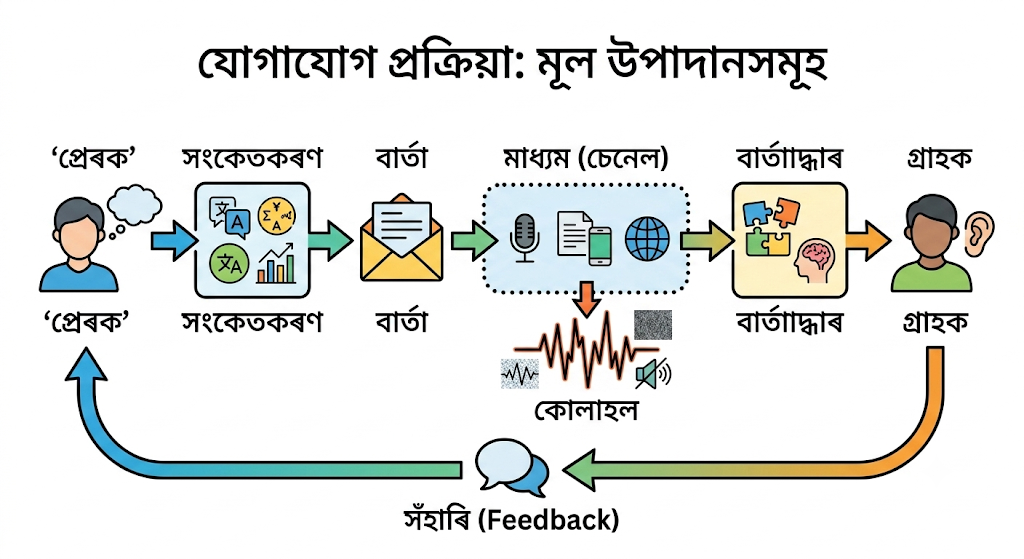
১/ প্ৰেৰক (Sender): যোগাযোগ প্ৰক্ৰিয়াটো যিগৰাকী ব্যক্তি বা পক্ষই আৰম্ভ কৰে, তেওঁ হৈছে প্ৰেৰক। শ্ৰেণীকোঠাত সাধাৰণতে শিক্ষকজন প্ৰেৰকৰ ভূমিকাত থাকে।
২/ সংকেতকৰণ (Encoding): প্ৰেৰকে নিজৰ মনৰ ভাবটোক গ্ৰাহকৰ বুজিব পৰাকৈ উপযুক্ত ভাষা, শব্দ, প্ৰতীক বা অংগী-ভংগীলৈ ৰূপান্তৰ কৰা কাৰ্যই হৈছে সংকেতকৰণ।
৩/ বাৰ্তা (Message): সংকেতকৰণৰ পিছত যিটো মূল তথ্য বা বিষয়বস্তু আদান-প্ৰদান কৰিব বিচৰা হয়, তাক বাৰ্তা বুলি কোৱা হয়।
৪/ মাধ্যম বা চেনেল (Channel): বাৰ্তাটো প্ৰেৰকৰ পৰা গ্ৰাহকলৈ যিটো পথ বা মাধ্যমৰ (যেনে— মুখৰ কথা, লিখিত পত্ৰ, ডিজিটেল মাধ্যম) জৰিয়তে প্ৰৱাহিত হয়, সেয়াই হ’ল মাধ্যম।
৫/ গ্ৰাহক (Receiver): বাৰ্তাটো যাৰ উদ্দেশ্যে প্ৰেৰণ কৰা হয়, তেৱেই হৈছে গ্ৰাহক বা বাৰ্তা গ্ৰহণকাৰী। শ্ৰেণীকোঠাৰ শিক্ষাৰ্থীসকল হ’ল ইয়াৰ উৎকৃষ্ট উদাহৰণ।
৬/ বাৰ্তাোদ্ধাৰ (Decoding): গ্ৰাহকে লাভ কৰা বাৰ্তাটো নিজৰ ধৰণে বিশ্লেষণ কৰি তাৰ অন্তৰ্নিহিত অৰ্থ বুজি পোৱাৰ প্ৰয়াস কৰা মানসিক প্ৰক্ৰিয়াটোৱেই হৈছে বাৰ্তাোদ্ধাৰ।
৭/ সঁহাৰি বা প্ৰতিক্ৰিয়া (Feedback): বাৰ্তাটো লাভ কৰাৰ পিছত গ্ৰাহকে প্ৰেৰকলৈ যি প্ৰতিক্ৰিয়া বা উত্তৰ প্ৰেৰণ কৰে, তাক সঁহাৰি বোলে। এই সঁহাৰিয়ে যোগাযোগ প্ৰক্ৰিয়াটো সম্পূৰ্ণ কৰে।
প্ৰশ্ন ২: শ্ৰেণীকোঠাৰ যোগাযোগ আকৰ্ষণীয় আৰু প্ৰভাৱশালী কৰাৰ বাবে শিক্ষকে ল’বলগীয়া পাঁচটা গুৰুত্বপূৰ্ণ পদক্ষেপ আলোচনা কৰা।
উত্তৰ: শ্ৰেণীকোঠাত কেৱল পাঠ্যপুথিৰ তথ্য ভাঙি দিলেই যোগাযোগ সফল নহয়; ই শিক্ষাৰ্থীৰ মনোগ্ৰাহী হ’ব লাগিব। শ্ৰেণীকোঠাৰ যোগাযোগ অধিক প্ৰভাৱশালী কৰিবলৈ শিক্ষকে তলত দিয়া পদক্ষেপসমূহ গ্ৰহণ কৰিব পাৰে:
১/ দ্বিমুখী যোগাযোগক উদগনি (Two-way Communication): শিক্ষকে শ্ৰেণীকোঠাটোক একপক্ষীয় বক্তৃতা মঞ্চ কৰাৰ পৰিৱৰ্তে দ্বিমুখী ক্ৰিয়া-প্ৰতিক্ৰিয়াৰ স্থান কৰিব লাগে। শিক্ষাৰ্থীক প্ৰশ্ন সোধাৰ, নিজৰ মতামত দিয়াৰ স্বাধীনতা দিলে যোগাযোগ জীৱন্ত হৈ উঠে।
২/ উপযুক্ত শিক্ষণ সমলৰ ব্যৱহাৰ (Use of Teaching Aids): কেৱল মুখেৰে বুজোৱাতকৈ বিষয়বস্তুৰ সৈতে সংগতি ৰাখি প্ৰক্ষেপিত বা অপ্ৰক্ষেপিত সমল, যেনে— ছবি, মডেল, মেপ বা প্ৰজেক্টৰ ব্যৱহাৰ কৰিলে শিক্ষাৰ্থীৰ মনোযোগ সহজে আকৰ্ষণ কৰিব পৰা যায়।
৩/ নমনীয় আৰু সহজ ভাষাৰ প্ৰয়োগ (Clarity of Language): শিক্ষকৰ ভাষা সদায় সহজ, স্পষ্ট আৰু শিক্ষাৰ্থীৰ বয়স তথা মানসিক স্তৰৰ সৈতে খাপ খোৱা হ’ব লাগে। জটিল বা দুৰ্বোধ্য শব্দৰ প্ৰয়োগে যোগাযোগত বাধাৰ সৃষ্টি কৰে।
৪/ ধনাত্মক অমৌখিক ইংগিতৰ ব্যৱহাৰ (Positive Non-verbal Cues): কথা কোৱাৰ উপৰিও শিক্ষকে নিজৰ চকুৰ চাৱনি, মুখৰ হাঁহি, মৰমিয়াল অংগী-ভংগী আৰু শ্ৰেণীকোঠাত কৰা খোজকঢ়াৰ জৰিয়তে শিক্ষাৰ্থীৰ সৈতে এক আৱেগিক সংযোগ স্থাপন কৰিব লাগে।
৫/ ব্যক্তিগত পাৰ্থক্যৰ প্ৰতি সন্মান (Attending to Individual Differences): শ্ৰেণীকোঠাত থকা মেধাৱী আৰু পিছপৰা— দুয়ো শ্ৰেণীৰ শিক্ষাৰ্থীৰে প্ৰয়োজনীয়তা বুজি শিক্ষকে নিজৰ যোগাযোগ শৈলী সলনি কৰিব লাগে, যাতে কোনেও নিজক অৱহেলিত অনুভৱ নকৰে।
প্ৰশ্ন ৩: শ্ৰেণীকোঠাৰ যোগাযোগৰ প্ৰধান অন্তৰায় বা বাধাসমূহ শ্ৰেণীবিভাজন কৰি বহলাই লিখা।
উত্তৰ: শ্ৰেণীকোঠাৰ যোগাযোগ প্ৰক্ৰিয়াটো বিভিন্ন কাৰণত বিফল বা ত্ৰুটিপূৰ্ণ হ’ব পাৰে। এই অন্তৰায়সমূহক প্ৰধানকৈ চাৰিটা ভাগত ভগাব পাৰি:
১/ ভৌতিক বা পাৰিপাৰ্শ্বিক অন্তৰায় (Physical Barriers):
শ্ৰেণীকোঠাৰ ওচৰ-পাজৰৰ পৰা অহা হুলস্থূলীয়া পৰিৱেশ বা যান-বাহনৰ শব্দ।
শ্ৰেণীকোঠাত ছাত্ৰ-ছাত্ৰীৰ অত্যধিক ভিৰ বা কদৰ্য বহা ব্যৱস্থা।
শ্ৰেণীত পৰ্যাপ্ত পোহৰ আৰু বতাহ চলাচলৰ অভাৱ তথা প্ৰচণ্ড গৰম বা ঠাণ্ডা।
২/ মনস্তাত্ত্বিক অন্তৰায় (Psychological Barriers):
শিক্ষক বা বিষয়টোৰ প্ৰতি শিক্ষাৰ্থীৰ মনত থকা ভয়, পূৰ্বধাৰণা বা ঋণাত্মক দৃষ্টিভংগী।
শিক্ষাৰ্থীৰ মনোযোগৰ অভাৱ, মানসিক দুশ্চিন্তা বা হীনমন্যতা।
শিক্ষকৰ অত্যধিক খং বা কঠোৰ স্বভাৱ, যাৰ বাবে শিক্ষাৰ্থীয়ে প্ৰশ্ন সোধাৰ সাহস নকৰে।
৩/ ভাষাগত বা অৰ্থগত অন্তৰায় (Semantic/Linguistic Barriers):
শিক্ষকে শ্ৰেণীত ব্যৱহাৰ কৰা ভাষা অতি জটিল, তাত্ত্বিক বা ব্যাকৰণগতভাৱে দুৰ্বোধ্য হ’লে।
শিক্ষকৰ অস্পষ্ট উচ্চাৰণ বা কম শব্দ-ভঁৰাল।
আঞ্চলিক ভাষাৰ প্ৰভাৱৰ বাবে শব্দৰ ভিন্ন অৰ্থ প্ৰকাশ পালে।
৪/ শৰীৰবৃত্তীয় অন্তৰায় (Physiological Barriers):
শিক্ষাৰ্থী বা শিক্ষকৰ শ্ৰৱণ শক্তিৰ দুৰ্বলতা বা দৃষ্টিশক্তিৰ সমস্যা।
শাৰীৰিক অসুস্থতা, ক্লান্তি বা টোপনি অহা ভাব, যিয়ে বাৰ্তা গ্ৰহণ কৰাত বাধা দিয়ে।
প্ৰশ্ন ৪: আধুনিক শিক্ষণ-শিকন প্ৰক্ৰিয়াত ই-শিকন (E-learning) আৰু ছচিয়েল মিডিয়াৰ ভূমিকা বিশ্লেষণ কৰা।
উত্তৰ: একবিংশ শতিকাৰ শিক্ষা ব্যৱস্থাত ডিজিটেল প্ৰযুক্তিয়ে এক ডাঙৰ পৰিৱৰ্তন আনিছে। ইয়াৰ ভিতৰত ই-শিকন আৰু ছচিয়েল মিডিয়াৰ ভূমিকা তলত আলোচনা কৰা হ’ল:
ই-শিকন (E-learning) ৰ ভূমিকা:
সময় আৰু স্থানৰ স্বাধীনতা: ই-শিকনে শিক্ষাৰ্থীক নিজৰ সুবিধাজনক সময়ত আৰু পৃথিৱীৰ যিকোনো প্ৰান্তৰ পৰা শিক্ষাগ্ৰহণ কৰাৰ সুযোগ দিয়ে।
বিপুল সমলৰ উপলব্ধতা: ইণ্টাৰনেটত থকা বিভিন্ন শৈক্ষিক ৱেবছাইট, ই-বুক আৰু লাইব্ৰেৰীৰ জৰিয়তে ছাত্ৰ-ছাত্ৰীয়ে একেটা বিষয়ৰে বহুতো তথ্য লাভ কৰিব পাৰে।
দৃশ্য-শ্ৰাব্য অভিজ্ঞতা: এনিমেচন, ভিডিঅ’ আৰু গ্ৰাফিক্সৰ ব্যৱহাৰে কঠিন বিজ্ঞান বা গণিতৰ সূত্ৰসমূহ বুজাত সহজ কৰি তোলে।
ছচিয়েল মিডিয়া (Social Media) ৰ ভূমিকা:
সহযোগিতামূলক শিকন (Collaborative Learning): ফেচবুক, হোৱাটছএপ বা টেলিগ্ৰামৰ দৰে মাধ্যম ব্যৱহাৰ কৰি ছাত্ৰ-ছাত্ৰীয়ে অধ্যয়ন গোট গঠন কৰিব পাৰে আৰু শিক্ষা সম্পৰ্কীয় আলোচনা কৰিব পাৰে।
তাত্ক্ষণিক বাৰ্তা আৰু সমাধান: কোনো এটা বিষয়ত খোকোজা লাগিলে ছাত্ৰ-ছাত্ৰীয়ে সামাজিক মাধ্যমৰ জৰিয়তে শিক্ষক বা সহপাঠীৰ সৈতে পোনপটীয়াকৈ যোগাযোগ কৰি সমাধান উলিয়াব পাৰে।
মুক্ত জ্ঞানৰ প্ৰসাৰ: ইউটিউবৰ দৰে প্লেটফৰ্মে বিনামূলীয়াকৈ বিশ্বমানৰ শিক্ষকসকলৰ ক্লাছ ঘৰতে বহিব পৰাৰ সুবিধা কৰি দিছে, যিয়ে শিক্ষাৰ গণতান্ত্ৰিকীকৰণত সহায় কৰিছে।
প্ৰশ্ন ৫: ভাৰতীয় শিক্ষা ব্যৱস্থাত 'EDUSAT' আৰু 'INFLIBNET' ৰ অৱদান সম্পূৰ্ণ তথ্যসহ আলোচনা কৰা।
উত্তৰ: ভাৰতৰ উচ্চ শিক্ষা আৰু দূৰৱৰ্তী শিক্ষাক প্ৰযুক্তিৰ জৰিয়তে শক্তিশালী কৰাৰ ক্ষেত্ৰত 'EDUSAT' আৰু 'INFLIBNET' দুটা মাইলৰ খুঁটিস্বৰূপ। ইয়াৰ অৱদানসমূহ তলত দিয়া ধৰণে আলোচনা কৰা হ’ল:
EDUSAT (এদুছাট) ৰ অৱদান: ভাৰতীয় মহাকাশ গৱেষণা সংস্থা (ISRO) ৰ দ্বাৰা ২০০৪ চনৰ ২০ ছেপ্টেম্বৰত উৎক্ষেপণ কৰা EDUSAT বা GSAT-3 হ’ল ভাৰতৰ প্ৰথমটো শিক্ষাভিত্তিক উপগ্ৰহ।
দূৰৱৰ্তী শিক্ষাৰ আধুনিকীকৰণ: ইয়াৰ জৰিয়তে ভাৰতৰ পিছপৰা আৰু গ্ৰাম্য অঞ্চলৰ শিক্ষানুষ্ঠানসমূহলৈ উন্নতমানৰ দৃশ্য-শ্ৰাব্য শৈক্ষিক কাৰ্যসূচী পোনপটীয়াকৈ সম্প্ৰচাৰ কৰা সম্ভৱ হৈছে।
ভাৰ্চুৱেল শ্ৰেণীকোঠা: ইয়াৰ ইন্টাৰেক্টিভ নেটৱৰ্কে শিক্ষক আৰু শিক্ষাৰ্থীৰ মাজত দূৰৈৰ পৰাই পোনপটীয়া যোগাযোগ (Interactive Virtual Classroom) স্থাপনত সহায় কৰিছে।
শিক্ষক প্ৰশিক্ষণ: সমগ্ৰ দেশৰ শিক্ষকসকলক একেলগে আধুনিক শিক্ষণ পদ্ধতিৰ প্ৰশিক্ষণ দিয়াৰ বাবেও এই উপগ্ৰহটো ব্যৱহাৰ কৰা হয়।
INFLIBNET (ইনফ্লিবনেট) ৰ অৱদান: ১৯৯১ চনত বিশ্ববিদ্যালয় মঞ্জুৰী আয়োগ (UGC) ৰ অধীনত আৰম্ভ হোৱা ই এক স্বায়ত্তশাসিত আন্তঃবিশ্ববিদ্যালয় কেন্দ্ৰ, যাৰ মূল কাৰ্যালয় বৰ্তমান গুজৰাটৰ গান্ধীনগৰত অৱস্থিত।
ডিজিটেল পুথিভঁৰাল সংযোগ: ই ভাৰতৰ বিশ্ববিদ্যালয় আৰু উচ্চ শিক্ষানুষ্ঠানসমূহৰ গ্ৰন্থাগাৰসমূহক এটা নেটৱৰ্কৰ অধীনলৈ আনি কিতাপ আৰু তথ্যৰ আদান-প্ৰদান সহজ কৰি তুলিছে।
শোধনদী (Shodhganga) আৰু শোধগংগোত্ৰী: এই প্ৰকল্পৰ অধীনত ভাৰতীয় গৱেষক ছাত্ৰ-ছাত্ৰীসকলৰ পি.এইচ.ডি. গৱেষণা পত্ৰসমূহ (Theses) ডিজিটেল ৰূপত সংৰক্ষণ কৰা হয়, যাৰ ফলত গৱেষণাৰ চুৰি কাৰ্য (Plagiarism) ৰোধ হয়।
e-ShodhSindhu: ইয়াৰ জৰিয়তে দেশৰ মহাবিদ্যালয় আৰু বিশ্ববিদ্যালয়সমূহক অতি কম খৰচত দেশী-বিদেশী উচ্চমানৰ শৈক্ষিক জাৰ্নেল আৰু ই-বুক পঢ়াৰ অনুজ্ঞাপত্ৰ প্ৰদান কৰা হয়।
Very Short Answer Questions (1 Mark)
1. What is communication?
Answer: Communication is the process of sharing information, ideas, thoughts, or feelings between two or more people to achieve mutual understanding.
2. What is meant by educational communication?
Answer: Educational communication is the exchange of knowledge, ideas, and information between teachers and learners for effective teaching and learning.
3. Who is called the sender in communication?
Answer: The sender is the person who creates and sends a message to another person.
4. Who is the receiver in communication?
Answer: The receiver is the person who receives, understands, and responds to the message.
5. What is a message in communication?
Answer: A message is the information, idea, or feeling that the sender wants to communicate.
6. What is feedback?
Answer: Feedback is the response given by the receiver to indicate whether the message has been understood correctly.
7. What is verbal communication?
Answer: Verbal communication is the exchange of information through spoken or written words.
8. What is non-verbal communication?
Answer: Non-verbal communication is the transfer of messages through facial expressions, gestures, body language, and eye contact.
9. What is formal communication?
Answer: Formal communication follows official rules, procedures, and organizational channels.
10. What is informal communication?
Answer: Informal communication is the unofficial exchange of information among individuals without following formal procedures.
11. What is one-way communication?
Answer: One-way communication occurs when information flows only from the sender to the receiver without feedback.
12. What is two-way communication?
Answer: Two-way communication involves both sending and receiving messages along with feedback.
13. Why is communication important in teaching?
Answer: Communication helps teachers explain concepts clearly and enables students to understand lessons effectively.
14. Mention one characteristic of good communication.
Answer: Good communication is clear, simple, and easy to understand.
15. Name any two types of communication.
Answer: Verbal communication and non-verbal communication.
Part B: Short Answer Questions (2 Marks)
1. Define communication.
Answer: Communication is the process of exchanging ideas, information, opinions, and feelings between two or more people. It aims to create mutual understanding through speaking, writing, listening, or using non-verbal signals.
2. Explain the importance of communication in education.
Answer: Communication is essential in education because it helps teachers present knowledge clearly and enables students to understand lessons. It also encourages interaction, participation, and better learning outcomes.
3. What are the basic elements of communication?
Answer: The basic elements are sender, message, encoding, channel, receiver, decoding, feedback, and noise. These elements work together to make communication successful.
4. What is verbal communication? Explain briefly.
Answer: Verbal communication uses spoken or written words to convey information. It is commonly used in classrooms through lectures, discussions, assignments, and textbooks.
5. What is non-verbal communication?
Answer: Non-verbal communication involves conveying messages without words. It includes facial expressions, eye contact, gestures, posture, and body language, which support verbal communication.
6. Distinguish between verbal and non-verbal communication.
Answer: Verbal communication uses spoken or written language, whereas non-verbal communication uses gestures, facial expressions, and body movements. Both help in effective communication.
7. What is formal communication?
Answer: Formal communication takes place through official channels and follows established rules. It is commonly used in schools, colleges, offices, and other organizations.
8. What is informal communication?
Answer: Informal communication is the unofficial exchange of information among people. It is flexible, quick, and usually occurs during casual conversations.
9. Explain one-way communication.
Answer: One-way communication allows information to flow only from the sender to the receiver. It does not involve feedback and is suitable for announcements or instructions.
10. Explain two-way communication.
Answer: Two-way communication involves interaction between the sender and receiver. Feedback is provided, making communication more effective and improving understanding.
11. Why is feedback important in communication?
Answer: Feedback helps the sender know whether the receiver has understood the message correctly. It also allows corrections and improves the communication process.
12. State any four characteristics of communication.
Answer: Communication is continuous, dynamic, purposeful, and interactive. It requires at least two participants and involves the exchange of ideas.
13. Mention any four objectives of communication.
Answer: The objectives are to share information, develop understanding, influence behaviour, and improve cooperation among individuals.
14. Why is communication considered a two-way process?
Answer: Communication is called a two-way process because it includes sending a message and receiving feedback. Both sender and receiver actively participate in communication.
15. Explain the role of communication in classroom learning.
Answer: Communication helps teachers explain concepts effectively, motivates students to participate, resolves doubts, and creates a positive learning environment. Effective communication improves the quality of teaching and learning.
5 Important Long Questions and Answer :
1. Define communication. Explain its nature and importance in the teaching-learning process.
Answer: Communication is the process of exchanging ideas, information, thoughts, and feelings between two or more persons to achieve mutual understanding. In education, communication helps teachers deliver knowledge effectively and enables students to understand concepts clearly.
Nature of Communication:
- It is a two-way process involving sender and receiver.
- It is continuous and dynamic.
- It is goal-oriented.
- It requires feedback for effectiveness.
- It may be verbal or non-verbal.
Importance in Teaching-Learning:
- Makes teaching effective.
- Promotes active student participation.
- Removes doubts and misconceptions.
- Builds healthy teacher-student relationships.
- Improves classroom discipline and motivation.
- Enhances learning outcomes.
Thus, communication is the foundation of successful teaching and learning. Without proper communication, educational objectives cannot be achieved effectively.
2. Explain the different types of communication with suitable examples.
Answer: Communication can be classified into different types based on the medium and direction of information.
1. Verbal Communication: Uses spoken or written words. Example: Classroom lecture.
2. Non-verbal Communication: Uses facial expressions, gestures, eye contact, posture, and body language. Example: Teacher smiling to encourage students.
3. Formal Communication: Takes place through official channels. Example: School notices and circulars.
4. Informal Communication: Occurs through casual conversations. Example: Discussion among classmates.
5. One-way Communication: Information flows only from sender to receiver without feedback. Example: Radio announcement.
6. Two-way Communication: Includes feedback between sender and receiver. Example: Classroom discussion.
Different types of communication are used according to the teaching situation. Effective teachers combine verbal and non-verbal communication to improve learning.
3. Describe the communication process with a neat diagram.
Answer: Communication is a systematic process through which information is transmitted from one person to another.
Communication Process
Sender
   ↓
Encoding
   ↓
Message
   ↓
Channel/Medium
   ↓
Receiver
   ↓
Decoding
   ↓
Feedback
Explanation:
- Sender: Originates the message.
- Encoding: Converts ideas into words or symbols.
- Message: Information being communicated.
- Channel: Medium such as speech, writing, or digital media.
- Receiver: Person who receives the message.
- Decoding: Interprets the message.
- Feedback: Response of the receiver showing understanding.
Noise or barriers may interfere with communication. Effective communication requires clear messages and timely feedback.
4. Discuss the characteristics (nature) of effective communication.
Answer: Effective communication has the following characteristics:
- It is clear and easy to understand.
- It is accurate and free from errors.
- It is simple and uses appropriate language.
- It is a two-way process involving feedback.
- It is purpose-oriented and meaningful.
- It is continuous throughout the teaching-learning process.
- It encourages active participation.
- It promotes mutual understanding.
- It creates a positive learning environment.
- It develops trust and cooperation between teacher and students.
Effective communication improves classroom interaction, enhances students' interest, and increases academic achievement.
5. Explain the role of communication in education and classroom teaching.
Answer: Communication plays a vital role in education because teaching and learning depend upon the exchange of information between teachers and students.
Role of Communication:
- Helps teachers explain concepts clearly.
- Encourages students to ask questions.
- Promotes active participation.
- Creates a friendly classroom environment.
- Helps in classroom management.
- Improves understanding and retention.
- Motivates students to learn.
- Develops confidence and critical thinking.
- Facilitates evaluation through feedback.
- Strengthens teacher-student relationships.
Good communication increases students' interest in learning and ensures that educational objectives are achieved successfully. Therefore, communication is considered the backbone of the teaching-learning process.