১ নম্বৰীয়া প্ৰশ্নোত্তৰ (অতি চমু প্ৰশ্ন) :
১. শিলা (Rock) বুলিলে কি বুজা?
উত্তৰ: পৃথিৱীৰ ভূ-ত্বক গঠনকাৰী এক বা একাধিক খনিজ পদাৰ্থৰ প্ৰাকৃতিক কঠিন সমষ্টিকে শিলা বোলে।
২. খনিজ পদাৰ্থ (Mineral) কি?
উত্তৰ: প্ৰকৃতিত পোৱা এক নিৰ্দিষ্ট ৰাসায়নিক গঠন আৰু আভ্যন্তৰীণ পাৰমাণৱিক বিন্যাসযুক্ত অজৈৱ কঠিন পদাৰ্থক খনিজ পদাৰ্থ বোলে।
৩. 'প্ৰাথমিক শিলা' কাক আৰু কিয় কোৱা হয়?
উত্তৰ: আগ্নেয় শিলাক প্ৰাথমিক শিলা বোলা হয়, কাৰণ পৃথিৱীৰ সৃষ্টিৰ সময়ত পোনপ্ৰথমে এই শিলাৰ উৎপত্তি হৈছিল।
৪. মহছৰ কাঠিন্য মাপকত আটাইতকৈ কঠিন খনিজবিধ কি?
উত্তৰ: মহছৰ মাপকত আটাইতকৈ কঠিন খনিজবিধ হ'ল হীৰা (Diamond, যাৰ কাঠিন্য ১০)।
৫. মহছৰ মাপকত আটাইতকৈ কোমল খনিজবিধৰ নাম লিখা।
উত্তৰ: মহছৰ মাপকত আটাইতকৈ কোমল খনিজবিধ হ'ল টেল্ক (Talc, যাৰ কাঠিন্য ১)।
৬. স্তৰীভৱন (Stratification) কোন শিলাৰ প্ৰধান বৈশিষ্ট্য?
উত্তৰ: স্তৰীভৱন গেদীয় শিলাৰ (Sedimentary Rock) প্ৰধান বৈশিষ্ট্য।
৭. জীৱাশ্ম (Fossil) সাধাৰণতে কোন শিলাত পোৱা যায়?
উত্তৰ: জীৱাশ্ম সাধাৰণতে গেদীয় শিলাত পোৱা যায়।
৮. এটা পাতালিক (Plutonic) আগ্নেয় শিলাৰ উদাহৰণ দিয়া।
উত্তৰ: গ্ৰেনাইট (Granite) পাতালিক আগ্নেয় শিলাৰ উৎকৃষ্ট উদাহৰণ।
৯. শিলাৰ ৰূপান্তৰণ কি?
উত্তৰ: অত্যধিক তাপ, চাপ আৰু ৰাসায়নিক ক্ৰিয়াৰ ফলত শিলাৰ আদিম ভৌতিক আৰু ৰাসায়নিক গুণ পৰিৱৰ্তন হৈ নতুন শিলালৈ পৰিণত হোৱা প্ৰক্ৰিয়াকে ৰূপান্তৰণ বোলে।
১০. চূণশিল ৰূপান্তৰিত হৈ কি শিললৈ পৰিৱৰ্তিত হয়?
উত্তৰ: চূণশিল ৰূপান্তৰিত হৈ মাৰ্বল (Marble) শিললৈ পৰিৱৰ্তিত হয়।
১১. ক্লিভেজ বা বিদলন (Cleavage) বুলিলে কি বুজা?
উত্তৰ: চাপ পৰিলে খনিজ পদাৰ্থবোৰ নিৰ্দিষ্ট সমতলৰে সহজে ভাঙি যোৱাৰ প্ৰাকৃতিক প্ৰৱণতাকে ক্লিভেজ বা বিদলন বোলে।
১২. এটা ৰাসায়নিকভাৱে গঠিত গেদীয় শিলাৰ নাম লিখা।
উত্তৰ: সৈন্ধৱ নিমখ বা ৰক চল্ট (Rock Salt)।
১৩. লাভা আৰু মেগমাৰ মূল পাৰ্থক্য কি?
উত্তৰ: পৃথিৱীৰ অন্তৰ্ভাগৰ গলিত পদাৰ্থ হ'ল মেগমা আৰু ভূপৃষ্ঠৰ ওপৰলৈ ওলাই অহা গলিত পদাৰ্থ হ'ল লাভা।
১৪. বেচল্ট কি ধৰণৰ আগ্নেয় শিলা?
উত্তৰ: বেচল্ট এবিধ বহিঃনিঃসাৰী (Extrusive) বা আগ্নেয়গিৰিজাত আগ্নেয় শিলা।
১৫. ছিলিকেট খনিজৰ এটা উদাহৰণ দিয়া।
উত্তৰ: কোৱাৰ্টজ (Quartz) বা ফেল্ডছপাৰ (Feldspar)।
২ নম্বৰীয়া প্ৰশ্নোত্তৰ :
১. শিলা আৰু খনিজ পদাৰ্থৰ মাজৰ মূল পাৰ্থক্য কি?
উত্তৰ: খনিজ পদাৰ্থ হ'ল এক নিৰ্দিষ্ট ৰাসায়নিক সংযুতি আৰু স্ফটিকীয় গঠনযুক্ত প্ৰাকৃতিক অজৈৱ মৌল বা যৌগ। আনহাতে, শিলা হ'ল এনে এক বা ততোধিক খনিজ পদাৰ্থৰ যান্ত্ৰিক সংমিশ্ৰণত গঠিত কঠিন পদাৰ্থ। শিলাৰ কোনো নিৰ্দিষ্ট ৰাসায়নিক সংকেত নাথাকে, কিন্তু প্ৰতিটো খনিজৰে নিৰ্দিষ্ট সংকেত থাকে।
২. অন্তৰ্ভেদী আৰু বহিঃনিঃসাৰী আগ্নেয় শিলাৰ পাৰ্থক্য লিখা।
উত্তৰ: ভূ-অভ্যন্তৰৰ মেগমা উপৰিভাগলৈ আহিব নোৱাৰি ভূ-ত্বকৰ ভিতৰতে লাহে লাহে শীতল আৰু কঠিন হৈ সৃষ্টি হোৱা শিলাক অন্তৰ্ভেদী শিলা (যেনে— গ্ৰেনাইট) বোলে। বিপৰীতে, লাভা ভূপৃষ্ঠলৈ ওলাই আহি বায়ুৰ সংস্পৰ্শত দ্ৰুত শীতল হৈ সৃষ্টি হোৱা শিলাক বহিঃনিঃসাৰী শিলা (যেনে— বেচল্ট) বোলে।
৩. গেদীয় শিলাক কিয় স্তৰীভূত শিলা বোলা হয়?
উত্তৰ: নদী, বায়ু, হিমবাহ আদি প্ৰাকৃতিক কাৰকে কঢ়িয়াই অনা বিভিন্ন গেদ বা পলস হ্ৰদ, নদী বা সাগৰৰ তলিত দীৰ্ঘদিন ধৰি এটাৰ পিছত এটাকৈ অনুভূমিকভাৱে স্তৰে স্তৰে জমা হয়। পিছত ওপৰৰ চাপত এইবোৰ গোট বান্ধি শিলালৈ পৰিণত হয়। এনেদৰে স্পষ্ট স্তৰ গঠন হোৱাৰ বাবেই ইয়াক স্তৰীভূত শিলা বোলে।
৪. খনিজ পদাৰ্থৰ 'দ্যুতি' (Lustre) বুলিলে কি বুজা? ইয়াৰ শ্ৰেণীবিভাজন লিখা।
উত্তৰ: খনিজ পদাৰ্থৰ পৃষ্ঠভাগৰ পৰা পোহৰ প্ৰতিফলিত হোৱাৰ প্ৰকৃতি বা উজ্জ্বলতাকে দ্যুতি বোলা হয়। ই মূলতঃ দুই প্ৰকাৰৰ: ধাতৱীয় দ্যুতি (যিবোৰ পোহৰ পৰিলে ধাতুৰ দৰে তিৰবিৰায়, যেনে— পাইৰাইট) আৰু অধাতৱীয় দ্যুতি (যেনে— কাঁচৰ দৰে, ৰেচমীয়া বা হীৰাৰ দৰে দ্যুতি)।
৫. 'ষ্ট্ৰীক' বা খনিজৰ ৰেখা (Streak) কি আৰু ই কিয় গুৰুত্বপূৰ্ণ?
উত্তৰ: খনিজ পদাৰ্থ এটাক অমসৃণ চীনা মাটিৰ ফলিৰ (Streak Plate) ওপৰত ঘঁহিলে যি ৰঙৰ গুড়ি পোৱা যায়, তাকে খনিজৰ ষ্ট্ৰীক বোলে। বহুত খনিজৰ বাহ্যিক ৰং অপদ্ৰব্যৰ বাবে সলনি হ'ব পাৰে, কিন্তু তাৰ গুড়িৰ ৰং বা ষ্ট্ৰীক সদায় অপৰিৱৰ্তনীয় থাকে। সেয়েহে খনিজ চিনাক্তকৰণত ই অতি গুৰুত্বপূৰ্ণ।
৬. পাতালিক শিলাৰ স্ফটিকবোৰ কিয় ডাঙৰ আকাৰৰ হয়?
উত্তৰ: পাতালিক শিলা ভূ-ত্বকৰ গভীৰতাত মেগমা জমা হৈ সৃষ্টি হয়। তাত অত্যন্ত উত্তাপ থকাৰ বাবে মেগমা অতি লাহে লাহে আৰু বহু বছৰ ধৰি শীতল হয়। শীতলীকৰণৰ গতি মন্থৰ হোৱা বাবে খনিজ অণুসমূহে একগোট হৈ সুষম আৰু ডাঙৰ আকাৰৰ স্ফটিক (Crystals) গঠন কৰাৰ পৰ্যাপ্ত সময় পায়।
৭. জৈৱিকভাৱে গঠিত গেদীয় শিলা কি? দুটা উদাহৰণ দিয়া।
উত্তৰ: উদ্ভিদ আৰু প্ৰাণীদেহৰ অৱশেষ সাগৰ বা হ্ৰদৰ তলিত লাখ লাখ বছৰ ধৰি জমা হৈ ভূ-গৰ্ভৰ চাপ আৰু ৰাসায়নিক পৰিৱৰ্তনৰ ফলত যি শিলা গঠিত হয়, তাকে জৈৱিক গেদীয় শিলা বোলে। উদাহৰণস্বৰূপে— কয়লা (উদ্ভিদৰ ধ্বংসাৱশেষৰ পৰা) আৰু চূণশিল (সাগৰীয় প্ৰাণীৰ খোলাৰ পৰা)।
৮. সংযোগী ৰূপান্তৰণ বুলিলে কি বুজা?
উত্তৰ: ভূ-ত্বকৰ ভিতৰত থকা পুৰণি শিলা যেতিয়া উত্তপ্ত মেগমা বা লাভাৰ সংস্পৰ্শলৈ আহে, তেতিয়া সেই প্ৰচণ্ড উত্তাপৰ ফলত পুৰণি শিলাখনৰ খনিজ গঠন আৰু ৰূপ সলনি হৈ নতুন শিলাৰ সৃষ্টি হয়। এনেদৰে কেৱল তাপৰ প্ৰভাৱত হোৱা ৰূপান্তৰণক সংযোগী ৰূপান্তৰণ বোলে।
৯. আঞ্চলিক ৰূপান্তৰণ (Regional Metamorphism) কি?
উত্তৰ: ভূ-আন্দোলন বা গিৰিজনি আলোড়নৰ (Mountain Building) ফলত বিস্তীৰ্ণ অঞ্চল জুৰি প্ৰচণ্ড চাপ আৰু উত্তাপৰ সৃষ্টি হয়। ইয়াৰ ফলত বিশাল অঞ্চলৰ শিলাসমূহৰ ব্যাপক গাঁথনিগত আৰু ৰাসায়নিক পৰিৱৰ্তন ঘটি নতুন ৰূপান্তৰিত শিলাৰ সৃষ্টি হয়। ইয়াক আঞ্চলিক ৰূপান্তৰণ বোলে।
১০. ফলিয়েচন (Foliation) বা পত্ৰায়ন কি?
উত্তৰ: আঞ্চলিক ৰূপান্তৰণৰ সময়ত একমুখী প্ৰচণ্ড চাপৰ বাবে শিলাৰ ভিতৰত থকা চেপেটা বা আঁহযুক্ত খনিজবোৰ (যেনে— মাইকা) চাপৰ সমকোণত একাদিক্ৰমে পাতৰ দৰে সমান্তৰালভাৱে সজ্জিত হয়। ৰূপান্তৰিত শিলাৰ এই সমান্তৰাল স্তৰীয় বা ৰৈখিক গঠনকে ফলিয়েচন বোলে।
১১. মহছৰ কাঠিন্য মাপক (Mohs Hardness Scale) কি?
উত্তৰ: ১৮১২ চনত ফ্ৰেডৰিখ মহছে খনিজ পদাৰ্থৰ কাঠিন্য বা ঘঁহনি প্ৰতিৰোধ ক্ষমতা জুখিবলৈ ১ ৰ পৰা ১০ লৈকে এটা আপেক্ষিক মাপক নিৰ্ধাৰণ কৰে। ইয়াত আটাইতকৈ কোমল খনিজ টেল্কক ১ আৰু আটাইতকৈ কঠিন খনিজ হীৰাক ১০ নম্বৰ স্থান দিয়া হৈছে।
১২. শিলাচক্ৰ (Rock Cycle) বুলিলে কি বুজা?
উত্তৰ: ভূ-প্ৰকৃতিক প্ৰক্ৰিয়াৰ দ্বাৰা আগ্নেয়, গেদীয় আৰু ৰূপান্তৰিত— এই তিনি প্ৰকাৰৰ শিলা এটা ৰূপৰ পৰা আন এটা ৰূপলৈ ধাৰাবাহিকভাৱে ৰূপান্তৰিত হৈ থকা চিৰন্তন আৰু চক্ৰীয় প্ৰক্ৰিয়াটোকে শিলাচক্ৰ বোলে। এই প্ৰক্ৰিয়াত পুৰণি শিলা ধ্বংস হয় আৰু নতুন শিলাৰ সৃষ্টি হয়।
১৩. অপধাতৱীয় আৰু ধাতৱীয় খনিজৰ মূল প্ৰভেদ কি?
উত্তৰ: যিবোৰ খনিজ পদাৰ্থ গলাই বা নিষ্কাষণ কৰি উপযোগী ধাতু (যেনে— লো, তাম, সোণ) পোৱা যায়, সেইবোৰ ধাতৱীয় খনিজ (যেনে— হেমাটাইট)। আনহাতে, যিবোৰ খনিজৰ পৰা কোনো ধাতু পোৱা নাযায়, সেইবোৰ অপধাতৱীয় খনিজ (যেনে— চূণশিল, মাইকা, জিপচাম)।
১৪. ক্ল্যাষ্টিক বা খণ্ডজ গেদীয় শিলা কি? উদাহৰণ দিয়া।
উত্তৰ: পুৰণি শিলাসমূহ চূৰ্ণ-বিচূৰ্ণ হৈ সৃষ্টি হোৱা শিলাখণ্ড, বালি, বোকামাটি আদি কঢ়িয়াই নি জমা কৰাৰ ফলত আৰু পিছত সংকোচন তথা সিমেন্টেশ্যনৰ যোগেৰে গোট বান্ধি গঠিত হোৱা শিলাক খণ্ডজ বা ক্ল্যাষ্টিক শিলা বোলে। উদাহৰণ— বেলেগশিল (Sandstone), কংগ্লোমাৰেট (Conglomerate)।
১৫. ছিলিকেট আৰু নন-ছিলিকেট খনিজৰ মাজত পাৰ্থক্য কি?
উত্তৰ: ছিলিকন আৰু অক্সিজেনৰ পৰমাণুৰে গঠিত যৌগযুক্ত খনিজসমূহক ছিলিকেট খনিজ বোলে (যেনে— কোৱাৰ্টজ, ফেল্ডছপাৰ); ভূ-ত্বকৰ ৯০% তকৈ অধিক শিলা এইবোৰেৰে গঠিত। আনহাতে, ছিলিকন নথকা খনিজসমূহ, যেনে— কাৰ্বনেট, অক্সাইড, ছালফাইড আদিক নন-ছিলিকেট খনিজ বোলে (যেনে— কেলচাইট, হেমাটাইট)।
৫ নম্বৰীয়া প্ৰশ্নোত্তৰ :
১. খনিজ পদাৰ্থৰ সংজ্ঞা দিয়া আৰু ইয়াৰ প্ৰধান ভৌতিক ধৰ্মসমূহ আলোচনা কৰা।
উত্তৰ: প্ৰকৃতিত উপলব্ধ নিৰ্দিষ্ট ৰাসায়নিক সংযুতি, স্ফটিকীয় গঠন আৰু ভৌতিক ধৰ্মযুক্ত প্ৰাকৃতিক অজৈৱ কঠিন পদাৰ্থকে খনিজ পদাৰ্থ বোলে। খনিজ চিনাক্তকৰণত ব্যৱহৃত প্ৰধান ভৌতিক ধৰ্মসমূহ হ'ল:
স্ফটিক ৰূপ (Crystal Form): খনিজৰ ভিতৰৰ অণু-পৰমাণুসমূহৰ সুষম আৰু নিয়মিত বিন্যাসৰ ফলত এক নিৰ্দিষ্ট বাহ্যিক জ্যামিতিক আকৃতি গঢ় লৈ উঠে (যেনে— ঘনকাকাৰ, ষড়ভূজাকাৰ)।
ৰং (Colour): যদিও ৰং সহজে দৃশ্যমান, অপদ্ৰব্য থকাৰ বাবে একেটা খনিজ বেলেগ বেলেগ ৰঙৰ হ'ব পাৰে। সেয়েহে ই সম্পূৰ্ণ নিৰ্ভৰযোগ্য নহয়।
ৰেখা বা ষ্ট্ৰীক (Streak): অমসৃণ চীনা মাটিৰ প্লেটত খনিজ ঘঁহিলে পোৱা গুড়িৰ ৰং। ই খনিজৰ প্ৰকৃত ৰং প্ৰকাশ কৰে আৰু সদায় স্থিৰ।
দ্যুতি (Lustre): খনিজৰ পৃষ্ঠৰ পৰা পোহৰ প্ৰতিফলিত হোৱাৰ প্ৰকৃতি। ই ধাতৱীয় বা অধাতৱীয় (কাঁচৰ দৰে, ৰেচমী) হ'ব পাৰে।
কাঠিন্য (Hardness): ঘঁহনি বা আচোৰ প্ৰতিৰোধ কৰিব পৰা ক্ষমতা। মহছৰ মাপকত ১ (টেল্ক) ৰ পৰা ১০ (হীৰা) লৈকে ইয়াৰ মান নিৰ্ধাৰণ কৰা হয়।
ক্লিভেজ বা বিদলন (Cleavage): কোনো সমতল বা দিশত খনিজ সহজে আৰু মসৃণভাৱে ভাঙি যোৱাৰ প্ৰৱণতা।
এই ভৌতিক ধৰ্মসমূহৰ নিখুঁত পৰীক্ষাৰ দ্বাৰাই ভূ-তত্ত্ববিদসকলে খনিজৰ সঠিক পৰিচয় নিৰূপণ কৰে।
২. উৎপত্তি আৰু গঠন অনুসৰি আগ্নেয় শিলাৰ শ্ৰেণীবিভাজন বৰ্ণনা কৰা।
উত্তৰ: পৃথিৱীৰ ভূ-গৰ্ভস্থ উত্তপ্ত গলিত মেগমা বা লাভা শীতল আৰু কঠিন হৈ সৃষ্টি হোৱা শিলাক আগ্নেয় শিলা বোলে। উৎপত্তি স্থান আৰু শীতলীকৰণৰ ধৰণ অনুসৰি আগ্নেয় শিলাক প্ৰধানকৈ দুটা ভাগত ভগোৱা হয়:
১. অন্তৰ্ভেদী আগ্নেয় শিলা (Intrusive Igneous Rocks): যেতিয়া ভূ-অভ্যন্তৰৰ মেগমা কোনো কাৰণত ভূপৃষ্ঠলৈ ওলাই আহিব নোৱাৰি ভূ-ত্বকৰ ভিতৰতে আবদ্ধ হৈ পৰে আৰু লাহে লাহে শীতল হৈ টান হয়, তেতিয়া তাক অন্তৰ্ভেদী শিলা বোলে। শীতলীকৰণৰ গতি মন্থৰ হোৱা বাবে ইয়াত ডাঙৰ আকাৰৰ স্ফটিক গঠিত হয়। ইয়াক পুনৰ দুটা ভাগত ভগোৱা হয়:
পাতালিক শিলা (Plutonic Rocks): অতি গভীৰতাত সৃষ্টি হোৱা শিলা; যেনে— গ্ৰেনাইট (Granite), গেব্ৰ' (Gabbro)।
উপ-পাতালিক শিলা (Hypabyssal Rocks): ভূ-ত্বকৰ মধ্যমীয়া গভীৰতাৰ ফাঁট বা চিদ্ৰত সৃষ্টি হোৱা শিলা; যেনে— ডলেৰাইট (Dolerite)।
২. বহিঃনিঃসাৰী আগ্নেয় শিলা (Extrusive Igneous Rocks): আগ্নেয়গিৰিৰ উদগীৰণৰ সময়ত বা ভূ-ত্বকৰ ফাট মেলাৰ ফলত যেতিয়া উত্তপ্ত লাভা ভূপৃষ্ঠলৈ ওলাই আহে আৰু বায়ুমণ্ডলৰ সংস্পৰ্শত দ্ৰুতগতিত শীতল হৈ কঠিন হয়, তাক বহিঃনিঃসাৰী বা আগ্নেয়গিৰিজাত শিলা বোলে। শীতলীকৰণ দ্ৰুত হোৱাৰ বাবে ইয়াৰ স্ফটিকসমূহ অতি সূক্ষ্ম হয় বা কেতিয়াবা স্ফটিক গঠন নোহোৱাকৈ কাঁচৰ দৰে হৈ পৰে; যেনে— বেচল্ট (Basalt), অবচিডিয়ান (Obsidian)।
ৰাসায়নিক গঠন অনুসৰি ছিলিকাৰ পৰিমাণৰ ওপৰত ভিত্তি কৰিও ইয়াক আম্লিক (Acidic, যেনে— গ্ৰেনাইট) আৰু ক্ষাৰকীয় (Basic, যেনে— বেচল্ট) হিচাপে ভাগ কৰা হয়।
৩. গেদীয় শিলাৰ গঠন প্ৰক্ৰিয়া আৰু প্ৰধান বৈশিষ্ট্যসমূহ আলোচনা কৰা।
উত্তৰ: পূৰ্বতে থকা বিভিন্ন শিলা অপক্ষয় আৰু ক্ষয়ীভৱনৰ দ্বাৰা চূৰ্ণ-বিচূৰ্ণ হৈ নদী, বতাহ বা হিমবাহৰ দ্বাৰা পৰিবাহিত হয়। এই গেদসমূহ কোনো হ্ৰদ বা সাগৰৰ তলিত দীৰ্ঘদিন ধৰি জমা হৈ ক্ৰমান্বয়ে শিলালৈ ৰূপান্তৰিত হয়।
গঠন প্ৰক্ৰিয়া (Lithification Process): গেদীয় শিলা গঠনত তিনিটা মূল স্তৰ থাকে—
গেদ অৱক্ষেপণ (Sedimentation): প্ৰাকৃতিক কাৰকবোৰে কঢ়িয়াই অনা গেদ বা পদাৰ্থসমূহ সাগৰ বা হ্ৰদৰ তলিত স্তৰে স্তৰে জমা হয়।
সংকোচন (Compaction): ওপৰৰ স্তৰবোৰৰ প্ৰচণ্ড চাপত তলৰ স্তৰসমূহৰ পানী ওলাই যায় আৰু গেদৰ কণাবোৰ পৰস্পৰৰ ওচৰ চাপি সংকুচিত হয়।
সিমেন্টেশ্যন বা জোৰা লগা (Cementation): পানীত দ্ৰৱীভূত হৈ থকা কেলচাইট, ছিলিকা আদি খনিজ পদাৰ্থবোৰে আঠা বা সিমেন্টৰ দৰে কাম কৰি গেদৰ কণাবোৰক টানকৈ বান্ধি পেলায় আৰু কঠিন শিলাত পৰিণত কৰে।
গেদীয় শিলাৰ প্ৰধান বৈশিষ্ট্যসমূহ:
এই শিলা স্পষ্ট স্তৰে স্তৰে সজ্জিত থাকে, সেয়ে ইয়াক স্তৰীভূত শিলা বোলে।
ইয়াৰ স্তৰসমূহৰ মাজত উদ্ভিদ আৰু প্ৰাণীৰ জীৱাশ্ম (Fossils) সংৰক্ষিত হৈ থাকে।
এই শিলা অন্যান্য শিলাৰ তুলনাত বেছি কোমল আৰু ছিদ্ৰযুক্ত, যাৰ বাবে ইয়াত ভূগৰ্ভস্থ পানী আৰু খনিজ তেল সংৰক্ষিত হয়।
ইয়াত তৰংগ চিন (Ripple Marks) আৰু বোকাৰ ফাট (Mud Cracks) দেখা যায়।
৪. ৰূপান্তৰিত শিলা বুলিলে কি বুজা? ইয়াৰ বিভিন্ন প্ৰকাৰ আৰু কাৰকসমূহ ব্যাখ্যা কৰা।
উত্তৰ: ভূ-অভ্যন্তৰৰ প্ৰচণ্ড উত্তাপ, চাপ আৰু ৰাসায়নিক ক্ৰিয়াৰ ফলত পূৰ্বৰ আগ্নেয় বা গেদীয় শিলাৰ মৌলিক ভৌতিক আৰু ৰাসায়নিক গঠন সলনি হৈ সম্পূৰ্ণ এক নতুন ধৰণৰ শিলাই জন্ম লয়। এইদৰে সৃষ্টি হোৱা শিলাকে ৰূপান্তৰিত শিলা (Metamorphic Rock) বোলে।
ৰূপান্তৰণৰ প্ৰধান কাৰকসমূহ:
উত্তাপ (Heat): মেগমাৰ সান্নিধ্য বা ভূ-গৰ্ভৰ গভীৰতাৰ বাবে হোৱা উত্তাপে শিলাৰ খনিজসমূহ পুনৰ স্ফটিকীকৰণ কৰে।
চাপ (Pressure): টেকটনিক পাতৰ সঞ্চালন আৰু ওপৰৰ শিলাস্তৰৰ বোজাৰ ফলত সৃষ্টি হোৱা চাপে শিলাৰ আয়তন সংকুচিত কৰি খনিজসমূহ নতুনকৈ সজায়।
ৰাসায়নিকভাৱে সক্ৰিয় তৰল (Hydrothermal Fluids): ভূ-গৰ্ভৰ উত্তপ্ত বাষ্প আৰু খনিজ মিশ্ৰিত পানীয়ে পুৰণি খনিজ দ্ৰৱীভূত কৰি নতুন খনিজ গঠন কৰে।
ৰূপান্তৰণৰ প্ৰকাৰ:
১. সংযোগী বা তাপীয় ৰূপান্তৰণ (Contact Metamorphism): উত্তপ্ত মেগমাৰ সান্নিধ্যলৈ অহাৰ বাবে কেৱল উত্তাপৰ প্ৰভাৱত স্থানীয়ভাৱে শিলা ৰূপান্তৰিত হয়। যেনে— চূণশিল মাৰ্বললৈ পৰিৱৰ্তিত হয়।
২. আঞ্চলিক ৰূপান্তৰণ (Regional Metamorphism): ভূ-আন্দোলনৰ সময়ত অতি বিশাল অঞ্চল জুৰি প্ৰচণ্ড চাপ আৰু তাপৰ যুগপৎ ক্ৰিয়াত এই ৰূপান্তৰ ঘটে। যেনে— বোকা শিল স্লেটলৈ আৰু গ্ৰেনাইট নিচলৈ (Gneiss) পৰিণত হয়।
৩. গতীয় ৰূপান্তৰণ (Dynamic Metamorphism): ভূ-ত্বকৰ চ্যুতি অঞ্চলত কেৱল প্ৰচণ্ড চাপ আৰু ঘঁহনিৰ ফলত এই ৰূপান্তৰ ঘটে।
৫. খনিজ পদাৰ্থৰ ৰাসায়নিক শ্ৰেণীবিভাজন উদাহৰণসহ আলোচনা কৰা।
উত্তৰ: খনিজ পদাৰ্থসমূহত থকা ঋণাত্মক আয়ন (Anion) বা ৰাসায়নিক যৌগৰ মূল উপাদানৰ ওপৰত ভিত্তি কৰি ভূ-তত্ত্ববিদসকলে ইয়াক কেইবাটাও প্ৰধান শ্ৰেণীত ভাগ কৰিছে:
১. ছিলিকেট গোট (Silicates): ই ভূ-ত্বকৰ সৰ্বাধিক গুৰুত্বপূৰ্ণ আৰু বহুল পৰিমাণে পোৱা খনিজ শ্ৰেণী। ই ছিলিকন আৰু অক্সিজেনৰ সমন্বয়ত গঠিত। যেনে— কোৱাৰ্টজ ( ), ফেল্ডছপাৰ, মাইকা আদি।
২. কাৰ্বনেট গোট (Carbonates): এই খনিজসমূহত কাৰ্বনেট আয়ন ( ) থাকে। সাধাৰণতে সাগৰীয় পৰিৱেশত গেদীয় শিলা গঠনত ই মুখ্য ভূমিকা লয়। যেনে— কেলচাইট (
 ), ডল'মাইট।
৩. অক্সাইড গোট (Oxides): অক্সিজেনৰ সৈতে ধাতু যুক্ত হৈ এই শ্ৰেণীৰ খনিজ সৃষ্টি হয়। এইবোৰ গুৰুত্বপূৰ্ণ ধাতৱ আকৰ। যেনে— হেমাটাইট , মেগনেটাইট।
৪. ছালফাইড গোট (Sulphides): গন্ধক বা ছালফাৰৰ সৈতে ধাতুৰ সংযোগত এইবোৰ গঠিত হয়। যেনে— পাইৰাইট , যাক "মূৰ্খৰ সোণ" বোলে), গেলিনা (PbS)।
৫. ছালফেট গোট (Sulphates): ছালফেট আয়ন বিশিষ্ট খনিজ। সাধাৰণতে পানী বাষ্পীভৱনৰ ফলত সৃষ্টি হয়; যেনে— জিপচাম।
৬. হেলাইড গোট (Halides): ক্ল'ৰিন, ফ্লু'ৰিন আদি হেল'জেন মৌলৰ লগত ধাতু যুক্ত হৈ গঠিত হয়। যেনে— হেলাইট বা নিমখ (NaCl), ফ্লু'ৰাইট।
৭. মৌল বা প্ৰাকৃতিক ধাতু (Native Elements): যিবোৰ খনিজ কোনো যৌগ নোহোৱাকৈ একক বিশুদ্ধ মৌল হিচাপে পোৱা যায়। যেনে— সোণ (Au), ৰূপ (Ag), হীৰা (C)।
৬. চিত্ৰসহ শিলাচক্ৰৰ ধাৰণা আৰু ইয়াৰ ভূ-তাত্বিক তাৎপৰ্য ব্যাখ্যা কৰা।
উত্তৰ: পৃথিৱীৰ শিলাসমূহ চিৰস্থায়ী নহয়। ভূ-প্ৰাকৃতিক আৰু টেকটনিক প্ৰক্ৰিয়াৰ দ্বাৰা শিলাসমূহ এটা অৱস্থাৰ পৰা আন এটা অৱস্থালৈ চক্ৰাকাৰে সলনি হৈ থাকে। ইয়াকেই শিলাচক্ৰ (Rock Cycle) বোলে।
চক্ৰীয় প্ৰক্ৰিয়াৰ পৰিক্ৰমা:
১. ভূ-অভ্যন্তৰৰ পৰা অহা গলিত মেগমা বা লাভা গোট বান্ধি প্ৰথমে আগ্নেয় শিলা সৃষ্টি হয়।
২. বতৰৰ প্ৰভাৱত (অপক্ষয় আৰু ক্ষয়ীভৱন) আগ্নেয় শিলা ভাগি ক্ষুদ্ৰ কণিকাত পৰিণত হয় আৰু নদী, বতাহে কঢ়িয়াই নি সাগৰৰ তলিত জমা কৰে। সময়ৰ লগে লগে এই গেদ গোট বান্ধি গেদীয় শিলা গঠিত হয়।
৩. এই আগ্নেয় আৰু গেদীয় শিলা যেতিয়া ভূ-আন্দোলনৰ ফলত ভূ-গৰ্ভৰ গভীৰতালৈ নামি যায়, তেতিয়া প্ৰচণ্ড তাপ আৰু চাপত পৰি ৰূপান্তৰিত শিলালৈ পৰিৱৰ্তিত হয়।
৪. শেষত, এই ৰূপান্তৰিত শিলা ভূ-গৰ্ভৰ অতি গভীৰতালৈ গ'লে অত্যধিক উত্তাপত পুনৰ গলি মেগমা হৈ পৰে। এই মেগমা আকৌ শীতল হৈ নতুন আগ্নেয় শিলাৰ সৃষ্টি কৰে।
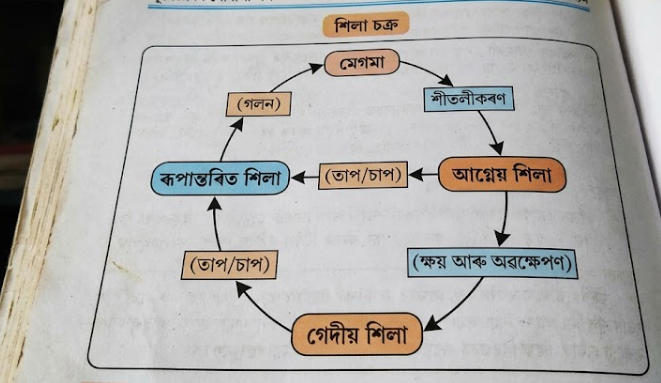
তাৎপৰ্য: শিলাচক্ৰই প্ৰমাণ কৰে যে ভূ-ত্বকৰ উপাদানসমূহ সংৰক্ষিত হৈ থাকে আৰু প্ৰকৃতিৰ বুকুত পদাৰ্থৰ পুনৰাবৰ্তন চিৰকাল চলি থাকে।
৭. উৎপত্তিৰ ভিত্তিত গেদীয় শিলাৰ শ্ৰেণীবিভাজন চমুকৈ লিখা।
উত্তৰ: গেদীয় শিলাৰ গঠনৰ উৎস আৰু অৱক্ষেপণ প্ৰক্ৰিয়াৰ ওপৰত ভিত্তি কৰি ইয়াক তিনিটা প্ৰধান শ্ৰেণীত ভাগ কৰা হয়:
১. যান্ত্ৰিকভাৱে গঠিত বা খণ্ডজ শিলা (Mechanically Formed / Clastic Rocks): পুৰণি শিলাসমূহ বায়ুমণ্ডলীয় অপক্ষয়, নদীৰ ঘঁহনি আদি যান্ত্ৰিক প্ৰক্ৰিয়াত ভাঙি টুকুৰা-টুকুৰ হয়। এই শিলাখণ্ড, বালি আৰু পলসবোৰ পৰিবাহিত হৈ স্তৰে স্তৰে জমা হয় আৰু ভূ-চাপত টান হৈ এই শিলা গঠন কৰে। গেদৰ কণাৰ আকাৰ অনুসৰি ইয়াক ভাগ কৰা হয়; যেনে—
ডাঙৰ শিলেৰে গঠিত: কংগ্লোমাৰেট (গোলাকাৰ খণ্ড) আৰু ব্ৰেক্সিয়া (জোঙা খণ্ড)।
মধ্যমীয়া বালিয়ে গঠিত: বেলেগশিল (Sandstone)।
সূক্ষ্ম বোকাৰে গঠিত: শ্বেল (Shale) আৰু বোকাশিল (Mudstone)।
২. ৰাসায়নিকভাৱে গঠিত গেদীয় শিলা (Chemically Formed Rocks): বিভিন্ন খনিজ পদাৰ্থ পানীত দ্ৰৱীভূত হৈ থাকে। যেতিয়া হ্ৰদ বা বন্ধ সাগৰৰ পানী বাষ্পীভূত হয় অথবা ৰাসায়নিক বিক্ৰিয়া ঘটে, তেতিয়া সেই দ্ৰৱীভূত খনিজবোৰ তলত অধঃক্ষেপিত হৈ জমা হয় আৰু কঠিন শিলাৰ ৰূপ লয়। যেনে— ৰক চল্ট (Rock Salt), জিপচাম (Gypsum) আৰু চূণশিলৰ কিছু প্ৰকাৰ।
৩. জৈৱিকভাৱে গঠিত গেদীয় শিলা (Organically Formed Rocks): কোটি কোটি বছৰ ধৰি মৃত উদ্ভিদ আৰু সাগৰীয় জীৱ-জন্তুৰ অৱশিষ্ট সাগৰ বা জলাহৰ তলিত জমা হৈ এই শিলা গঠিত হয়।
উদ্ভিদৰ অংশ গেদৰ তলত পোত খাই কাৰ্বনৰ মাত্ৰা বাঢ়ি কয়লা (Coal) গঠিত হয়।
সাগৰীয় প্ৰাণীৰ (যেনে— প্ৰৱাল, শামুক) চূণযুক্ত খোলা বা জঁকা জমা হৈ চক (Chalk) আৰু চূণশিল (Limestone) সৃষ্টি হয়।
৮. খনিজ পদাৰ্থৰ আলোকীয় আৰু স্ফটিকীয় ধৰ্মসমূহৰ বিষয়ে লিখা।
উত্তৰ: খনিজ পদাৰ্থসমূহ চিনাক্ত কৰাৰ বাবে আৰু সিহঁতৰ আভ্যন্তৰীণ গঠন বুজিবলৈ আলোকীয় (Optical) আৰু স্ফটিকীয় (Crystallographic) ধৰ্মসমূহ বিশেষভাৱে অধ্যয়ন কৰা হয়।
স্ফটিকীয় ধৰ্ম (Crystallographic Properties): প্ৰতিটো খনিজৰে অণু আৰু পৰমাণুসমূহ এক নিৰ্দিষ্ট ত্ৰিমাত্ৰিক জ্যামিতিক সজ্জাত শৃংখলিত হৈ থাকে। ইয়াৰ ফলত খনিজটোৱে এক নিৰ্দিষ্ট বাহ্যিক স্ফটিক ৰূপ লাভ কৰে। স্ফটিক অক্ষ আৰু কোণৰ ওপৰত ভিত্তি কৰি খনিজক ছটা প্ৰধান স্ফটিক মণ্ডলত (Crystal Systems) ভগোৱা হয়:
১. আইছ'মেট্ৰিক বা কিউবিক (যেনে— হেলাইট, পাইৰাইট),
২. টেট্ৰাগ'নেল (যেনে— জিৰকন),
৩. হেক্সাগ'নেল (যেনে— কোৱাৰ্টজ, কেলচাইট),
৪. অৰ্থ'ৰম্বিক (যেনে— টোপাজ),
৫. মন'ক্লিনিক (যেনে— জিপচাম),
৬. ট্ৰাইক্লিনিক (যেনে— এলবাইট)।
আলোকীয় ধৰ্ম (Optical Properties): খনিজৰ মাজেৰে পোহৰ পাৰ হৈ যাওঁতে বা পৃষ্ঠত আপতিত হ'লে তলত দিয়া পৰিঘটনা দেখা যায়:
স্বচ্ছতা (Transparency): পোহৰ কিমান পাৰ হ'ব পাৰে তাৰ ওপৰত নিৰ্ভৰ কৰি খনিজ স্বচ্ছ (যেনে— বিশুদ্ধ কোৱাৰ্টজ), অৰ্ধস্বচ্ছ বা অস্বচ্ছ হ'ব পাৰে।
পোহৰৰ প্ৰতিসৰণ আৰু দ্বি-প্ৰতিসৰণ (Refraction & Double Refraction): কিছুমান খনিজৰ (যেনে— কেলচাইট) মাজেৰে পোহৰ পাৰ হ'লে পোহৰৰ ৰশ্মি দুভাগ হৈ দুটা প্ৰতিবিম্বৰ সৃষ্টি কৰে, ইয়াক দ্বি-প্ৰতিসৰণ বোলে।
প্লিয়'ক্ৰইজম (Pleochroism): মেৰুীকৃত পোহৰত (Polarized light) খনিজ ঘূৰালে যদি বেলেগ বেলেগ দিশত বেলেগ বেলেগ ৰং দেখা যায়, তাকে প্লিয়'ক্ৰইজম বোলে।
পেট্ৰ'গ্ৰাফিক অণুবীক্ষণ যন্ত্ৰৰ সহায়ত এই আলোকীয় গুণসমূহ পৰীক্ষা কৰি পাতল শিলাখণ্ডৰ মাজত থকা খনিজ চিনাক্ত কৰা হয়।
৯. আগ্নেয়, গেদীয় আৰু ৰূপান্তৰিত শিলাৰ মাজত এটি তুলনামূলক পাৰ্থক্য দাঙি ধৰা।
উত্তৰ: পৃথিৱীৰ ভূ-ত্বক গঠনকাৰী তিনি প্ৰধান শিলাৰ মাজত থকা তুলনামূলক পাৰ্থক্য তলৰ তালিকাত দাঙি ধৰা হ'ল:
| তুলনামূলক দিশ | আগ্নেয় শিলা (Igneous) | গেদীয় শিলা (Sedimentary) | ৰূপান্তৰিত শিলা (Metamorphic) |
| ১. উৎপত্তি | মেগমা বা লাভা শীতল আৰু কঠিন হৈ সৃষ্টি হয়। | পুৰণি শিলাৰ ক্ষয়প্ৰাপ্ত গেদ স্তৰে স্তৰে জমা হৈ গঠিত হয়। | প্ৰচণ্ড তাপ, চাপ আৰু ৰাসায়নিক ক্ৰিয়াত পুৰণি শিলা সলনি হৈ গঠিত হয়। |
| ২. স্তৰীভৱন | কোনো স্তৰ নাথাকে (অস্তৰীভূত শিলা)। | স্পষ্ট অনুভূমিক স্তৰ দেখা যায় (স্তৰীভূত শিলা)। | স্তৰ নাথাকে, কিন্তু চাপৰ ফলত পত্ৰায়ন (Foliation) বা ৰৈখিক সজ্জা দেখা যায়। |
| ৩. স্ফটিকৰ উপস্থিতি | স্ফটিকযুক্ত (Crystalline); স্ফটিকবোৰ পৰস্পৰ সংলগ্ন। | সাধাৰণতে স্ফটিক নাথাকে; বিভিন্ন শিলাখণ্ড বা বালিৰ কণিকাৰে গঠিত। | পুনৰ স্ফটিকীকৰণ (Recrystallization) ঘটি নতুন স্ফটিক গঠন হয়। |
| ৪. জীৱাশ্ম | প্ৰচণ্ড উত্তাপৰ বাবে কোনো জীৱাশ্ম পোৱা নাযায়। | স্তৰসমূহৰ মাজত প্ৰচুৰ জীৱাশ্ম পোৱা যায়। | অত্যধিক তাপ আৰু চাপৰ বাবে জীৱাশ্ম ধ্বংস হৈ যায় (কেতিয়াবা বিকৃত ৰূপত পোৱা যায়)। |
| ৫. ছিদ্ৰতা আৰু ঘনত্ব | অতি কঠিন, ঘন আৰু অপ্ৰৱেশ্য। | তুলনামূলকভাৱে কোমল, ছিদ্ৰযুক্ত আৰু পানী প্ৰৱেশ্য। | যথেষ্ট কঠিন, ঘন আৰু অছিদ্ৰযুক্ত। |
| ৬. উদাহৰণ | গ্ৰেনাইট, বেচল্ট, পিউমিচ। | বেলেগশিল, চূণশিল, শ্বেল। | মাৰ্বল, স্লেট, নিচ, কোৱাৰ্টজাইট। |
১০. মানৱ সভ্যতা আৰু অৰ্থনীতিত শিলা আৰু খনিজ পদাৰ্থৰ ব্যৱহাৰিক গুৰুত্ব আলোচনা কৰা।
উত্তৰ: মানৱ সভ্যতাৰ আদিম প্ৰস্তৰ যুগৰ পৰা আৰম্ভ কৰি আধুনিক মহাকাশ যুগলৈকে শিলা আৰু খনিজ পদাৰ্থ অবিহনে মানুহৰ অগ্ৰগতি অসম্ভৱ। অৰ্থনৈতিক আৰু ব্যৱহাৰিক দিশত ইয়াৰ গুৰুত্ব অপৰিসীম:
১. গৃহ আৰু আন্তঃগাঁথনি নিৰ্মাণত: ঘৰ-দুৱাৰ, দলং, ৰাস্তা-ঘাট আদি নিৰ্মাণত শিলাৰ ব্যৱহাৰ অপৰিহাৰ্য। গ্ৰেনাইট, মাৰ্বল আদি সৌন্দৰ্যবৰ্ধক মজিয়া আৰু দেৱালত ব্যৱহাৰ হয়। চূণশিলৰ পৰা চিমেণ্ট প্ৰস্তুত কৰা হয়। বেলেগশিল আৰু বেচল্ট শিল ৰাস্তা আৰু ৰে'লপথ নিৰ্মাণৰ বাবে ব্যৱহাৰ কৰা হয়।
২. শক্তি আৰু ইন্ধন উৎপাদনত: গেদীয় শিলাৰ পৰা পোৱা কয়লা, পেট্ৰ'লিয়াম আৰু প্ৰাকৃতিক গেছ হ'ল বিশ্বৰ শক্তিৰ প্ৰধান চালিকা শক্তি। ইয়াৰ উপৰিও পাৰমাণৱিক শক্তি উৎপাদনত ইউৰেনিয়াম আৰু থৰিয়ামৰ দৰে তেজষ্ক্ৰিয় খনিজ ব্যৱহাৰ কৰা হয়।
৩. ধাতু আৰু উদ্যোগিক উৎপাদনত: দৈনন্দিন জীৱনত ব্যৱহৃত যন্ত্ৰপাতি, যান-বাহন আদি নিৰ্মাণৰ বাবে প্ৰয়োজনীয় লো (হেমাটাইটৰ পৰা), এলুমিনিয়াম (বক্সাইটৰ পৰা), তাম আদি বিভিন্ন ধাতৱ খনিজৰ পৰাই আহৰণ কৰা হয়।
৪. কৃষি খণ্ডত: মাটিৰ উৰ্বৰতা বৃদ্ধিৰ বাবে প্ৰয়োজনীয় সাৰ প্ৰস্তুত কৰিবলৈ জিপচাম, ফছফেট আৰু পটাছ খনিজৰ ব্যৱহাৰ অতি জৰুৰী।
৫. অলংকাৰ আৰু আধুনিক প্ৰযুক্তি: সোণ, ৰূপ, প্লেটিনাম আদি মূল্যবান ধাতু আৰু হীৰা, ৰুবি আদি খনিজ অলংকাৰত ব্যৱহাৰ হয়। আনহাতে কোৱাৰ্টজ আৰু চিলিকন খনিজ কম্পিউটাৰ চিপ, ঘড়ী আৰু সৌৰশক্তি প পেনেল তৈয়াৰ কৰাত ব্যৱহাৰ কৰা হয়।
Very Short Answer Type :
1. What is meant by a rock?
Answer: A rock is a naturally occurring aggregate of one or more minerals forming an essential part of the Earth's crust.
2. What is a mineral?
Answer: A mineral is a naturally occurring, homogeneous inorganic solid possessing a definite chemical composition and an ordered internal atomic structure.
3. Which rock is termed the 'primary rock' and why?
Answer: Igneous rocks are termed primary rocks because they were the earliest to form during the consolidation of the primordial crust and serve as parent material for all other rocks.
4. Name the hardest mineral on Mohs hardness scale.
Answer: Diamond is the hardest mineral on Mohs scale, having a designated hardness value of 10.
5. Name the softest mineral on Mohs hardness scale.
Answer: Talc is the softest mineral on Mohs scale, with a designated hardness value of 1.
6. Stratification is the characteristic feature of which rock class?
Answer: Stratification is the primary and definitive characteristic of sedimentary rocks.
7. In which type of rock are fossils predominantly preserved?
Answer: Fossils are predominantly found and preserved within sedimentary rocks.
8. Cite an example of a plutonic igneous rock.
Answer: Granite is an exemplary example of a coarse-grained, deep-seated plutonic igneous rock.
9. What is metamorphism?
Answer: Metamorphism is the geological process whereby pre-existing rocks undergo mineralogical, chemical, and structural reconstitution under extreme temperature, pressure, and chemically active hydrothermal fluids without melting.
10. What does limestone transform into upon metamorphism?
Answer: Upon thermal or regional metamorphism, limestone recrystallizes into marble.
11. What is cleavage in mineralogy?
Answer: Cleavage refers to the inherent tendency of a crystalline mineral to split smoothly along predetermined planes of structural weakness where atomic bonds are weakest.
12. Name a chemically formed sedimentary rock.
Answer: Rock salt (Halite) is a notable chemically precipitated sedimentary rock.
13. What is the fundamental difference between magma and lava?
Answer: Magma designates molten or semi-molten rock material beneath the Earth's surface, whereas lava denotes molten material that has extruded onto the terrestrial surface.
14. What type of igneous rock is basalt?
Answer: Basalt is a fine-grained, extrusive (volcanic) mafic igneous rock.
15. Cite an example of a silicate mineral.
Answer: Quartz () or Feldspar serves as a representative example of the silicate mineral group.
2-Mark Questions & Answers :
1. Distinguish between a rock and a mineral.
Answer: A mineral is a naturally occurring inorganic chemical substance with a homogeneous, ordered crystal structure and a definite stoichiometric formula. In contrast, a rock is a heterogeneous mechanical mixture or lithified aggregate of one or more distinct minerals, lacking a singular crystalline geometry or specific chemical formula.
2. Differentiate between intrusive and extrusive igneous rocks.
Answer: Intrusive igneous rocks crystallize when subterranean magma is trapped beneath the crust, cooling sluggishly to produce prominent, coarse crystals (e.g., granite). Extrusive igneous rocks develop when molten lava discharges onto the surface, encountering ambient temperatures that enforce rapid thermal quenching and produce microscopic crystalline or glassy groundmasses (e.g., basalt).
3. Why are sedimentary rocks referred to as stratified rocks?
Answer: Sediments weathered and eroded by geological agents are systematically transported and deposited horizontally across oceanic basins, lakebeds, or river systems over geological epochs. Successive sedimentary cycles deposit continuous overlying strata, which undergo diagenesis and compaction, developing prominent horizontal stratification planes that define their structural architecture.
4. What is meant by mineral lustre? State its primary classification.
Answer: Lustre describes the qualitative appearance and reflective character of a mineral's surface under ambient incident light. It is broadly categorized into metallic lustre, reflecting light brilliantly akin to native polished metals (e.g., pyrite), and non-metallic lustre, which includes vitreous (glassy), adamantine (diamond-like), silky, and pearly variants.
5. Define streak in mineralogy and explain its diagnostic utility.
Answer: Streak denotes the distinct coloration of a mineral when pulverized against an unglazed porcelain streak plate. While macroscopic surface coloration is frequently confounded by chemical impurities or surface oxidation, the pulverized powdered residue maintains a chemically uniform, unvarying shade, rendering it an indispensable diagnostic index in identification.
6. Why do plutonic igneous rocks exhibit coarse crystalline textures?
Answer: Plutonic rocks assemble at significant depths within the planetary lithosphere, fully insulated by extensive overlying crustal masses. This thermal barrier prevents rapid dissipation of internal thermal energy, enforcing exceedingly sluggish cooling rates. Consequently, nucleating ions enjoy prolonged temporal windows to coalesce into large, well-individualized macroscopic mineral crystals.
7. What are organically formed sedimentary rocks? Give two examples.
Answer: Organically formed sedimentary rocks originate from the progressive accumulation, lithification, and biochemical diagenesis of non-decayed structural remnants of past flora and fauna over geological epochs. Prominent examples comprise bituminous coal (lithified terrestrial vegetative detritus) and biogenic limestone or chalk (consolidated calcium carbonate derived from marine invertebrate shells).
8. Explain contact (thermal) metamorphism.
Answer: Contact or thermal metamorphism takes place locally when pre-existing country rocks are invaded by ultra-hot magmatic intrusions. The steep thermal gradient radiating from the igneous contact zone triggers localized recrystallization and volatile phase exchange across the adjacent rock mass, forging non-foliated hornfelsic fabrics without significant directional stress.
9. What is regional metamorphism?
Answer: Regional metamorphism refers to extensive structural and mineral reconstitution encompassing vast tracts of continental crust, driven by widespread orogenic (mountain-building) tectonic collisions. Subjected simultaneously to immense differential pressures, confining lithostatic loads, and pervasive elevated geothermal gradients, parent rocks recrystallize into conspicuously banded or foliated crystalline assemblages.
10. Define foliation in metamorphic petrology.
Answer: Foliation represents a repetitive, planar, or banded fabric induced within metamorphic rocks when differential tectonic stress drives mechanical rotation, recrystallization, and segregation of platy or elongated mineral grains (notably micas and amphiboles). These minerals align perpendicular to maximum compressive stress, yielding fissile sheet-like planes.
11. What is Mohs hardness scale?
Answer: Formulated in 1812 by German mineralogist Friedrich Mohs, this empirical ordinal scale gauges the scratch-resistance of crystalline minerals through ten comparative index minerals. Ascending from the softest mineral, talc (assigned hardness 1), to the most resilient substance, diamond (hardness 10), it standardizes field diagnostics.
12. Define the rock cycle.
Answer: The rock cycle encapsulates the dynamic, continuous geological continuum whereby internal tectonic drivers and external denudational forces perpetually transform rock material across igneous, sedimentary, and metamorphic states. Through iterative melting, uplift, subaerial weathering, lithification, and recrystallization, Earth’s lithospheric matter is endlessly recycled without net loss.
13. What is the fundamental distinction between metallic and non-metallic minerals?
Answer: Metallic minerals possess high specific gravity and distinct metallic lustre, yielding extractable, economically viable metallic elements upon industrial smelting (e.g., hematite yielding iron, chalcopyrite yielding copper). Non-metallic minerals lack metallic elements or malleability, instead yielding functional non-metallic commodities, construction aggregates, or chemical industrial feedstocks (e.g., gypsum, fluorite).
14. Define clastic sedimentary rocks with suitable examples.
Answer: Clastic sedimentary rocks are formed from the accumulated, physically transported lithic detritus and mineral grains detached from parent rocks through subaerial mechanical disintegration. Following fluvial or aeolian transport and deposition, these grains undergo pore-water expulsion and interstitial matrix cementation. Characteristic types include quartz sandstone and coarse-grained conglomerate.
15. Differentiate between silicate and non-silicate mineral classes.
Answer: Silicate minerals are built predominantly around the fundamental silicon-oxygen tetrahedral anionic complex ($[SiO_4]^{4-}$), forming over ninety percent of continental crustal volume (e.g., quartz, plagioclase). Non-silicate minerals lack the silicon-oxygen backbone, comprising disparate chemical groups including native elemental states, halides, sulphides, sulphates, and carbonates (e.g., calcite, galena).
5-Mark Questions & Answers :
1. Define a mineral and critically analyze its diagnostic physical properties.
Answer: A mineral is defined as an inorganic, naturally occurring, homogeneous solid exhibiting a definite, orderly internal atomic lattice and a characteristic chemical composition expressible by a specific stoichiometric formula. Petrologists and mineralogists distinguish discrete mineral species through the evaluation of diagnostic macroscopic physical properties:
Crystal Form and Habit: Reflects the outward geometric expression of internal atomic symmetry, manifesting as distinct geometric shapes such as cubes, prisms, or rhombohedra.
Colour: Although easily observed, colour is frequently diagnostically unreliable due to minor ionic substitutions, trace element impurities, or radiation exposure within crystal lattices.
Streak: Represents the unadulterated colour of a mineral's finely ground powder when abraded across a vitrified streak plate; it remains constant regardless of misleading exterior body coloration.
Lustre: The optical quality and intensity of light reflection exhibited by the mineral surface, demarcated fundamentally into metallic, sub-metallic, and diverse non-metallic categories (vitreous, resinous, or pearly).
Hardness: Measures the internal structural cohesion and resistance to surface scratching, standardly evaluated via Mohs scratch hardness scale (spanning from talc = 1 to diamond = 10).
Cleavage and Fracture: Cleavage describes the reproducible tendency of minerals to fracture along flat planes dictated by weaker interatomic bonds. Surfaces fracturing irregularly without crystallographic control display characteristic fracture patterns (e.g., conchoidal fracture).
Systematic cross-examination of these integrated parameters allows accurate macroscopic identification of field specimens.
2. Describe the classification of igneous rocks based on mode of occurrence and origin.
Answer: Igneous rocks originate through the cooling, consolidation, and crystallization of high-temperature molten planetary silicate fluids, classified either as subsurface magma or subaerial lava. Based upon genetic environment, crustal depth, and corresponding thermal cooling dynamics, they are primarily classified into two comprehensive categories:
1. Intrusive (Plutonic and Hypabyssal) Igneous Rocks: These lithologies develop when buoyant molten magma ascending toward the surface is trapped beneath thick crustal strata. Insulated from rapid atmospheric cooling, crystallization proceeds sluggishly across extended temporal intervals, facilitating unrestrained ionic diffusion that produces coarse, interlocking phaneritic textures.
Plutonic Rocks: Crystallize at extreme depths within large batholiths or lopoliths, typified by granite, diorite, and gabbro.
Hypabyssal Rocks: Solidify at intermediate or shallow crustal regimes within structural dykes, sills, and laccoliths, exhibiting intermediate to porphyritic crystalline grain sizes; dolerite is a classic archetype.
2. Extrusive (Volcanic) Igneous Rocks: These rocks form when violent or fissure volcanism vents lava onto subaerial or subaqueous crustal surfaces. Direct thermal exposure to ambient atmospheric or oceanic media initiates rapid thermal quenching. Nucleation outpaces crystal growth, generating aphanitic (microcrystalline) or non-crystalline amorphous glassy textures. Basalt, andesite, and obsidian represent prominent exemplars.
Chemically, these occurrences are simultaneously partitioned by silica saturation into felsic (silica-rich, acidic), intermediate, mafic (basic), and ultramafic suites.
3. Elaborate upon the formation process and defining characteristics of sedimentary rocks.
Answer: Sedimentary rocks are secondary rock bodies produced through the deposition, burial, and subsequent diagenetic lithification of organic debris, chemical precipitates, or mechanical detritus derived from weathered pre-existing rocks.
The Lithification and Diagenetic Process:
Weathering and Erosion: Subaerial weathering disintegrates pre-existing terranes into mineral residues and dissolved ions.
Transportation and Deposition (Sedimentation): Gravitational, fluvial, glacial, and aeolian agents transport these materials into low-energy basins of deposition, where they accumulate in horizontal sheets.
Compaction: Overlying sedimentary accumulations subject lower sediments to escalating lithostatic loads, driving out trapped pore fluids and packing constituent particles tightly together.
Cementation: Mineral-saturated pore waters precipitate binding agents—most notably silica, calcite, and iron oxides—which fill microscopic voids, cementing discrete particles into an enduring coherent rock mass.
Distinctive Characteristics:
Stratification: Display planar layering and bedding planes, occasionally exhibiting cross-bedding and graded bedding.
Fossil Preservation: Function as the sole lithological reservoir preserving entombed macro- and micro-fossils, offering windows into evolutionary chronology.
Primary Sedimentary Structures: Often preserve fragile subaerial indicators including aqueous ripple marks, flute casts, and desiccated polygonal mud cracks.
Porosity and Permeability: Typically possess interconnected porous networks, rendering them vital reservoirs for groundwater extraction and hydrocarbon accumulation.
4. What is a metamorphic rock? Discuss the agents and major types of metamorphism.
Answer: Metamorphic rocks are products of solid-state structural, mineralogical, and chemical reconstitution induced in pre-existing igneous, sedimentary, or older metamorphic rocks when subjected to environmental conditions disparate from their conditions of genesis. This transformation proceeds without complete bulk melting.
Primary Agents of Metamorphism:
Temperature: Thermal energy weakens intra-crystalline bonds, facilitates ionic diffusion, and destabilizes low-temperature hydrated mineral lattices to trigger recrystallization.
Pressure: Operates either as uniform confining lithostatic pressure (compacting rock fabric) or non-hydrostatic directed stress (generating directional deformation and flattening).
Chemically Active Hydrothermal Fluids: Superheated aqueous pore fluids carry dissolved ions that accelerate metamorphic reactions and introduce metasomatic components.
Major Metamorphic Regimes:
1. Contact (Thermal) Metamorphism: Localized alteration occurring adjacent to hot igneous plutons, governed predominantly by extreme temperatures and thermal baking; non-foliated textures like marble (from limestone) and hornfels prevail.
2. Regional (Dynamothermal) Metamorphism: Large-scale tectonic metamorphism coinciding with collisional mountain-building belts. Combined high temperatures and compressive deviatoric stress foster pervasive mineral alignment, generating foliated suites like slate, phyllite, schist, and banded gneiss.
3. Dynamic (Cataclastic) Metamorphism: Concentrated along localized fault zones and crustal shear boundaries, governed almost exclusively by severe mechanical shearing and crushing, yielding cataclasites and mylonites.
5. Present a comprehensive chemical classification of the mineral kingdom with representative examples.
Answer: Mineralogical classification is systematically structured upon the chemical nature of dominant anionic radicals or negative groups, as anions largely control internal atomic packing and physical properties:
1. Silicates: The most abundant crustal mineral family, built of  tetrahedra linked in diverse topological configurations (neso-, soro-, ino-, phyllo-, and tectosilicates). Examples: Quartz (), Orthoclase , and Biotite.
2. Carbonates: Defined by the trigonal planar carbonate radical , forming major sedimentary and metamorphic rock masses. Examples: Calcite (), Aragonite, and Dolomite .
3. Oxides: Consist of metal cations bonded directly to oxygen ions . Crucial economic ores belong here, including Hematite , Magnetite , and Corundum .
4. Sulphides: Contain the reduced sulphide anion paired with heavy transition metals, constituting critical industrial metallic sources. Examples: Pyrite , Galena (PbS), and Chalcopyrite .
5. Sulphates: Minerals dominated by the tetrahedral sulphate complex , commonly precipitating in arid evaporitic settings. Notable examples include Gypsum and Anhydrite.
6. Halides: Feature electro-negative halogen elements ionicly bonded with alkali or alkaline-earth metals. Examples: Halite (NaCl) and Fluorite.
7. Native Elements: Minerals occurring as uncombined, chemically pure elemental states. Examples: Native Gold (Au), Native Copper (Cu), Graphite, and Diamond (C).
6. Explain the concept of the Rock Cycle with an illustrative schematic, highlighting its geological significance.
Answer: The rock cycle is a fundamental petrological model demonstrating that the three primary rock classes—igneous, sedimentary, and metamorphic—are genetically linked within an ongoing, interconvertible geochemical cycle governed by internal mantle dynamics and external atmospheric weathering.
The Cyclical Dynamics:
Primary igneous rocks emerge via the ascent and cooling of molten magma or surface lava. Exposed to atmospheric elements, they undergo denudation, fragmentation, and fluvial transport, accumulating in aqueous basins to lithify into sedimentary rocks. Deep crustal subsidence or tectonic compression subjects these sedimentary and older igneous lithologies to intense geothermal gradients and lithostatic stresses, recrystallizing them into metamorphic equivalents. Finally, deep tectonic subduction drives these rocks beyond their solidus temperatures into complete anatexis (remelting), regenerating magma to initiate subsequent cycles.
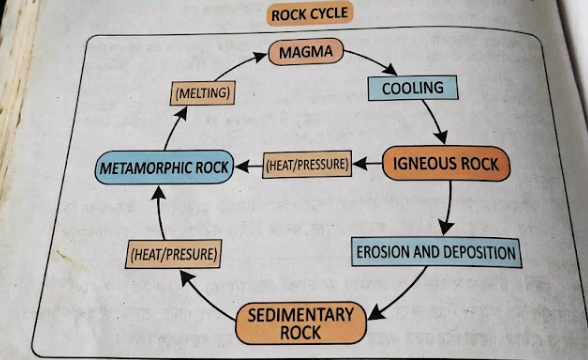
Geological Significance:
The cycle exemplifies uniformitarian recycling of terrestrial matter, establishes that lithospheric crust is dynamic rather than static, and governs the redistribution of vital chemical elements, mineral deposits, and energy resources throughout geological time.
7. Discuss the genetic classification of sedimentary rocks based on their depositional origin.
Answer: Sedimentary rocks are categorized on the basis of their genesis, sediment source, and the specific physical, chemical, or biological pathways driving their deposition:
1. Clastic (Mechanically Formed) Sedimentary Rocks:
Formed through the mechanical deposition and lithification of solid mineral and rock fragments detached from prior terranes via weathering. Classification depends on grain size:
Rudaceous (Coarse-grained, >2 mm): Composed of gravel, cobbles, and pebbles; rounded clasts produce Conglomerate, whereas sharp, angular clasts produce Breccia.
Arenaceous (Medium-grained, 0.0625–2 mm): Dominated by sand grains, prominently represented by Sandstone and Arkose.
Argillaceous (Fine-grained, <0.0625 mm): Composed of silt and clay fractions, producing Shale and Mudstone.
2. Chemically Formed Sedimentary Rocks:
These precipitate directly out of mineral-saturated aqueous solutions due to inorganic evaporation or chemical reactions. Evaporites such as Rock Salt (Halite), Sylvite, and Gypsum form in desiccating marine or lacustrine basins, while Travertine precipitates in thermal spring and speleothem environments.
3. Organically Formed (Biogenic) Sedimentary Rocks:
Arise from the bio-accumulation and diagenetic compaction of organic skeletal fragments, shells, or floral detritus.
Calcareous deposits: Consolidated accumulations of calcium carbonate shells, forming Fossiliferous Limestone, Coquina, and Chalk.
Carbonaceous deposits: Anaerobically decomposed terrestrial vegetative biomass undergoing progressive carbon enrichment, yielding Peat, Lignite, and Bituminous Coal.
8. Detail the crystallographic and optical properties essential for mineral analysis.
Answer: Definitive mineralogical identification, particularly across microscopically fine lithic sections, demands analysis of crystallographic geometries and transmitted polarized optical properties.
Crystallographic Attributes:
Crystalline minerals express external planar forms governed by ordered three-dimensional internal lattices. Systems are categorized across six crystal divisions according to axial lengths and interfacial angles:
Isometric (Cubic): Three mutually perpendicular equal axes ; e.g., Garnet, Halite.
Tetragonal: Three perpendicular axes, two equal horizontal axes ; e.g., Zircon.
Hexagonal: Four crystallographic axes; e.g., Quartz, Beryl.
Orthorhombic: Three unequal axes intersecting at right angles; e.g., Topaz, Olivine.
Monoclinic: Three unequal axes with one oblique inclination ; e.g., Gypsum, Orthoclase.
Triclinic: Three unequal axes intersecting at non-perpendicular angles; e.g., Plagioclase feldspars.
Optical Properties under the Petrological Microscope:
Thin-section examination utilizing plane-polarized and cross-polarized light reveals:
Pleochroism: The variation in transmitted light absorption and observed color upon rotating the microscope stage under plane-polarized light (e.g., Biotite).
Refractive Index and Relief: The relative optical density of a mineral grain relative to its mounting medium, determining grain boundary prominence.
Birefringence and Interference Colours: Arises from anisotropic splitting of polarized light into ordinary and extraordinary rays, generating diagnostic interference hues under crossed polars.
Extinction Angle: The specific angle between crystallographic directions (such as cleavage planes) and vibration directions when illumination drops to zero under crossed nicols.
9. Provide a comparative analysis of igneous, sedimentary, and metamorphic rocks.
Answer: The primary physical, structural, and genetic attributes differentiating the three principal lithological classes are summarized in the comparative framework below:
| Comparative Parameter | Igneous Rocks | Sedimentary Rocks | Metamorphic Rocks |
| Primary Origin | Direct cooling and crystallization of molten magma or subaerial lava. | Deposition, compaction, and lithification of particulate or precipitated matter. | Solid-state reconstitution of pre-existing rocks under elevated heat and pressure. |
| Structural Fabric | Massive, non-stratified crystalline or amorphous glassy fabrics. | Distinct stratified beds, displaying clear bedding planes. | Foliated, banded (schistosity, gneissosity), or granoblastic non-foliated textures. |
| Crystallinity | Wholly crystalline to glassy; interlocking primary crystals. | Typically non-crystalline; composed of cemented clastic grains or bioclasts. | Recrystallized crystalline fabric; secondary porphyroblasts often present. |
| Fossil Content | Totally devoid of fossils due to magmatic thermal destruction. | Abundantly fossiliferous, preserving intact biological structures. | Typically devoid of fossils; occasionally retain distorted, recrystallized remnants. |
| Porosity & Hardness | Dense, non-porous, hard, and mechanically resistant. | Variable, commonly porous, permeable, and mechanically softer. | Highly compacted, dense, low porosity, with high compressive strength. |
| Representative Examples | Granite, Basalt, Gabbro, Obsidian. | Sandstone, Limestone, Shale, Conglomerate. | Marble, Slate, Schist, Quartzite, Gneiss. |
10. Critically evaluate the economic and practical significance of rocks and minerals in human civilization.
Answer: The continuum of human civilizational advancement—from ancient Stone Age tool manufacturing to contemporary semi-conductor and aerospace technologies—is underpinned by the industrial exploitation of lithic and mineral resources.
1. Civil Engineering and Structural Infrastructure: Crushed basalt, diorite, and granite supply foundational railway ballast and highway sub-bases. Dimension stones like polished marble, granite slabs, and slate are deployed in architectural facades and roofing. Pulverized limestone forms the non-negotiable chemical feedstock for Portland cement synthesis.
2. Energy Resources and Strategic Fuels: Sedimentary basins provide terrestrial fossil fuel deposits: coal, petroleum hydrocarbons, and natural gas continue to supply global baseload power. Furthermore, radioactive minerals such as Uraninite (Uranium) and Thorite drive nuclear power generation.
3. Metallurgical and Industrial Raw Materials: Ores provide industrial base metals: hematite and magnetite yield structural steel; bauxite produces lightweight aluminum; chalcopyrite provides conductive copper wiring. Rare-earth elements extracted from monazite sand underpin modern electronics.
4. Agronomic Productivity: Mineral fertilizers derived from rock phosphate, gypsum, and evaporitic potash salts replenish depleted arable soils, stabilizing agricultural output.
5. Advanced Technologies and Gemology: Quartz crystals and hyper-purified silicon derived from quartz sand drive telecommunications, solar photovoltaic panels, and semiconductor microprocessors. Concurrently, corundum (ruby, sapphire), beryl (emerald), and diamond sustain the international gemstone and industrial abrasive sectors.