১ নম্বৰীয়া প্ৰশ্নোত্তৰ :
১. তলৰ কোনটো জল-বতৰ বিজ্ঞানভিত্তিক (Hydro-meteorological) বিপৰ্যয়? [GU 2025]
উত্তৰ: ঘূৰ্ণীবতাহ (Cyclone)।
২. ভাৰতৰ ৰাষ্ট্ৰীয় বিপৰ্যয় ব্যৱস্থাপনা প্ৰাধিকৰণ (NDMA) কোন চনত গঠন কৰা হৈছিল? [GU 2025]
উত্তৰ: ২০০৫ চনত।
৩. বিপৰ্যয় ব্যৱস্থাপনাত 'স্থিতিস্থাপকতা' (Resilience) শব্দটোৱে কি বুজায়? [GU 2025]
উত্তৰ: বিপৰ্যয়ৰ পিছত পুনৰ সুস্থ বা স্বাভাৱিক অৱস্থালৈ ঘূৰি অহাৰ সামৰ্থ্য বা ক্ষমতাক (Ability to recover) বুজায়।
৪. অসমত সঘনাই বানপানী সৃষ্টি কৰা নদীখনৰ নাম কি? [GU 2025]
উত্তৰ: ব্ৰহ্মপুত্ৰ নদী।
৫. ভূমিকম্পৰ প্ৰাবল্য বা তীব্ৰতা কোনটো স্কেলত জোখা হয়? [GU 2025]
উত্তৰ: ৰিখটাৰ স্কেল (Richter scale) বা মাৰ্কালি স্কেল (Mercalli scale)।
৬. এটা দুৰ্যোগ কেতিয়া বিপৰ্যয়ত পৰিণত হয়? [GU 2025]
উত্তৰ: যেতিয়া ই মানৱ জীৱন, সম্পত্তি আৰু পৰিৱেশৰ বিস্তৰ ক্ষতি আৰু লোকচান সাধন কৰে।
৭. সম্প্ৰদায়ভিত্তিক দুৰ্যোগ ব্যৱস্থাপনাই (CBDM) প্ৰধানকৈ কিহত গুৰুত্ব দিয়ে? [GU 2025]
উত্তৰ: স্থানীয় জনসাধাৰণৰ সক্ৰিয় অংশগ্ৰহণত।
৮. ভূমিকম্পৰ এটা গাঁথনিমূলক প্ৰশমনৰ (Structural mitigation) ব্যৱস্থা উল্লেখ কৰা। [GU 2025]
উত্তৰ: ভৱনসমূহৰ পুনঃসংস্কাৰ বা মজবুতীকৰণ (Retrofitting of buildings)।
৯. বয়স বা শাৰীৰিক অক্ষমতাৰ বাবে হোৱা দুৰ্বলতাই কোনটো প্ৰেক্ষাপটক প্ৰতিফলিত কৰে? [GU 2025]
উত্তৰ: সামাজিক প্ৰেক্ষাপট (Social context)।
১০. ভূমি ব্যৱহাৰৰ পৰিকল্পনা (Land-use planning) কেনেধৰণৰ প্ৰশমন ব্যৱস্থা? [GU 2025]
উত্তৰ: অগাঁথনিমূলক ব্যৱস্থা (Non-structural measure)।
১১. 'Disaster' শব্দটো কোন দুটা শব্দৰ পৰা উৎপত্তি হৈছে?
উত্তৰ: ফৰাচী শব্দ 'Des' (অশুভ বা বেয়া) আৰু 'Astre' (তৰা বা নক্ষত্ৰ)ৰ পৰা।
১২. এটা ভূ-ভৌতিক (Geophysical) সংকটৰ উদাহৰণ দিয়া।
উত্তৰ: আগ্নেয়গিৰিৰ উদগীৰণ বা ভূমিকম্প।
১৩. এটা মানৱসৃষ্ট বা প্ৰযুক্তিগত বিপৰ্যয়ৰ উদাহৰণ দিয়া।
উত্তৰ: বিষাক্ত ৰাসায়নিক গেছ নিৰ্গমন (যেনে: ১৯৮৪ চনৰ ভূপাল গেছ কাণ্ড)।
১৪. SDMA-ৰ সম্পূৰ্ণ ৰূপটো কি?
উত্তৰ: State Disaster Management Authority (ৰাজ্যিক দুৰ্যোগ ব্যৱস্থাপনা প্ৰাধিকৰণ)।
১৫. বিপদাশঙ্কা (Risk) নিৰ্ণয়ৰ গাণিতিক সমীকৰণটো কি?
উত্তৰ: 
২ নম্বৰীয়া প্ৰশ্নোত্তৰ (Short Answer Type - প্ৰায় ৫০ শব্দ)
১. সংকট বা দুৰ্যোগৰ (Hazard) সংজ্ঞা দিয়া আৰু এটা উদাহৰণ উল্লেখ কৰা। [GU 2025]
উত্তৰ: সংকট বা দুৰ্যোগ হ'ল এনে এক বিপজ্জনক ভৌতিক পৰিঘটনা, পৰিস্থিতি বা মানৱীয় কাৰ্যকলাপ, যাৰ ফলত জীৱন হানি, আঘাত, সম্পত্তিৰ ক্ষতি, সামাজিক-অৰ্থনৈতিক ব্যাঘাত বা পৰিৱেশৰ অৱক্ষয় ঘটিব পাৰে। উদাহৰণস্বৰূপে— সাগৰত সৃষ্টি হোৱা ঘূৰ্ণীবতাহ বা পাহাৰীয়া অঞ্চলৰ ভূমিস্খলন।
২. বান ব্যৱস্থাপনাৰ বাবে দুটা গাঁথনিমূলক ব্যৱস্থা (Structural measures) উল্লেখ কৰা। [GU 2025]
উত্তৰ: বান ব্যৱস্থাপনাৰ দুটা প্ৰধান গাঁথনিমূলক ব্যৱস্থা হ'ল—
নদীৰ দুয়োপাৰে সুৰক্ষামূলক মথাউৰি (Embankments) নিৰ্মাণ আৰু সংস্কাৰ কৰা।
অতিৰিক্ত পানী নিয়ন্ত্ৰণৰ বাবে জলাশয়, নদীবান্ধ আৰু পানী নিষ্কাশন নলা নিৰ্মাণ কৰা।
৩. বিপৰ্যয় ব্যৱস্থাপনাত থলুৱা জ্ঞানৰ (Indigenous knowledge) ভূমিকা উল্লেখ কৰা। [GU 2025]
উত্তৰ: থলুৱা জ্ঞানে স্থানীয় পৰিৱেশ, বতৰৰ পৰিৱৰ্তন আৰু পশুপখীৰ অস্বাভাৱিক আচৰণ পৰ্যবেক্ষণ কৰি আগতীয়া সতৰ্কবাণী লাভ কৰাত সহায় কৰে। পৰম্পৰাগত গৃহনিৰ্মাণ পদ্ধতি (যেনে: অসমৰ চাংঘৰ) আৰু স্থানীয় সম্পদ ব্যৱহাৰ কৰি সমাজখনে সহজতে বিপৰ্যয়ৰ ক্ষতি কমাব পাৰে।
৪. দুৰ্বলতা বা বিপন্নতাৰ (Vulnerability) দুটা কাৰণ উল্লেখ কৰা। [GU 2025]
উত্তৰ: বিপন্নতাৰ দুটা মূল কাৰণ হ'ল—
দৰিদ্ৰতা আৰু অৰ্থনৈতিক অনগ্ৰসৰতা: যাৰ ফলত মানুহে সুৰক্ষিত বাসস্থান আৰু উন্নত আন্তঃগাঁথনি লাভ কৰিব নোৱাৰে।
অনিয়ন্ত্ৰিত নগৰীকৰণ আৰু পৰিকল্পনাহীন ভূমি ব্যৱহাৰ: যাৰ ফলত বিপদসংকুল এলেকাত ঘন জনবসতি গঢ় লৈ উঠে।
৫. ৰাষ্ট্ৰীয় বিপৰ্যয় ব্যৱস্থাপনা পৰিকল্পনাৰ (NDMP) দুটা বৈশিষ্ট্য লিখা। [GU 2025]
উত্তৰ: এন.ডি.এম.পি.-ৰ দুটা উল্লেখযোগ্য বৈশিষ্ট্য হ'ল—
ই দুৰ্যোগ প্ৰশমনৰ বাবে 'চেণ্ডাই ফ্ৰেমৱৰ্ক' (Sendai Framework)-ৰ চাৰিটা প্ৰাথমিক অগ্ৰাধিকাৰৰ সৈতে সংগতি ৰাখি প্ৰস্তুত কৰা হৈছে।
ই বিপৰ্যয়ৰ সকলো স্তৰ যেনে— প্ৰস্তুতি, সঁহাৰি, উদ্ধাৰ আৰু পুনৰুদ্ধাৰৰ বাবে সকলো চৰকাৰী বিভাগৰ মাজত এক সমন্বিত দায়িত্ব নিৰ্ধাৰণ কৰে।
৬. বিপৰ্যয় ব্যৱস্থাপনা বুলিলে কি বুজা?
উত্তৰ: বিপৰ্যয় ব্যৱস্থাপনা হ'ল সম্পদ আৰু দায়িত্বসমূহৰ এনে এক নিৰন্তৰ আৰু সমন্বিত প্ৰশাসনিক পৰিকল্পনা, যাৰ জৰিয়তে দুৰ্যোগৰ প্ৰভাৱ প্ৰশমন, পূৰ্বপ্ৰস্তুতি, তাৎক্ষণিক উদ্ধাৰ আৰু জৰুৰী সাহায্য প্ৰদানৰ লগতে ক্ষতিগ্ৰস্ত সমাজৰ পুনৰ্বাসন আৰু পুনৰ্নিৰ্মাণ নিশ্চিত কৰা হয়।
৭. ভূ-ভৌতিক সংকট (Geophysical Hazard) কি?
উত্তৰ: পৃথিৱীৰ অভ্যন্তৰীণ বা ভূ-গাঠনিক সঞ্চালন আৰু কাৰকসমূহৰ পৰা উদ্ভৱ হোৱা প্ৰাকৃতিক সংকটসমূহক ভূ-ভৌতিক সংকট বোলে। উদাহৰণস্বৰূপে— ভূমিকম্প, আগ্নেয়গিৰি উদগীৰণ, আৰু ভূ-পৃষ্ঠৰ গভীৰ প্লেট টেকটনিক সঞ্চালনৰ ফলত হোৱা চুনামী।
৮. জল-বতৰ বিজ্ঞানভিত্তিক দুৰ্যোগ কি?
উত্তৰ: বায়ুমণ্ডলীয়, জলবায়ুজনিত বা জলবিজ্ঞান সম্বন্ধীয় পৰিঘটনাৰ বিষম অৱস্থাৰ ফলত সৃষ্টি হোৱা প্ৰাকৃতিক দুৰ্যোগক জল-বতৰ বিজ্ঞানভিত্তিক দুৰ্যোগ বোলে। উদাহৰণস্বৰূপে— বানপানী, ঘূৰ্ণীবতাহ, খৰাং, ডাৱৰ বিস্ফোৰণ (Cloudburst) ইত্যাদি।
৯. বিপদাশঙ্কা (Disaster Risk) বুলিলে কি বুজোৱা হয়?
উত্তৰ: কোনো এক নিৰ্দিষ্ট অঞ্চল বা সম্প্ৰদায়ত এক নিৰ্দিষ্ট সময়সীমাৰ ভিতৰত প্ৰাকৃতিক বা মানৱসৃষ্ট দুৰ্যোগৰ ফলত হ'ব পৰা সাম্ভাব্য জীৱনহানি, আঘাত, ক্ষয়-ক্ষতি আৰু অৰ্থনৈতিক বিঘিনিৰ পৰিমাণ বা সম্ভাৱনাকেই বিপদাশঙ্কা বোলে।
১০. বিপৰ্যয়ৰ সামাজিক প্ৰেক্ষাপট (Social context of vulnerability) কি?
উত্তৰ: সামাজিক গাঁথনি যেনে— জাতি, শ্ৰেণী, লিংগ, বয়স, আৰু শাৰীৰিক সক্ষমতাৰ ভিত্তিত যেতিয়া সমাজৰ কিছুমান বিশেষ শ্ৰেণী (যেনে: মহিলা, শিশু, বৃদ্ধ আৰু বিশেষভাৱে সক্ষম লোক) দুৰ্যোগৰ সময়ত আনতকৈ অধিক অসুৰক্ষিত আৰু প্ৰভাৱিত হয়, তাকে বিপন্নতাৰ সামাজিক প্ৰেক্ষাপট বোলে।
১১. বিপৰ্যয়ৰ অৰ্থনৈতিক প্ৰেক্ষাপট কেনেদৰে প্ৰভাৱ পেলায়?
উত্তৰ: অৰ্থনৈতিকভাৱে পিছপৰা আৰু দৰিদ্ৰ জনসাধাৰণ সাধাৰণতে নিৰাপদ স্থানত বসবাস কৰিব নোৱাৰি দুৰ্যোগপ্ৰৱণ অঞ্চলত থাকে। তেওঁলোকৰ হাতত দুৰ্যোগ প্ৰতিৰোধী গৃহ নিৰ্মাণ বা দুৰ্যোগৰ পিছত নিজাববীয়াকৈ ক্ষতিপূৰণ কৰাৰ পৰ্যাপ্ত আৰ্থিক সামৰ্থ্য নাথাকে।
১২. ৰাজনৈতিক প্ৰেক্ষাপটে কেনেকৈ দুৰ্বলতা বৃদ্ধি কৰে?
উত্তৰ: দুৰ্বল প্ৰশাসন, ৰাজনৈতিক সদিচ্ছাৰ অভাৱ, দুৰ্নীতি, সঠিক নীতি-নিয়ম প্ৰয়োগৰ ব্যৰ্থতা আৰু সম্পদৰ অসম বিতৰণে একোটা অঞ্চলৰ দুৰ্যোগ প্ৰতিৰোধ ক্ষমতাক হ্ৰাস কৰি অঞ্চলটোক বিপৰ্যয়ৰ প্ৰতি অত্যন্ত সংবেদনশীল কৰি তোলে।
১৩. পৰিৱেশীয় দুৰ্বলতা (Environmental Vulnerability) কি?
উত্তৰ: প্ৰাকৃতিক সম্পদৰ অবাধ ব্যৱহাৰ, বনাঞ্চল ধ্বংস, জলাশয় ভৰাট আৰু পৰিৱেশ প্ৰদূষণৰ ফলত পৰিৱেশ তন্ত্ৰৰ ভাৰসাম্য বিনষ্ট হৈ যেতিয়া কোনো এটা অঞ্চল প্ৰাকৃতিক দুৰ্যোগৰ (যেনে: ভূমিস্খলন বা বানপানী) সন্মুখত সহজে বিধ্বস্ত হৈ পৰে, তাকে পৰিৱেশীয় দুৰ্বলতা বোলে।
১৪. মানৱসৃষ্ট দুৰ্যোগৰ মূল কাৰণ কি?
উত্তৰ: মানুহৰ অসচেতনতা, প্ৰযুক্তিগত ত্ৰুটি, ঔদ্যোগিক দুৰ্ঘটনা, যুদ্ধ-বিগ্ৰহ, বনাঞ্চল নিধন আৰু প্ৰাকৃতিক নিয়মত অপৰিকল্পিত হস্তক্ষেপেই হ'ল মানৱসৃষ্ট দুৰ্যোগৰ মূল কাৰণ। উদাহৰণস্বৰূপে— তৈলখাদৰ অগ্নিকাণ্ড, বিষাক্ত গেছ নিৰ্গমন ইত্যাদি।
১৫. অগাঁথনিমূলক প্ৰশমন (Non-structural mitigation) কি?
উত্তৰ: কোনো ভৌতিক বা কংক্ৰিটৰ গাঁথনি নিৰ্মাণ নকৰাকৈ নীতি-নিয়ম, ভূমি ব্যৱহাৰৰ পৰিকল্পনা, আইন প্ৰণয়ন, জনসজাগতা বৃদ্ধি, দুৰ্যোগৰ আগতীয়া সতৰ্কবাণী প্ৰণালী আৰু প্ৰশিক্ষণৰ জৰিয়তে দুৰ্যোগৰ ক্ষয়-ক্ষতি হ্ৰাস কৰা কাৰ্যকেই অগাঁথনিমূলক প্ৰশমন বোলে।
৫ নম্বৰীয়া প্ৰশ্নোত্তৰ :
১. উপযুক্ত চিত্ৰসহ বিপৰ্যয় ব্যৱস্থাপনা চক্ৰৰ (Disaster Management Cycle) পৰ্যায়সমূহ ব্যাখ্যা কৰা। [GU 2025]
উত্তৰ: বিপৰ্যয় ব্যৱস্থাপনা চক্ৰ হৈছে দুৰ্যোগৰ ক্ষয়-ক্ষতি হ্ৰাস আৰু ফলপ্ৰসূভাৱে মোকাবিলা কৰিবলৈ গ্ৰহণ কৰা এক শৃংখলাবদ্ধ ধাৰাবাহিক প্ৰক্ৰিয়া। ইয়াক প্ৰধানকৈ তিনিটা মূল পৰ্যায়ত ভাগ কৰা হয়:
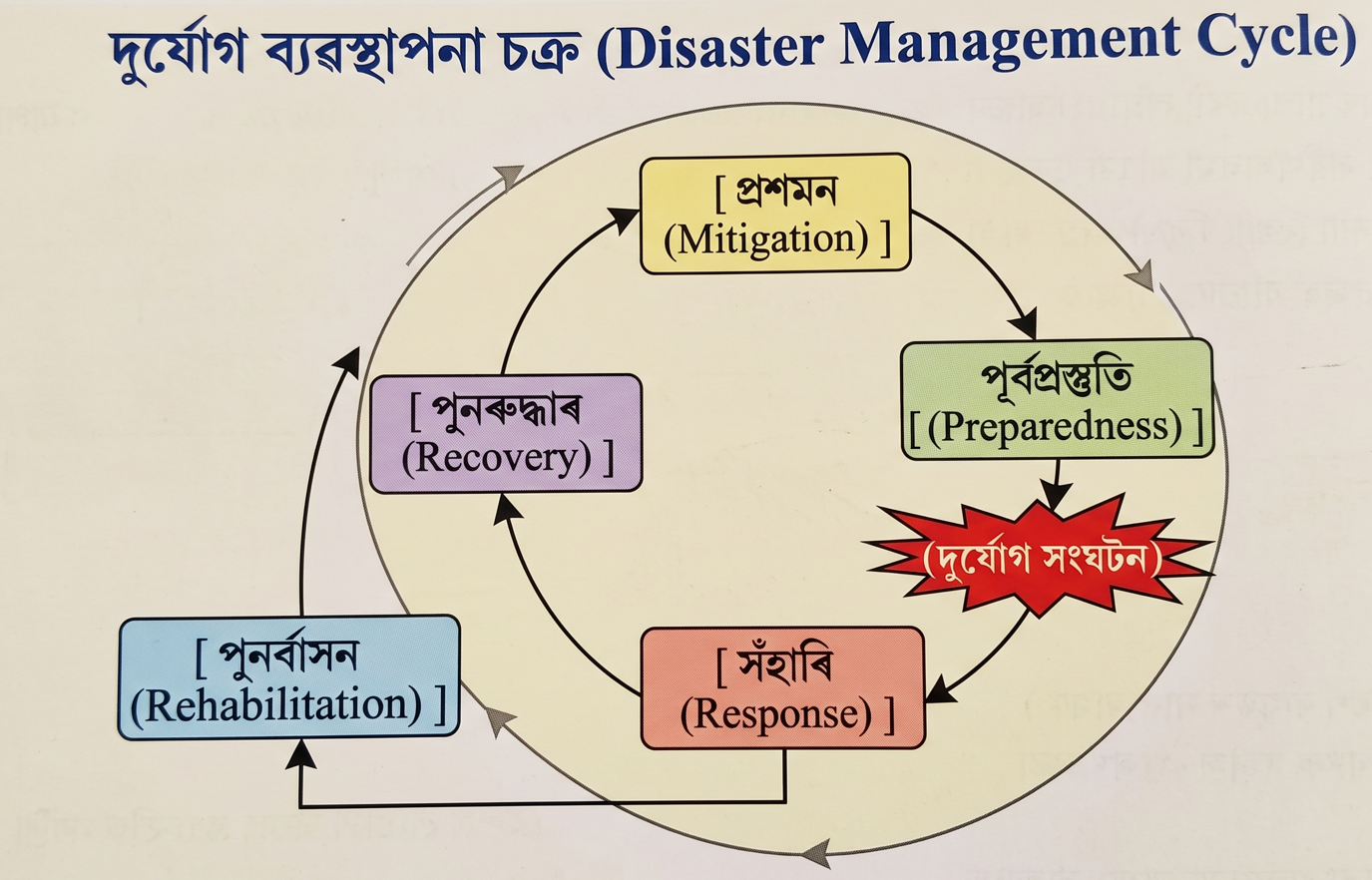
বিপৰ্যয়ৰ পূৰ্ববৰ্তী পৰ্যায় (Pre-Disaster Phase):
প্ৰশমন (Mitigation): দুৰ্যোগৰ সম্ভাৱ্য ক্ষতি দীৰ্ঘম্যাদীভাৱে হ্ৰাস কৰাৰ ব্যৱস্থা, যেনে— মজবুত আন্তঃগাঁথনি আৰু ভূমি ব্যৱহাৰ পৰিকল্পনা।
পূৰ্বপ্ৰস্তুতি (Preparedness): সতৰ্কবাণী ব্যৱস্থা, জৰুৰীকালীন অনুশীলন (Mock Drills), আৰু খাদ্য-চিকিৎসা সামগ্ৰী মজুত ৰখা।
বিপৰ্যয়কালীন পৰ্যায় (During Disaster Phase):
সঁহাৰি আৰু উদ্ধাৰ (Response & Relief): ক্ষিপ্ৰ উদ্ধাৰ অভিযান, প্ৰাথমিক চিকিৎসা, আশ্ৰয় প্ৰদান আৰু খাদ্য বিতৰণ।
বিপৰ্যয়ৰ পৰৱৰ্তী পৰ্যায় (Post-Disaster Phase):
পুনৰুদ্ধাৰ আৰু পুনৰ্বাসন (Recovery & Rehabilitation): বিদ্যুৎ, পানী আদি অপৰিহাৰ্য সেৱা পুনৰুদ্ধাৰ আৰু ক্ষতিগ্ৰস্ত লোকক পুনৰ্বাসন দিয়া।
পুনৰ্নিৰ্মাণ (Reconstruction): 'Build Back Better' নীতিৰে অধিক সুৰক্ষিত আন্তঃগাঁথনি নিৰ্মাণ কৰা।
২. মানৱসৃষ্ট বিপৰ্যয়ৰ কাৰণ আৰু প্ৰভাৱসমূহ আলোচনা কৰা। [GU 2025]
উত্তৰ: মানুহৰ অপৰিকল্পিত কাৰ্যকলাপ, প্ৰযুক্তিগত ব্যৰ্থতা আৰু গাফিলতিৰ ফলত সৃষ্টি হোৱা দুৰ্যোগসমূহেই হৈছে মানৱসৃষ্ট বিপৰ্যয়।
প্ৰধান কাৰণসমূহ:
ঔদ্যোগিক আৰু প্ৰযুক্তিগত গাফিলতি: কল-কাৰখানাৰ বিষাক্ত গেছ নিৰ্গমন বা ৰাসায়নিক দুৰ্ঘটনা (যেনে: ভূপাল গেছ কাণ্ড)।
অপৰিকল্পিত নগৰীকৰণ আৰু নিৰ্মাণ: উপযুক্ত পৰিকল্পনাহীনভাৱে পাহাৰ কাটি আৱাস নিৰ্মাণ কৰাৰ ফলত কৃটিম ভূমিস্খলন আৰু কৃত্ৰিম বানপানী সৃষ্টি হোৱা।
পৰিৱেশ ধ্বংসমুখী কাৰ্য: ব্যাপক নিৰ্বননীকৰণ, নদীবান্ধৰ ত্ৰুটিপূৰ্ণ পৰিচালনা আৰু খনন কাৰ্য।
অসাৱধানতা আৰু সংঘাত: বনজুই, পথ বা ৰে'ল দুৰ্ঘটনা, আৰু যুদ্ধ বা সন্ত্ৰাসবাদী আক্ৰমণ।
বিৰূপ প্ৰভাৱসমূহ:
প্ৰাণহানি আৰু স্বাস্থ্যহানি: তাৎক্ষণিক মৃত্যুৰ উপৰিও দীৰ্ঘম্যাদীভাৱে বিকলাংগতা আৰু ৰোগৰ সংক্ৰমণ ঘটে।
অৰ্থনৈতিক লোকচান: কোটি কোটি টকাৰ সা-সম্পত্তি আৰু আন্তঃগাঁথনি ধ্বংস হয়।
পৰিৱেশৰ অৱক্ষয়: বায়ু, পানী আৰু মাটি গুৰুতৰভাৱে প্ৰদূষিত হৈ জৈৱ বৈচিত্ৰ্যৰ বিস্তৰ ক্ষতি সাধন কৰে।
৩. বিপৰ্যয় ব্যৱস্থাপনাত স্থানীয় সম্প্ৰদায়ৰ (Community) ভূমিকা আৰু দায়িত্বসমূহ কি কি? [GU 2025]
উত্তৰ: যিকোনো দুৰ্যোগৰ সময়ত প্ৰথম সঁহাৰিদাতা (First Responder) হিচাপে স্থানীয় সম্প্ৰদায়ৰ ভূমিকা সৰ্বাধিক গুৰুত্বপূৰ্ণ।
প্ৰধান ভূমিকা আৰু দায়িত্বসমূহ:
প্ৰথম সঁহাৰি আৰু উদ্ধাৰ: চৰকাৰী সাহায্য পোৱাৰ পূৰ্বেই স্থানীয় যুৱক-যুৱতী আৰু ৰাইজে আবদ্ধ লোকক উদ্ধাৰ আৰু প্ৰাথমিক চিকিৎসা প্ৰদান কৰিব পাৰে।
থলুৱা জ্ঞানৰ প্ৰয়োগ: স্থানীয় ভৌগোলিক অৱস্থা আৰু পৰম্পৰাগত জ্ঞান প্ৰয়োগ কৰি দুৰ্যোগৰ সতৰ্কবাণী সমাজৰ সকলোৰে মাজত প্ৰচাৰ কৰা।
আশ্ৰয় আৰু খাদ্য ব্যৱস্থাপনা: স্থানীয় বিদ্যালয় বা সামাজিক ভৱনসমূহত গৃহহীন লোকসকলক আশ্ৰয় দিয়া আৰু সামূহিক ৰান্ধনশালা পৰিচালনা কৰা।
দুৰ্বল শ্ৰেণীক সুৰক্ষা: সমাজৰ বৃদ্ধ, শিশু, গৰ্ভৱতী মহিলা আৰু বিশেষভাৱে সক্ষম ব্যক্তিসকলক বিশেষ নিৰাপত্তা প্ৰদান কৰা।
সম্প্ৰদায়ভিত্তিক পৰিকল্পনা (CBDM): গাঁও বা ৱাৰ্ড পৰ্যায়ত দুৰ্যোগ প্ৰশমন দল গঠন কৰি জৰুৰীকালীন পৰিকল্পনা প্ৰস্তুত আৰু অনুশীলন কৰা।
৪. ভাৰতৰ দুৰ্যোগ পাৰ্শ্বচিত্ৰৰ (Hazard Profile of India) ওপৰত এটা চমু টোকা লিখা। [GU 2025]
উত্তৰ: অনন্য ভৌগোলিক অৱস্থান, জলবায়ুৰ ভিন্নতা আৰু উচ্চ জনসংখ্যাৰ ঘনত্বৰ বাবে ভাৰতবৰ্ষ বিশ্বৰ অন্যতম দুৰ্যোগপ্ৰৱণ দেশ।
প্ৰধান দুৰ্যোগসমূহৰ পাৰ্শ্বচিত্ৰ:
ভূমিকম্প: ভাৰতৰ প্ৰায় ৫৯% ভূ-খণ্ড মধ্যমৰ পৰা অতি উচ্চ প্ৰাবল্যৰ ভূমিকম্প বিপদাশঙ্কাযুক্ত অঞ্চলত (বিশেষকৈ হিমালয় আৰু উত্তৰ-পূৰ্বাঞ্চল— Zone V আৰু IV) অৱস্থিত।
বানপানী: দেশৰ প্ৰায় ১২% (প্ৰায় ৪ কোটি হেক্টৰ) ভূমি বানপ্ৰৱণ। বিশেষকৈ ব্ৰহ্মপুত্ৰ, গংগা আৰু মহানদী অৱবাহিকাত প্ৰতিবছৰে প্ৰলয়ংকাৰী বান হয়।
ঘূৰ্ণীবতাহ: ভাৰতৰ প্ৰায় ৭৫১৬ কিমি উপকূলীয় অঞ্চলৰ ভিতৰত প্ৰায় ৫,৭০০ কিমি অঞ্চল ঘূৰ্ণীবতাহ আৰু চুনামীৰ প্ৰতি সংবেদনশীল (বিশেষকৈ ওড়িশা, অন্ধ্ৰপ্ৰদেশ, পশ্চিমবংগ আৰু তামিলনাডু)।
খৰাং: দেশৰ প্ৰায় ৬৮% কৃষিমুখী ভূমি বিভিন্ন মাত্ৰাৰ খৰাঙৰ সন্মুখীন হয়।
ভূমিস্খলন: হিমালয় অঞ্চল আৰু পশ্চিমঘাট পৰ্বতমালাৰ প্ৰায় ১৫% অংশ ভূমিস্খলন প্ৰৱণ।
৫. ভূমিকম্প প্ৰৱণ অঞ্চলৰ বাবে অগাঁথনিমূলক প্ৰশমনৰ (Non-structural mitigation) ব্যৱস্থাসমূহ আলোচনা কৰা। [GU 2025]
উত্তৰ: অগাঁথনিমূলক প্ৰশমন ব্যৱস্থাই কোনো ডাঙৰ ভৌতিক নিৰ্মাণ নকৰাকৈ নীতি, শিক্ষা আৰু পৰিকল্পনাৰ দ্বাৰা ভূমিকম্পৰ ক্ষতি ৰোধ কৰাত সহায় কৰে।
প্ৰধান ব্যৱস্থাসমূহ:
ভূমি ব্যৱহাৰ নিয়ন্ত্ৰণ আৰু মণ্ডল বিভাজন (Zoning Regulations): ভূমিকম্পীয় ফল্ট লাইন বা অতি সংবেদনশীল মাটিৰ ওপৰত ওখ অট্টালিকা নিৰ্মাণ নিষিদ্ধ কৰা।
গৃহ নিৰ্মাণ বিধি প্ৰণয়ন (Building Codes): ৰাষ্ট্ৰীয় গৃহ নিৰ্মাণ বিধি (National Building Code) কঠোৰভাৱে প্ৰয়োগ কৰি সকলো নতুন নিৰ্মাণ ভূমিকম্প প্ৰতিৰোধী কৰা।
জনসজাগতা আৰু শিক্ষা: বিদ্যালয়, মহাবিদ্যালয় আৰু কাৰ্যালয়সমূহত 'Drop, Cover, Hold On' আদি পদ্ধতিৰ জৰুৰীকালীন অনুশীলন (Mock Drills) কৰোৱা।
আৱাসিক সুৰক্ষা ব্যৱস্থা: ঘৰৰ ভিতৰত ওখ আলমাৰী, গধুৰ বস্তু আৰু বৈদ্যুতিক সঁজুলিসমূহ বেৰৰ লগত টানকৈ সংলগ্ন কৰি ৰখা।
বীমা ব্যৱস্থা: ভূমিকম্পৰ সম্ভাৱ্য লোকচানৰ ক্ষতিপূৰণৰ বাবে সম্পত্তিৰ দুৰ্যোগ বীমা কৰিবলৈ জনসাধাৰণক উৎসাহিত কৰা।
৬. মথাউৰি আৰু ভূমি ব্যৱহাৰৰ পৰিৱৰ্তনে কেনেদৰে বিপৰ্যয়ৰ সৃষ্টিত অৰিহণা যোগায়, বিশ্লেষণ কৰা। [GU 2025]
উত্তৰ: মানুহৰ অপৰিকল্পিত আন্তঃগাঁথনি আৰু প্ৰকৃতিৰ ওপৰত কৰা অত্যাচাৰে দুৰ্যোগৰ মাত্ৰা বহুগুণে বৃদ্ধি কৰে।
মথাউৰিৰ বিৰূপ প্ৰভাৱ: বান নিয়ন্ত্ৰণৰ বাবে মথাউৰি সজা হয় যদিও বিজ্ঞানসন্মত নহ'লে ই বিপৰ্যয়ৰ সৃষ্টি কৰে। নদীৰ পলস পৰি নদীৰ তলি ওপঙি আহে, ফলত পানী ধাৰণ ক্ষমতা কমে। মথাউৰি ভাঙি গ'লে হঠাতে হোৱা পানীৰ প্ৰকোপে (Breach Flood) সাধাৰণ বানপানীতকৈ বহু বেছি বিধ্বংসী ৰূপ লয়।
ভূমি ব্যৱহাৰৰ পৰিৱৰ্তন (Land-use changes):
জলাশয় আৰু পিতনি ভৰাট: চহৰাঞ্চলত পানী জমা হোৱা প্ৰাকৃতিক জলাশয়বোৰ ভৰাট কৰি ঘৰ-দুৱাৰ সজাৰ ফলত গুৱাহাটীৰ দৰে চহৰত কৃত্ৰিম বানপানী সৃষ্টি হয়।
নিৰ্বননীকৰণ আৰু পাহাৰ খনন: পাহাৰ কাটি আৱাস নিৰ্মাণ কৰাৰ ফলত মাটিৰ স্থিৰতা নষ্ট হয় আৰু সামান্য বৰষুণতেই প্ৰলয়ংকাৰী ভূমিস্খলন সংঘটিত হয়।
৭. বিপদাশঙ্কা (Risk), দুৰ্বলতা/বিপন্নতা (Vulnerability) আৰু স্থিতিস্থাপকতাৰ (Resilience) মাজৰ আন্তঃসম্পৰ্ক ব্যাখ্যা কৰা।
উত্তৰ: দুৰ্যোগ ব্যৱস্থাপনাত বিপদ, দুৰ্বলতা আৰু স্থিতিস্থাপকতা এটা আনটোৰ সৈতে ওতপ্ৰোতভাৱে জড়িত। ইয়াক তলৰ সমীকৰণটোৰে প্ৰকাশ কৰিব পাৰি:

সংকট (Hazard): ই হৈছে এক সম্ভাব্য ধ্বংসাত্মক ভৌতিক পৰিঘটনা (যেনে: ভূমিকম্প)। কিন্তু সংকট থাকিলে বিপৰ্যয় নঘটিবও পাৰে যদিহে অঞ্চলটো মানৱহীন হয়।
বিপন্নতা (Vulnerability): ই হৈছে সংকটৰ সন্মুখত সমাজখনৰ প্ৰতিৰোধহীনতা। দৰিদ্ৰতা, কেঁচা ঘৰ বা সজাগতাৰ অভাৱে বিপন্নতা বৃদ্ধি কৰে।
স্থিতিস্থাপকতা (Resilience): ই হ'ল দুৰ্যোগ প্ৰতিহত কৰাৰ আৰু ক্ষতিৰ পিছত পুনৰ স্বাভাৱিক অৱস্থালৈ ঘূৰি অহাৰ সামৰ্থ্য।
আন্তঃসম্পৰ্ক: যদি কোনো অঞ্চলত সংকট আৰু বিপন্নতা বৃদ্ধি পায়, তেন্তে সামগ্ৰিক বিপদাশঙ্কা বাঢ়ি যায়। বিপৰীতে, যদি সম্প্ৰদায়ৰ স্থিতিস্থাপকতা (প্ৰস্তুতি, শিক্ষা আৰু সুৰক্ষিত আন্তঃগাঁথনি) বৃদ্ধি কৰা হয়, তেন্তে দুৰ্যোগৰ আশংকা বহু পৰিমাণে হ্ৰাস পায়।
৮. প্ৰাকৃতিক আৰু মানৱসৃষ্ট দুৰ্যোগৰ মাজৰ পাৰ্থক্যসমূহ উদাহৰণসহ লিখা।
উত্তৰ: প্ৰাকৃতিক আৰু মানৱসৃষ্ট দুৰ্যোগৰ মূল পাৰ্থক্যসমূহ তলত উল্লেখ কৰা হ'ল:
| তুলনামূলক দিশ | প্ৰাকৃতিক দুৰ্যোগ (Natural Disaster) | মানৱসৃষ্ট দুৰ্যোগ (Man-made Disaster) |
| উৎপত্তিৰ উৎস | প্ৰাকৃতিক ভৌতিক, বায়ুমণ্ডলীয় বা ভূতাত্ত্বিক কাৰণত উদ্ভৱ হয়। | মানুহৰ গাফিলতি, ত্ৰুটিপূৰ্ণ প্ৰযুক্তি বা ধ্বংসাত্মক কাৰ্যৰ ফলত ঘটে। |
| নিয়ন্ত্ৰণ | মানুহে ইয়াক প্ৰত্যক্ষভাৱে ৰোধ বা নিয়ন্ত্ৰণ কৰিব নোৱাৰে। | সজাগতা আৰু উচিত পৰিকল্পনাৰে ইয়াক সম্পূৰ্ণৰূপে প্ৰতিৰোধ কৰিব পাৰি। |
| পূৰ্বানুমান | আধুনিক প্ৰযুক্তিৰে কিছুমানৰ (যেনে: ঘূৰ্ণীবতাহ) পূৰ্বানুমান সম্ভৱ। | বহুক্ষেত্ৰত কোনো পূৰ্ব সতৰ্কবাণী নোহোৱাকৈ আকস্মিকভাৱে ঘটে। |
| উদাহৰণ | ভূমিকম্প, চুনামী, বানপানী, আগ্নেয়গিৰি উদগীৰণ। | ৰাসায়নিক গেছ নিৰ্গমন, আণৱিক দুৰ্ঘটনা, বনজুই, যুদ্ধ। |
৯. দুৰ্বলতাৰ ওপৰত অৰ্থনৈতিক আৰু সামাজিক প্ৰেক্ষাপটৰ প্ৰভাৱ আলোচনা কৰা।
উত্তৰ: দুৰ্যোগে সমাজৰ সকলো শ্ৰেণীৰ মানুহক সমানে প্ৰভাৱিত নকৰে; ইয়াৰ মাত্ৰা আৰ্থ-সামাজিক অৱস্থাৰ ওপৰত নিৰ্ভৰ কৰে।
অৰ্থনৈতিক প্ৰেক্ষাপট (Economic Context):
দৰিদ্ৰ লোকসকলে সাধাৰণতে বিপদসংকুল নদীৰ পাৰ বা পাহাৰৰ ঢালত অস্থায়ী ঘৰ সাজি বাস কৰে।
দুৰ্যোগ প্ৰতিৰোধী মজবুত ঘৰ নিৰ্মাণ কৰিবলৈ তেওঁলোকৰ আৰ্থিক সামৰ্থ্য নাথাকে।
দুৰ্যোগৰ পিছত পুনৰ জীৱিকা আৰম্ভ কৰিবলৈ তেওঁলোকৰ হাতত সঞ্চিত পুঁজি বা বীমাৰ সুৰক্ষা নাথাকে।
সামাজিক প্ৰেক্ষাপট (Social Context):
লিংগভিত্তিক বৈষম্য: মহিলাসকলে সামাজিক বাধা আৰু পৰিয়ালৰ দায়িত্বৰ বাবে দুৰ্যোগৰ সময়ত সহজে স্থানান্তৰ হ'ব নোৱাৰে।
বয়স আৰু অক্ষমতা: শিশু, বৃদ্ধ আৰু বিশেষভাৱে সক্ষম ব্যক্তিসকল আনৰ ওপৰত নিৰ্ভৰশীল হোৱাৰ বাবে দুৰ্যোগকালীন মুহূৰ্তত অধিক ক্ষতিৰ সন্মুখীন হয়।
শ্ৰেণী আৰু শিক্ষা: নিৰক্ষৰতা আৰু তথ্যৰ অভাৱৰ বাবে পিছপৰা শ্ৰেণীয়ে সতৰ্কবাণী সঠিকভাৱে বুজি নাপায়।
১০. ব্ৰহ্মপুত্ৰ উপত্যকাৰ বান নিয়ন্ত্ৰণৰ বাবে অগাঁথনিমূলক ব্যৱস্থাসমূহ (Non-structural measures) উল্লেখ কৰা।
উত্তৰ: ব্ৰহ্মপুত্ৰ উপত্যকাত কেৱল মথাউৰি সাজি বান নিয়ন্ত্ৰণ কৰা সম্ভৱ নহয়; ইয়াৰ বাবে তলত দিয়া অগাঁথনিমূলক ব্যৱস্থাসমূহ অত্যন্ত জৰুৰী:
বানপানী প্লাৱনভূমি মণ্ডল বিভাজন (Flood Plain Zoning): নদীৰ কাষৰ অতি বানপ্ৰৱণ অঞ্চলসমূহত স্থায়ী আৱাস নিৰ্মাণ নিষিদ্ধ কৰি কৃষি আৰু সেউজ বলয় হিচাপে সংৰক্ষণ কৰা।
আধুনিক আগতীয়া সতৰ্কবাণী প্ৰণালী (Early Warning System): উপগ্ৰহ চিত্ৰ আৰু হাইড্ৰ'লজিকেল ডাটা ব্যৱহাৰ কৰি নৈপৰীয়া ৰাইজক বানপানীৰ আগতীয়া খবৰ প্ৰেৰণ কৰা।
অৱবাহিকাভিত্তিক বনাঞ্চল সংৰক্ষণ: ব্ৰহ্মপুত্ৰ আৰু ইয়াৰ উপনৈসমূহৰ উচ্চ অংশত ব্যাপক গছপুলি ৰোপণ কৰি মাটিৰ খহনীয়া আৰু নদীৰ তলিত পলস জমা হোৱা ৰোধ কৰা।
প্ৰাকৃতিক জলাশয় আৰু বিল সংৰক্ষণ: উপত্যকাটোৰ প্ৰাকৃতিক জলাশয়সমূহ সংস্কাৰ কৰি অতিৰিক্ত পানী ধৰি ৰখাৰ ব্যৱস্থা কৰা।
সম্প্ৰদায় সজাগতা আৰু প্ৰশিক্ষণ: স্থানীয় ৰাইজক বানপানীৰ সময়ত সুৰক্ষিত আশ্ৰয়স্থললৈ যোৱা আৰু উদ্ধাৰ কৌশলৰ প্ৰশিক্ষণ প্ৰদান কৰা।
Very Short Answer Type :
1. Which of the following is a hydro-meteorological disaster? [GU 2025]
Answer: Cyclone.
2. In which year was the National Disaster Management Authority (NDMA) of India established? [GU 2025]
Answer: 2005.
3. What does the term 'resilience' refer to in disaster management? [GU 2025]
Answer: The ability to recover from the impacts of a hazard or disaster.
4. Which river causes frequent floods in Assam? [GU 2025]
Answer: The Brahmaputra River.
5. On which scale is earthquake intensity or magnitude measured? [GU 2025]
Answer: Richter scale (for magnitude) or Modified Mercalli scale (for intensity).
6. When does a hazard turn into a disaster? [GU 2025]
Answer: When it causes significant damage, loss of human life, and destruction of property and environment.
7. What does Community-Based Disaster Management (CBDM) primarily emphasize? [GU 2025]
Answer: Active participation of local people and communities.
8. Mention one structural mitigation measure for earthquakes. [GU 2025]
Answer: Retrofitting existing buildings to make them earthquake-resistant.
9. Disaster vulnerability arising from age or physical disability reflects which context? [GU 2025]
Answer: Social context.
10. Land-use planning is categorized under which type of disaster risk reduction measure? [GU 2025]
Answer: Non-structural measure.
11. What is the etymological origin of the word 'Disaster'?
Answer: It originates from the French word Désastre, combining Des (bad/evil) and Astre (star).
12. Give an example of a geophysical hazard.
Answer: Volcanic eruption (or earthquake/tsunami).
13. State one example of a man-made (anthropogenic) or technological disaster.
Answer: Toxic chemical gas leak (e.g., the 1984 Bhopal Gas Tragedy).
14. What is the full form of SDMA?
Answer: State Disaster Management Authority.
15. Express disaster risk through its conceptual mathematical formula.
Answer: $\text{Risk} = \text{Hazard} \times \text{Vulnerability}$.
2-Mark Questions (Short Answer Type — ~50 Words)
1. Define hazard and give one example. [GU 2025]
Answer: A hazard is a dangerous physical event, phenomenon, or human activity that has the potential to cause loss of life, injury, property damage, socio-economic disruption, or environmental degradation. Examples include tropical cyclones over oceans and landslides on unstable hill slopes.
2. Mention two structural measures for flood management. [GU 2025]
Answer: Two key structural measures are:
Constructing and raising earthen embankments and levees along riverbanks to prevent water overflow.
Building multi-purpose storage reservoirs, retention basins, and dedicated drainage bypass channels to regulate surplus flood runoff.
3. State the role of indigenous knowledge in disaster management. [GU 2025]
Answer: Indigenous knowledge provides crucial community-level insights, including interpreting localized environmental cues (such as abnormal animal behavior or cloud patterns) for early warning. It also incorporates traditional building techniques—like the Chang Ghar (stilted housing) in Assam—that adapt naturally to recurring local hazards.
4. State two causes of vulnerability. [GU 2025]
Answer: Two major causes include:
Poverty and Economic Deprivation: Restricts access to safe land, secure housing materials, and post-disaster resources.
Unplanned Urbanization: Drives dense population settlements into high-risk zones, such as floodplains and steep landslide-prone slopes.
5. Write two features of the National Disaster Management Plan (NDMP). [GU 2025]
Answer: Two key features of India's NDMP are:
It is aligned with the four priority areas of the global Sendai Framework for Disaster Risk Reduction.
It outlines horizontal and vertical integration by assigning explicit roles across all stages—preparedness, response, relief, and recovery—to various administrative ministries.
6. What is meant by Disaster Management?
Answer: Disaster management is a continuous, integrated process of planning, organizing, coordinating, and implementing measures necessary for preventing hazards, mitigating risks, ensuring institutional preparedness, executing rapid search and rescue, and facilitating comprehensive post-disaster recovery and reconstruction.
7. What is a geophysical hazard?
Answer: Geophysical hazards are extreme natural events originating from solid Earth processes and internal tectonic dynamics. Examples include earthquakes, volcanic eruptions, tectonic tsunamis, and deep-seated geological mass movements.
8. Define a hydro-meteorological disaster.
Answer: Hydro-meteorological disasters are severe atmospheric, hydrological, or oceanographic phenomena that cause immense devastation. Common examples include riverine floods, tropical cyclones, droughts, cloudbursts, and heatwaves.
9. What is meant by Disaster Risk?
Answer: Disaster risk refers to the potential losses—measured in terms of fatalities, injuries, damaged assets, and disrupted livelihoods—that could occur to a specific community or system over a defined future time period, determined as a function of hazard, vulnerability, and exposure.
10. What is the social context of disaster vulnerability?
Answer: The social context reflects how socio-demographic factors—such as age, gender, caste, class, literacy, and physical ability—create unequal coping capacities, rendering marginalized groups (e.g., women, children, the elderly, and disabled individuals) disproportionately susceptible to hazard impacts.
11. How does the economic context influence vulnerability?
Answer: Low-income populations often inhabit hazard-exposed land due to land market constraints. Lacking diversified livelihoods, disaster-resistant infrastructure, and financial safety nets like insurance, they suffer severe asset destruction and face prolonged recovery cycles.
12. How does the political context aggravate disaster vulnerability?
Answer: Weak institutional governance, absence of strict zoning enforcement, corrupt land allocation, and unequal resource distribution impair early warning networks and emergency relief, undermining a region's overall structural preparedness.
13. Define environmental vulnerability.
Answer: Environmental vulnerability is the susceptibility of a community resulting from the degradation of surrounding ecosystems. Deforestation, wetland reclamation, and riverbed siltation severely reduce nature's buffering capacity, amplifying the destructive scale of natural hazards.
14. What are the primary causes of man-made disasters?
Answer: Man-made disasters stem from human negligence, technological malfunctions, industrial failure, unregulated urban construction, deforestation, toxic waste dumping, and anthropogenic conflicts such as chemical contamination, mine collapses, and major urban infernos.
15. What are non-structural mitigation measures?
Answer: Non-structural measures involve non-physical interventions—such as regulatory policies, land-use zoning, building code enforcement, public awareness programs, mock drills, and early warning dissemination—to minimize disaster risks without relying on major civil engineering structures.
5-Mark Questions (Descriptive— ~200 Words) :
1. Explain the phases of the disaster management cycle with a suitable diagram. [GU 2025]
Answer: The disaster management cycle is a cyclical, phased framework illustrating the continuous operational measures taken before, during, and after a disaster event.
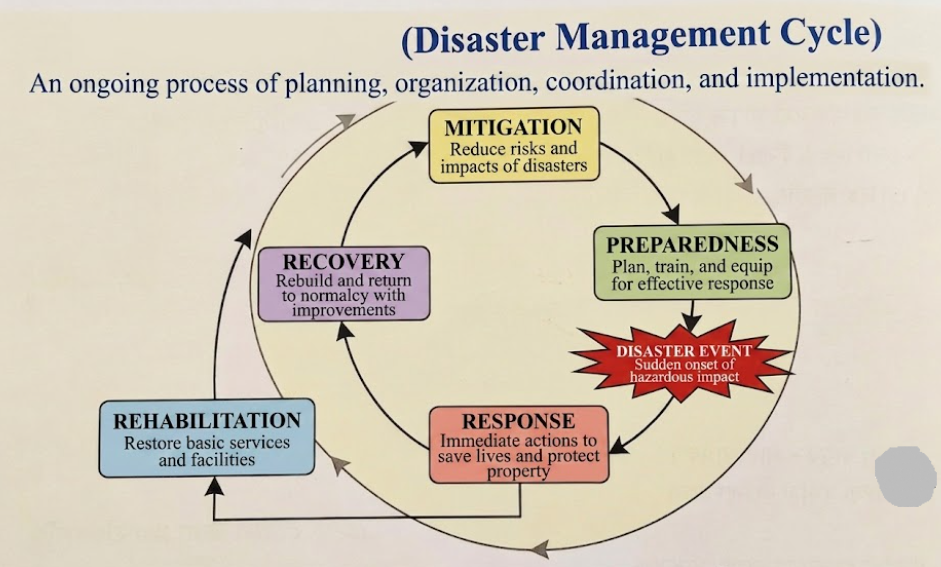
Pre-Disaster Phase:
Mitigation: Long-term sustained actions aimed at eliminating or reducing hazard risks (e.g., hazard mapping, land-use zoning, and enforcing building bylaws).
Preparedness: Pre-impact contingency planning, stocking essential supplies, running early warning systems, and executing regular community mock drills.
During Disaster Phase:
Response & Relief: Immediate deployment of search-and-rescue teams, emergency evacuation, triaged medical attention, and the provision of temporary shelter, water, and food rations.
Post-Disaster Phase:
Recovery & Rehabilitation: Restoring basic lifelines (electricity, road transport, safe water), providing psychosocial support, and reviving local livelihoods.
Reconstruction: Rebuilding damaged infrastructure anchored in the 'Build Back Better' principle to minimize future systemic risk.
2. Describe the causes and impacts of man-made disasters. [GU 2025]
Answer: Man-made disasters arise from technological failures, human negligence, industrial hazards, and unchecked environmental exploitation.
Key Causes:
Industrial & Chemical Accidents: Inadequate plant safety mechanisms, toxic material leaks, and refinery fires (e.g., Bhopal Gas Tragedy).
Ecological Degradation: Unregulated slope excavation for road construction and urban expansion leading to anthropogenic landslides.
Infrastructure Negligence: Poor dam water release protocols triggering sudden downstream flooding, electrical short circuits, and structural collapses.
Anthropogenic Forest Fires & Pollution: Slash-and-burn practices and industrial effluence discharging into regional ecosystems.
Major Impacts:
Human Casualties & Morbidity: High immediate death tolls accompanied by chronic, inter-generational health complications from toxic exposure.
Economic Paralysis: Severe destruction of high-capital industrial assets, public lifelines, and disruption of commerce.
Ecosystem Toxicity: Persistent contamination of soil, aquifers, and air sheds, leading to severe biodiversity loss and ecological degradation.
3. What are the roles and responsibilities of communities in disaster management? [GU 2025]
Answer: Because communities are the immediate first responders during any hazard event, community participation is central to reducing response times and saving lives.
Primary Roles and Responsibilities:
Immediate Search and Rescue: Utilizing local knowledge of terrain and neighborhood layouts to extricate trapped individuals before specialized state rescue forces arrive.
Early Warning Dissemination: Relaying official warnings to vulnerable households using local networks, village public address systems, and indigenous environmental observations.
Shelter and Relief Management: Setting up community kitchens, managing village school shelters, and distributing dry rations and clean water.
Protecting Vulnerable Segments: Prioritizing the evacuation and welfare of pregnant women, infants, the elderly, and persons with disabilities.
Grassroots Planning (CBDM): Organizing Village Disaster Management Committees (VDMCs), drafting local vulnerability maps, and conducting periodic evacuation drills.
4. Write a short note on the hazard profile of India. [GU 2025]
Answer: Due to its unique geo-climatic settings and high population density, India exhibits high vulnerability to multiple natural hazards:
Earthquake Hazards: Approximately 59% of India's total landmass is susceptible to moderate to severe seismic shaking, with the Himalayan belt and Northeast India designated as high-risk Seismic Zones V and IV.
Flood Hazards: Over 40 million hectares (around 12% of total geographical area) are chronically flood-prone, predominantly along the Brahmaputra, Ganga, and Mahanadi river basins.
Tropical Cyclones & Tsunamis: Out of a 7,516 km coastline, nearly 5,700 km is exposed to severe cyclonic storms and storm surges originating in the Bay of Bengal and the Arabian Sea.
Drought Hazards: Nearly 68% of cultivable land is vulnerable to drought of varying intensities across arid and semi-arid regions.
Landslides & Avalanches: About 15% of the land area, primarily across the Himalayas and Western Ghats, is prone to severe slope failures.
5. What are the non-structural mitigation measures for earthquake-prone areas? [GU 2025]
Answer: Non-structural mitigation reduces seismic risk through regulatory mechanisms, administrative planning, and behavioral adaptations rather than heavy engineering construction:
Micro-Zonation and Land-Use Regulations: Mapping local soil dynamics and fault lines to restrict high-density or high-rise constructions over liquefaction-prone or active seismic zones.
Enforcement of Building Codes: Legally integrating Bureau of Indian Standards (BIS) seismic codes into municipal building bylaws.
Public Education & Mock Drills: Conducting routine drills in educational institutions, workplaces, and hospitals emphasizing safety protocols like 'Drop, Cover, and Hold On'.
Securing Non-Structural Elements: Fastening heavy furniture, water heaters, overhead fixtures, and chemical storage securely to walls to prevent crushing injuries.
Financial Risk Transfer: Promoting catastrophe insurance and micro-insurance programs to support rapid economic recovery following structural damages.
6. Analyze how embankments and land-use changes contribute to disasters. [GU 2025]
Answer: Unplanned physical engineering and anthropogenically altered landscapes frequently exacerbate hazard intensity:
Adverse Role of Embankments:
While built for localized flood protection, continuous embankments trap riverbed silt, causing aggradation that elevates the riverbed above adjacent plains.
When high flood discharges breach these structures, the resulting embankment breach floods unleash catastrophic, high-velocity inundation that is far more destructive than gradual natural flooding.
Embankments also impede natural drainage from local tributaries and countryside catchments, causing prolonged waterlogging.
Land-Use Changes:
Reclamation of Wetlands: Encroaching upon natural wetlands, detention basins, and natural channels for urban development impedes surface runoff, causing severe urban flash floods (e.g., Guwahati, Chennai).
Deforestation & Hill-Cutting: Stripping vegetative cover and quarrying hill slopes destabilizes topsoil cohesion, triggering accelerated erosion, debris flows, and devastating landslides during heavy monsoons.
7. Elaborate on the interrelationship among Risk, Vulnerability, and Resilience. [GU 2025]
Answer: In disaster management studies, risk, vulnerability, and resilience form an interconnected triadic relationship expressed conceptually as:
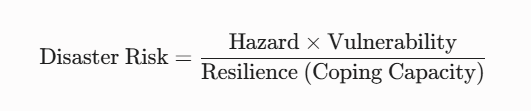
Hazard: Represents a threatening physical event (such as a severe earthquake or tropical cyclone). Without exposed vulnerable elements, a hazard does not generate risk.
Vulnerability: Refers to the internal weaknesses and susceptibility of a exposed community or asset to damage, determined by physical, economic, and social deficits.
Resilience: Denotes the adaptive capacity, structural robustness, and speed with which a system absorbs a shock and recovers to normal functionality.
Interrelationship:
Disaster Risk escalates directly with higher hazard intensity and increased socio-economic vulnerability. Conversely, strengthening community resilience—through robust building techniques, diversified livelihoods, and effective early warning systems—offsets high vulnerability and substantially lowers total disaster risk.
8. Distinguish between Natural Disasters and Man-made Disasters with suitable examples.
Answer: The key distinctions between natural and man-made disasters are summarized below:
| Parameter | Natural Disasters | Man-made Disasters |
| Origin | Triggered by natural geophysical, atmospheric, or hydrological dynamics. | Caused by human error, industrial accidents, structural negligence, or socio-political conflict. |
| Control & Prevention | The physical event cannot be directly prevented; only its impact can be mitigated. | Can be largely prevented through strict regulation, safety protocols, and proper land-use planning. |
| Predictability | Many meteorological events (e.g., cyclones) allow predictive early tracking. | Often occur suddenly without antecedent environmental signals (e.g., gas leaks, nuclear accidents). |
| Examples | Earthquakes, tsunamis, riverine floods, volcanic eruptions. | Toxic gas leaks, oil spills, dam failures, industrial explosions, urban fires. |
9. Discuss the influence of Economic and Social contexts on disaster vulnerability. [GU 2025]
Answer: Disaster impacts are mediated by the socio-economic framework of the affected human population:
Economic Context:
Low-income households often live in substandard housing on marginalized, high-hazard lands (such as steep slopes and river sandbars).
They lack disposable capital to invest in resilient structural retrofitting or risk transfer instruments like disaster insurance.
Disasters often destroy their primary productive assets (livestock, informal tools), resulting in prolonged debt cycles.
Social Context:
Gender Disparity: Women frequently experience higher casualty rates and slower recovery due to socio-cultural mobility constraints, caregiving burdens, and unequal access to relief resources.
Age & Physical Ability: Young children, the elderly, and disabled individuals face severe evacuation difficulties and require targeted physical assistance during emergencies.
Social Marginalization: Marginalized castes and illiterate populations often face systemic barriers in accessing official emergency information, relief camps, and long-term compensation schemes.
10. Describe non-structural measures for flood risk reduction in the Brahmaputra Valley. [GU 2025]
Answer: Given the complex hydro-geomorphic regime and heavy silt loads of the Brahmaputra River, non-structural measures are essential components of sustainable flood management:
Floodplain Zoning: Delineating high-, medium-, and low-frequency flood zones along the Brahmaputra and restricting permanent infrastructure in active flood channels.
Advanced Hydro-Meteorological Early Warning: Utilizing real-time satellite telemetry, doppler radar data, and automated rain gauges to provide upstream basin alerts to riparian communities with sufficient lead time.
Catchment-Wide Afforestation: Implementing extensive vegetative soil conservation across upper river catchments to reduce peak discharge velocities and arrest riverbed siltation.
Preservation of Wetlands (Beels): Rejuvenating natural drainage wetlands to function as ecological retention basins that absorb excess monsoon surges.
Community-Based Adaptation: Promoting traditional architectural adaptations (such as raised platforms and stilt houses) alongside village-level emergency rescue and health volunteer training.