অতি চমু প্ৰশ্নোত্তৰ (১ নম্বৰীয়া — ১৫ টা)
প্ৰশ্ন ১: সৌৰ বিকিৰণ বা সৌৰ তাপন (Insolation) মানে কি? [২০২৫]
উত্তৰ: সূৰ্যৰ পৰা ক্ষুদ্ৰ তৰংগৰ আকাৰত নিৰ্গত হৈ পৃথিৱীপৃষ্ঠই লাভ কৰা সৌৰ শক্তিক সৌৰ তাপন বা Insolation বোলে।
প্ৰশ্ন ২: পৃথিৱীৰ কোনো ঠাইত পোৱা সৌৰ তাপনৰ পৰিমাণ নিয়ন্ত্ৰণ কৰা মূল কাৰকটো কি? [২০২৫]
উত্তৰ: অক্ষাংশ (Latitude)।
প্ৰশ্ন ৩: বায়ুমণ্ডলীয় চাপ (Atmospheric Pressure) কি? [২০২৫]
উত্তৰ: মাধ্যাকৰ্ষণ শক্তিৰ ফলত বায়ুমণ্ডলৰ গেছে ভূপৃষ্ঠৰ প্ৰতি একক ক্ষেত্ৰফলৰ ওপৰত প্ৰয়োগ কৰা ভাৰ বা বলেয়েই হ’ল বায়ুমণ্ডলীয় চাপ।
প্ৰশ্ন ৪: নিয়ত বতাহৰ (Planetary wind) এটা উদাহৰণ দিয়াঁ। [২০২৫]
উত্তৰ: বাণিজ্য বতাহ (Trade Wind) বা পশ্চিমীয়া বতাহ।
প্ৰশ্ন ৫: বতাহৰ বিচ্ছিন্নতা (Divergence) তলৰ কাৰ লগত জড়িত? [২০২৫]
উত্তৰ: প্ৰতি-ঘূৰ্ণিবতাহ (Anticyclone)।
প্ৰশ্ন ৬: উচ্চ প্ৰকাশানুপাত বা এলবেডো (High Albedo) পৃষ্ঠৰ দুটা উদাহৰণ দিয়াঁ। [২০২৫]
উত্তৰ: সতেজ বৰফ (Fresh Snow) আৰু ডাঠ বগা ডাৱৰ।
প্ৰশ্ন ৭: বৰষুণ জুখিবলৈ ব্যৱহাৰ কৰা যন্ত্ৰবিধৰ নাম কি? [২০২৫]
উত্তৰ: ৰেইন গজ (Rain Gauge)।
প্ৰশ্ন ৮: বায়ুমণ্ডলৰ কোনটো স্তৰে ক্ষতিকাৰক অতিবেঙুনীয়া ৰশ্মি শোষণ কৰে? [২০২৫]
উত্তৰ: ষ্ট্ৰেট’স্ফিয়াৰত থকা অ’জন স্তৰে (Ozone Layer)।
প্ৰশ্ন ৯: সৌৰ স্থিৰাংক (Solar Constant) মানে কি? [২০২৫]
উত্তৰ: পৃথিৱীৰ বায়ুমণ্ডলৰ বহিঃসীমাত প্ৰতি বৰ্গ ছেন্টিমিটাৰত প্ৰতি মিনিটত লাভ কৰা সৌৰ শক্তিৰ গড় পৰিমাণক (প্ৰায় ২ কেলৰি/বৰ্গ ছেমি/মিনিট) সৌৰ স্থিৰাংক বোলে।
প্ৰশ্ন ১০: জেট প্ৰৱাহ (Jet Stream) কি? [২০২৫]
উত্তৰ: উচ্চ ট্ৰপ’স্ফিয়াৰত পশ্চিমৰ পৰা পূবলৈ অতি তীব্ৰ বেগত সৰ্পিল আকাৰে বৈ যোৱা বায়ুপ্ৰবাহক জেট প্ৰৱাহ বোলে।
প্ৰশ্ন ১১: তাপীয় বাজেট বা উত্তাপৰ লেখ (Heat Budget) কি?
উত্তৰ: পৃথিৱীয়ে সূৰ্যৰ পৰা লাভ কৰা তাপ আৰু মহাকাশলৈ পুনৰ ঘূৰাই পঠোৱা তাপৰ মাজৰ সমতাৰ হিচাপেই হ’ল তাপীয় বাজেট।
প্ৰশ্ন ১২: সমচাপ ৰেখা (Isobar) কাক বোলে?
উত্তৰ: মানচিত্ৰত একে পৰিমাণৰ বায়ুমণ্ডলীয় চাপ থকা ঠাইসমূহ সংযোগ কৰি অঁকা কাল্পনিক ৰেখাক সমচাপ ৰেখা বোলে।
প্ৰশ্ন ১৩: উষ্ণতাৰ বিপৰীতমুখীতা (Inversion of Temperature) কি?
উত্তৰ: উচ্চতা বৃদ্ধিৰ লগে লগে উষ্ণতা হ্ৰাস পোৱাৰ পৰিৱৰ্তে বৃদ্ধি পোৱা অৱস্থাক উষ্ণতাৰ বিপৰীতমুখীতা বোলে।
প্ৰশ্ন ১৪: কোৰিঅ’লিচ বল (Coriolis Force) কি?
উত্তৰ: পৃথিৱীৰ নিজ কক্ষপথত ঘূৰ্ণনৰ ফলত বতাহ আৰু সাগৰীয় সোঁতৰ গতিপথত সৃষ্টি হোৱা বিক্ষেপণ বলক কোৰিঅ’লিচ বল বোলে।
প্ৰশ্ন ১৫: বিশ্ব বতৰ বিজ্ঞান সংস্থাৰ (WMO) মুখ্য কাৰ্যালয় ক’ত অৱস্থিত? [২০২৫]
উত্তৰ: চুইজাৰলেণ্ডৰ জেনেভাত।
২) চমু প্ৰশ্নোত্তৰ (৫০ শব্দৰ — ১৫ টা)
প্ৰশ্ন ১: বতৰ আৰু জলবায়ুৰ মাজৰ দুটা পাৰ্থক্য লিখা। [২০২৫]
উত্তৰ:
১. সময়ৰ পৰিসৰ: বতৰ হ’ল কোনো এক নিৰ্দিষ্ট স্থানৰ বায়ুমণ্ডলৰ ক্ষন্তেকীয়া বা দৈনিক অৱস্থা; আনহাতে জলবায়ু হ’ল এখন ঠাইৰ কমেও ৩০-৩৫ বছৰৰ বতৰৰ গড় অৱস্থা।
২. পৰিৱৰ্তনশীলতা: বতৰ অতি ক্ষিপ্ৰভাৱে সলনি হ’ব পাৰে, কিন্তু জলবায়ুৰ পৰিৱৰ্তন অত্যন্ত ধীৰ গতিৰ।
প্ৰশ্ন ২: উষ্ণতা আৰু চাপৰ মাজৰ সম্পৰ্ক ব্যাখ্যা কৰা। [২০২৫]
উত্তৰ: উষ্ণতা আৰু বায়ুমণ্ডলীয় চাপৰ মাজত এক বিপৰীতমুখী বা ব্যস্তানুপাতিক সম্পৰ্ক আছে। যেতিয়া কোনো ঠাইৰ উষ্ণতা বাঢ়ে, বায়ু উত্তপ্ত হৈ প্ৰসাৰিত হয় আৰু পাতল হৈ ওপৰলৈ উঠে, ফলত চাপ হ্ৰাস পায় (নিম্নচাপ)। বিপৰীতে, উষ্ণতা কমিলে বায়ু শীতল ও গধুৰ হৈ তললৈ বহে, ফলত উচ্চচাপৰ সৃষ্টি হয়।
প্ৰশ্ন ৩: বতাহৰ অভিসৰণ আৰু বিচ্ছিন্নতা বুলিলে কি বুজা? [২০২৫]
উত্তৰ:
অভিসৰণ (Convergence): যেতিয়া বিভিন্ন দিশৰ পৰা বতাহ আহি এটা কেন্দ্ৰীয় নিম্নচাপ অঞ্চলত একত্ৰিত হয় আৰু ওপৰলৈ উঠে, তাক অভিসৰণ বোলে (যেনে: ঘূৰ্ণিবতাহ)।
বিচ্ছিন্নতা (Divergence): উচ্চচাপ কেন্দ্ৰৰ পৰা বায়ু চাৰিওফালে বাহিৰলৈ ওলাই যোৱা প্ৰক্ৰিয়াক বিচ্ছিন্নতা বোলে (যেনে: প্ৰতি-ঘূৰ্ণিবতাহ)।
প্ৰশ্ন ৪: নিয়ত বতাহ আৰু স্থানীয় বতাহৰ পাৰ্থক্য উদাহৰণসহ লিখা। [২০২৫]
উত্তৰ:
নিয়ত বতাহ: যিবোৰ বতাহ পৃথিৱীৰ স্থায়ী চাপ বলয়সমূহৰ মাজত বছৰজুৰি একে দিশত নিয়মিতভাৱে বলে, তাক নিয়ত বতাহ বোলে। যেনে— বাণিজ্য বতাহ।
স্থানীয় বতাহ: স্থানীয় ভূ-প্ৰকৃতি বা উষ্ণতাৰ তাৰতম্যৰ বাবে সীমিত অঞ্চলত বলা বতাহক স্থানীয় বতাহ বোলে। যেনে— উত্তৰ ভাৰতৰ গ্ৰীষ্মকালীন ‘লু’ (Loo)।
প্ৰশ্ন ৫: বায়ুমণ্ডলীয় চাপে কিদৰে বতাহ সৃষ্টিত সহায় কৰে? [২০২৫]
উত্তৰ: বায়ুমণ্ডলৰ দুটা অঞ্চলৰ মাজত উষ্ণতাৰ পাৰ্থক্য ঘটিলে চাপৰ তাৰতম্য ঘটে, যাক ‘চাপ প্ৰৱণতা শক্তি’ (Pressure Gradient Force) বোলে। প্ৰকৃতিৰ নিয়ম অনুসৰি সমতা ৰক্ষা কৰিবলৈ সদায় উচ্চচাপ অঞ্চলৰ পৰা নিম্নচাপ অঞ্চললৈ বায়ু অনুভূমিকভাৱে প্ৰবাহিত হয়। এই প্ৰৱাহেই হ’ল বতাহ।
প্ৰশ্ন ৬: পৃথিৱীৰ তাপীয় বাজেটৰ ধাৰণাটো কি? [২০২৫]
উত্তৰ: পৃথিৱীৰ উত্তাপৰ সমতা ৰক্ষাৰ প্ৰক্ৰিয়াই হ’ল তাপীয় বাজেট। সূৰ্যৰ পৰা পৃথিৱীলৈ অহা মুঠ সৌৰ বিকিৰণ (১০০ একক) আৰু বিভিন্ন প্ৰক্ৰিয়াৰে (প্ৰতিফলন, বিকিৰণ) মহাকাশলৈ ঘূৰি যোৱা তাপৰ পৰিমাণ সমান। এই ভাৰসাম্যৰ বাবেই পৃথিৱীখন অতিমাত্ৰা উত্তপ্ত বা শীতল হৈ নাযায়।
প্ৰশ্ন ৭: জলবায়ু বিজ্ঞানৰ অৰ্থ কি? [২০২৫]
উত্তৰ: জলবায়ু বিজ্ঞান (Climatology) হ’ল প্ৰাকৃতিক ভূগোল আৰু বায়ুমণ্ডল বিজ্ঞানৰ এনে এক শাখা, য’ত পৃথিৱীৰ বিভিন্ন অঞ্চলৰ দীৰ্ঘম্যাদী বতৰৰ গড় অৱস্থা, জলবায়ুৰ উপাদান, ইয়াৰ বিতৰণ আৰু মানৱ জীৱনৰ ওপৰত ইয়াৰ প্ৰভাৱৰ বিজ্ঞানসন্মত অধ্যয়ন কৰা হয়।
প্ৰশ্ন ৮: বৃষ্টিপাত আৰু বায়ুমণ্ডলীয় চাপৰ সম্পৰ্ক কি?
উত্তৰ: নিম্নচাপ অঞ্চলত বায়ু গৰম হৈ ওপৰলৈ উঠে, সম্পৃক্ত হয় আৰু ঘনীভূত হৈ ডাৱৰ সৃষ্টি কৰি প্ৰচুৰ বৃষ্টিপাত ঘটায়। আনহাতে, উচ্চচাপ অঞ্চলত বায়ু ওপৰৰ পৰা তললৈ নামি সংকুচিত আৰু শুষ্ক হয়, যাৰ ফলত ডাৱৰ বা বৃষ্টিপাতৰ সৃষ্টি নহয় আৰু বতৰ ফৰকাল থাকে।
প্ৰশ্ন ৯: অশ্ব অক্ষাংশ (Horse Latitudes) কাক বোলে?
উত্তৰ: উত্তৰ আৰু দক্ষিণ গোলাৰ্ধৰ প্ৰায় ৩০° ৰ পৰা ৩৫° অক্ষাংশৰ মাজত থকা উপ-ক্ৰান্তীয় উচ্চচাপ বলয় অঞ্চলটোক অশ্ব অক্ষাংশ বোলে। ইয়াত বতাহৰ অনুভূমিক গতি শান্ত আৰু প্ৰায়ে নিম্নগামী হয়।
প্ৰশ্ন ১০: আন্তঃক্ৰান্তীয় অভিসৰণ অঞ্চল (ITCZ) কি?
উত্তৰ: বিষুৱীয় নিম্নচাপ অঞ্চলত উত্তৰ-পূব বাণিজ্য বতাহ আৰু দক্ষিণ-পূব বাণিজ্য বতাহ মিলিত হোৱা নিম্নচাপযুক্ত শান্ত বলয়টোক আন্তঃক্ৰান্তীয় অভিসৰণ অঞ্চল (ITCZ) বোলা হয়। ইয়াত প্ৰচুৰ পৰিচলন বৃষ্টিপাত হয়।
প্ৰশ্ন ১১: সৌৰ তাপন বিতৰণত সূৰ্যৰ ৰশ্মিৰ পতন কোণে কিদৰে প্ৰভাৱ পেলায়? [২০২৫]
উত্তৰ: সূৰ্যৰ ৰশ্মি উলম্বভাৱে পৰিলে কম ঠাই আৱৰি থাকে আৰু বায়ুমণ্ডলৰ কম স্তৰ অতিক্ৰম কৰিবলগীয়া হোৱাত তাপ বেছি হয় (যেনে বিষুৱীয় অঞ্চল)। আনহাতে, হেলনীয়াকৈ পৰিলে অধিক এলেকাত বিয়পি পৰে আৰু তাপৰ মাত্ৰা হ্ৰাস পায় (যেনে মেৰু অঞ্চল)।
প্ৰশ্ন ১২: ফেৰেলৰ সূত্ৰ (Ferrel's Law) কি?
উত্তৰ: কোৰিঅ’লিচ বলৰ প্ৰভাৱত উত্তৰ গোলাৰ্ধত প্ৰবাহিত সকলো বতাহ আৰু সাগৰীয় সোঁত নিজৰ গতিপথৰ সোঁফালে আৰু দক্ষিণ গোলাৰ্ধত নিজৰ গতিপথৰ বাওঁফালে বেঁকা হৈ গতি কৰে। ইয়াকে ফেৰেলৰ সূত্ৰ বোলে।
প্ৰশ্ন ১৩: মৌচুমী বতাহক এক বৃহৎ পৰিসৰৰ সাময়িক বতাহ বুলি কিয় কোৱা হয়?
উত্তৰ: মৌচুমী বতাহ হ’ল স্থলভাগ আৰু জলভাগৰ মাজত ঋতুভিত্তিক উষ্ণতা আৰু চাপৰ তাৰতম্যৰ বাবে সৃষ্টি হোৱা বতাহ। গ্ৰীষ্মকালত ই সাগৰৰ পৰা স্থলভাগলৈ আৰু শীতকালত স্থলৰ পৰা সাগৰলৈ দিশ সলনি কৰি প্ৰবাহিত হয়।
প্ৰশ্ন ১৪: আপেক্ষিক আৰ্দ্ৰতা (Relative Humidity) কি আৰু ইয়াৰ গুৰুত্ব কি?
উত্তৰ: কোনো এক নিৰ্দিষ্ট উষ্ণতাত বায়ুত থকা জলীয় বাষ্পৰ পৰিমাণ আৰু সেই উষ্ণতাত বায়ুয়ে ধাৰণ কৰিব পৰা সৰ্বোচ্চ জলীয় বাষ্পৰ অনুপাতক শতকৰা হাৰত প্ৰকাশ কৰাকে আপেক্ষিক আৰ্দ্ৰতা বোলে। ই ঘনীভৱন আৰু অধঃক্ষেপণৰ সম্ভাৱনা নিৰ্ধাৰণ কৰে।
প্ৰশ্ন ১৫: জলবায়ু বিজ্ঞানৰ ব্যৱহাৰিক তাৎপৰ্য কি? [২০২৫]
উত্তৰ: জলবায়ু বিজ্ঞানে কৃষিৰ পৰিকল্পনা, দুৰ্যোগ ব্যৱস্থাপনা (ঘূৰ্ণিবতাহ, খৰাং), বিমান আৰু নৌ-পৰিবহণ পৰিচালনা, আৰু গোলকীয় উষ্ণতা বৃদ্ধিৰ দৰে পাৰিৱেশিক সমস্যাৰ মোকাবিলা কৰাত গুৰুত্বপূৰ্ণ পথ প্ৰদৰ্শন কৰে।
৩) বহলাই লিখা প্ৰশ্নোত্তৰ (২০০ শব্দৰ — ১০ টা)
প্ৰশ্ন ১: জলবায়ু বিজ্ঞানৰ অৰ্থ, পৰিসৰ আৰু তাৎপৰ্য আলোচনা কৰা। [২০২৫]
উত্তৰ: অৰ্থ: জলবায়ু বিজ্ঞান (Climatology) প্ৰাকৃতিক ভূগোলৰ এক অন্যতম প্ৰধান শাখা। ই বায়ুমণ্ডলৰ দীৰ্ঘম্যাদী অৱস্থা, বতৰৰ উপাদানসমূহৰ স্থানিক আৰু কালিক বিতৰণ তথা পাৰস্পৰিক ক্ৰিয়া-প্ৰতিক্ৰিয়া অধ্যয়ন কৰে।
পৰিসৰ (Scope):
জলবায়ু বিজ্ঞানৰ পৰিসৰ অত্যন্ত ব্যাপক:
ভৌতিক জলবায়ু বিজ্ঞান: সৌৰ বিকিৰণ, উষ্ণতা, বায়ুমণ্ডলীয় চাপ, বতাহ আৰু আৰ্দ্ৰতাৰ বিনিময় অধ্যয়ন কৰে।
আঞ্চলিক জলবায়ু বিজ্ঞান: পৃথিৱীৰ বিভিন্ন ভৌগোলিক অঞ্চলৰ জলবায়ুৰ শ্ৰেণীবিভাজন আৰু বৈশিষ্ট্য আলোচনা কৰে।
প্ৰায়োগিক জলবায়ু বিজ্ঞান: কৃষি, স্বাস্থ্য, উদ্যোগ, আৰু নগৰ পৰিকল্পনাত জলবায়ুৰ প্ৰভাৱ বিশ্লেষণ কৰে।
পুৰাজলবায়ু বিজ্ঞান (Paleoclimatology): অতীতৰ ভূতাত্ত্বিক সময়ৰ জলবায়ু আৰু বৰ্তমানৰ গোলকীয় জলবায়ু পৰিৱৰ্তনৰ অধ্যয়ন কৰে।
তাৎপৰ্য (Significance):
জলবায়ু বিজ্ঞানে আমাৰ অৰ্থনৈতিক আৰু সামাজিক ব্যৱস্থাত অপৰিসীম ভূমিকা পালন কৰে। কৃষিভিত্তিক দেশসমূহত শস্য ৰোপণ আৰু চপোৱাৰ সময় নিৰ্ধাৰণ কৰাত ই সহায় কৰে। ঘূৰ্ণিবতাহ, খৰাং আৰু বানপানীৰ দৰে প্ৰাকৃতিক দুৰ্যোগৰ পূৰ্বানুমান কৰি প্ৰাণ আৰু সম্পত্তি ৰক্ষা কৰাত সহায় কৰে। তদুপৰি, সাম্প্ৰতিক সময়ত সমগ্ৰ বিশ্বৰ প্ৰধান চিন্তা 'গোলকীয় উষ্ণতা' আৰু জলবায়ু পৰিৱৰ্তনৰ কাৰক আৰু সমাধানৰ সূত্ৰ বিচাৰিবলৈ জলবায়ু বিজ্ঞানৰ জ্ঞান অপৰিহাৰ্য।
প্ৰশ্ন ২: পৃথিৱীৰ তাপীয় বাজেট (Heat Budget of the Earth) এটি উপযুক্ত ৰেখাচিত্ৰৰ সহায়ত বৰ্ণনা কৰা। [২০২৫]
উত্তৰ: পৃথিৱীয়ে সূৰ্যৰ পৰা যি পৰিমাণৰ সৌৰশক্তি লাভ কৰে, ঠিক সমপৰিমাণৰ শক্তি পুনৰ মহাকাশলৈ বিকিৰণ কৰি ঘূৰাই পঠিয়ায়। এই সমতা ৰক্ষা কৰা ব্যৱস্থাকে পৃথিৱীৰ তাপীয় বাজেট বোলে।
ধৰা হ’ল, বায়ুমণ্ডলৰ উপৰিভাগত প্ৰৱেশ কৰা মুঠ সৌৰশক্তি = ১০০ একক।
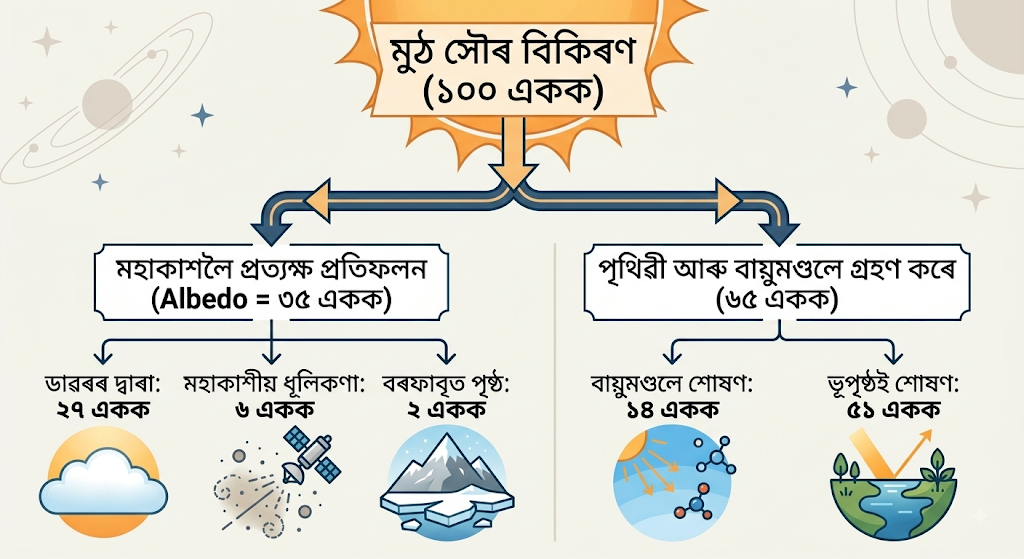
তাপৰ বহিৰ্গমন (Terrestrial Radiation):
পৃথিৱীয়ে শোষণ কৰা এই ৬৫ একক তাপ পুনৰ মহাকাশলৈ ওভতাই পঠিয়ায়:
ভূপৃষ্ঠৰ ৫১ এককৰ পৰা ১৭ একক পোনপটীয়াকৈ মহাকাশলৈ যায় আৰু ৩৪ একক বায়ুমণ্ডলে শোষণ কৰে (সংবহন, লীনতাপ আৰু বিকিৰণৰ দ্বাৰা)।
বায়ুমণ্ডলে নিজৰ ১৪ একক + ভূপৃষ্ঠৰ পৰা পোৱা ৩৪ একক = সৰ্বমুঠ ৪৮ একক তাপ পাছত মহাকাশলৈ বিকিৰণ কৰে।
উপসংহাৰ: প্ৰত্যক্ষ ৩৫ একক + ভূপৃষ্ঠৰ ১৭ একক + বায়ুমণ্ডলৰ ৪৮ একক = মুঠ ১০০ একক পুনৰ মহাকাশলৈ ওভতি যায়। এই সঠিক সমতাৰ কাৰণেই পৃথিৱীৰ গড় উষ্ণতা স্থিৰ হৈ থাকে।
প্ৰশ্ন ৩: পৃথিৱীৰ উপৰিভাগত সৌৰ তাপন বা বিকিৰণ বিতৰণ প্ৰভাৱিত কৰা কাৰকসমূহ ব্যাখ্যা কৰা। [২০২৫]
উত্তৰ: পৃথিৱীৰ সকলো স্থানতে সৌৰ তাপনৰ পৰিমাণ সমান নহয়। এই বিতৰণ তলত দিয়া কাৰকসমূহৰ ওপৰত নিৰ্ভৰ কৰে:
সূৰ্যৰ ৰশ্মিৰ আপতন কোণ (Angle of Sun's Rays):
বিষুৱীয় অঞ্চলত সূৰ্যৰ ৰশ্মি প্ৰায় উলম্বভাৱে পৰে, যাৰ ফলত কম এলেকাত প্ৰচুৰ তাপ কেন্দ্ৰীভূত হয়। কিন্তু মেৰু অঞ্চলৰ ফালে ৰশ্মি হেলনীয়া হৈ পৰে বাবে বৃহৎ এলেকাত বিয়পি যায় আৰু তাপৰ মাত্ৰা কমি যায়।
দিনৰ দৈৰ্ঘ্য (Duration of Daylight):
দিনৰ ভাগ যিমানে দীঘল হয়, সূৰ্যৰ পৰা তাপ শোষণৰ সময়ো সিমানে বৃদ্ধি পায়। গ্ৰীষ্মকালত দিন দীঘল হোৱাৰ বাবে তাপ অধিক পোৱা যায়।
বায়ুমণ্ডলৰ ঘনত্ব আৰু ডাঠতা:
হেলনীয়াকৈ পৰা ৰশ্মিয়ে বায়ুমণ্ডলৰ অধিক পথ অতিক্ৰম কৰিবলগীয়া হয়, যাৰ ফলত শোষণ, বিচ্ছুৰণ আৰু প্ৰতিফলনৰ দ্বাৰা বহু তাপ নষ্ট হয়।
ভূমিৰ উচ্চতা আৰু ঢাল (Altitude and Slope of Land):
উচ্চ পাহাৰীয়া অঞ্চলত বায়ু পাতল বাবে তাপ ধৰি ৰাখিব নোৱাৰে। সূৰ্যমুখী পাহাৰৰ ঢালে বিপৰীত ঢালতকৈ বেছি সৌৰ তাপ লাভ কৰে।
পৃষ্ঠৰ প্ৰকৃতি আৰু এলবেডো:
ডাঠ বৰফে প্ৰায় ৮০-৮৫% ৰশ্মি প্ৰতিফলিত কৰে, আনহাতে ঘন অৰণ্য বা ক’লা মাটিয়ে সৰ্বাধিক তাপ শোষণ কৰে।
প্ৰশ্ন ৪: পৃথিৱীৰ চাপ বলয়সমূহ আৰু নিয়ত বতাহ তন্ত্ৰৰ মাজৰ সম্পৰ্ক চিত্ৰসহ আলোচনা কৰা। [২০২৫]
উত্তৰ: পৃথিৱীৰ উপৰিভাগত তাপ আৰু আৱৰ্তনৰ তাৰতম্যৰ বাবে সাতটা নিৰ্দিষ্ট চাপ বলয়ৰ সৃষ্টি হৈছে। এই চাপ বলয়সমূহৰ মাজত অহৰহ বৈ থকা বতাহেই হ’ল নিয়ত বতাহ।
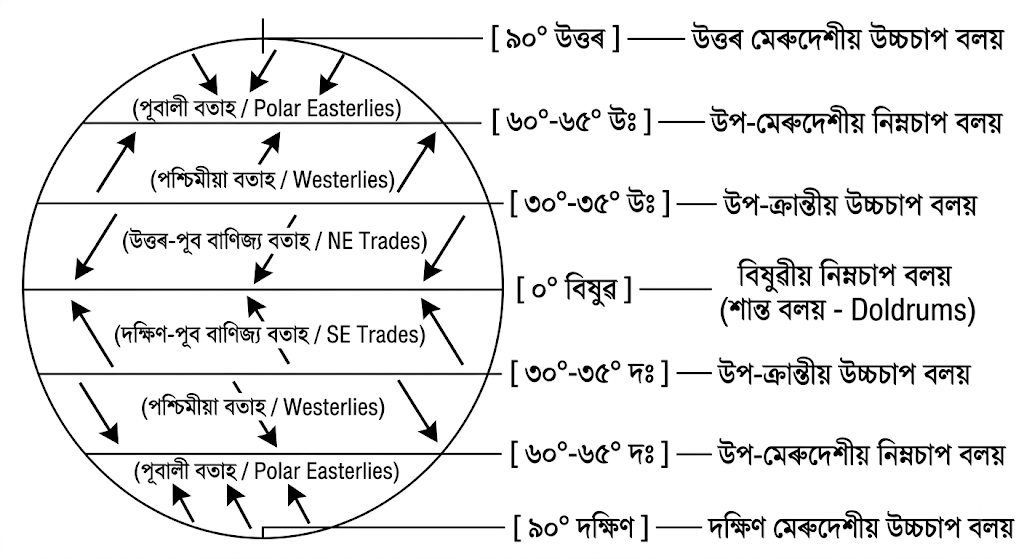
সম্পৰ্ক আৰু বতাহ প্ৰণালী:
বাণিজ্য বতাহ (Trade Winds): উপ-ক্ৰান্তীয় উচ্চচাপ বলয়ৰ পৰা বিষুৱীয় নিম্নচাপ বলয়লৈ বলা বতাহ। কোৰিঅ’লিচ বলৰ বাবে উত্তৰ গোলাৰ্ধত উত্তৰ-পূব আৰু দক্ষিণ গোলাৰ্ধত দক্ষিণ-পূব দিশৰ পৰা বলে।
পশ্চিমীয়া বতাহ (Westerlies): উপ-ক্ৰান্তীয় উচ্চচাপ বলয়ৰ পৰা উপ-মেৰুদেশীয় নিম্নচাপ বলয়লৈ বলে। উত্তৰত দক্ষিণ-পশ্চিম আৰু দক্ষিণত উত্তৰ-পশ্চিম দিশৰ পৰা বলে।
মেৰুদেশীয় পূবালী বতাহ (Polar Easterlies): মেৰুদেশীয় উচ্চচাপৰ পৰা উপ-মেৰুদেশীয় নিম্নচাপলৈ বলা শীতল বতাহ।
প্ৰশ্ন ৫: উষ্ণতা, বায়ুমণ্ডলীয় চাপ আৰু অধঃক্ষেপণৰ (বৰষুণ) ত্ৰিমুখী আন্তঃসম্পৰ্ক বিশ্লেষণ কৰা।
উত্তৰ: জলবায়ু বিজ্ঞানত উষ্ণতা, বায়ুমণ্ডলীয় চাপ আৰু অধঃক্ষেপণ এটা আনটোৰ সৈতে শৃংখলাবদ্ধভাৱে জড়িত।
উষ্ণতা আৰু চাপৰ সম্বন্ধ:
উষ্ণতা বৃদ্ধি পালে বায়ু প্ৰসাৰিত আৰু পাতল হৈ ওপৰলৈ উঠে, যাৰ ফলত নিম্নচাপৰ সৃষ্টি হয়। বিপৰীতে, নিম্ন উষ্ণতাত বায়ু শীতল আৰু গধুৰ হৈ তললৈ নামি উচ্চচাপৰ সৃষ্টি কৰে।
চাপ আৰু বতাহৰ গতি:
বায়ু সদায় উচ্চচাপ অঞ্চলৰ পৰা নিম্নচাপ অঞ্চললৈ গতি কৰে। নিম্নচাপ কেন্দ্ৰলৈ অহা বতাহ আৰ্দ্ৰতা লগত লৈ আহে আৰু কেন্দ্ৰত উপনীত হৈ ওপৰলৈ উঠিবলৈ বাধ্য হয়।
চাপ আৰু অধঃক্ষেপণৰ সম্বন্ধ:
নিম্নচাপ অঞ্চলত উৰ্ধগামী বায়ু এডিয়াবেটিক প্ৰক্ৰিয়াত শীতল হয়। যেতিয়া আপেক্ষিক আৰ্দ্ৰতা ১০০% হয় (শিশিৰাঙ্ক পায়), তেতিয়া জলীয় বাষ্প ঘনীভূত হৈ ডাৱৰ হয় আৰু প্ৰচুৰ অধঃক্ষেপণ (বৰষুণ) ঘটায়। উদাহৰণস্বৰূপে, বিষুৱীয় নিম্নচাপ অঞ্চলত প্ৰতিদিনে দুপৰীয়াৰ পাছত প্ৰৱল পৰিচলন বৃষ্টিপাত হয়।
আনহাতে, উচ্চচাপ অঞ্চলত বায়ু নিম্নগামী হোৱাৰ বাবে তাপ বৃদ্ধি পায় আৰু ঘনীভৱন ঘটিব নোৱাৰে, যাৰ বাবে তাত খৰাং বা মৰুভূমিৰ সৃষ্টি হয় (যেনে সাহাৰা মৰুভূমি উপ-ক্ৰান্তীয় উচ্চচাপ বলয়ত অৱস্থিত)।
প্ৰশ্ন ৬: বায়ুমণ্ডলৰ উষ্ণতা বিতৰণ নিয়ন্ত্ৰণ কৰা ভৌগোলিক কাৰকসমূহ আলোচনা কৰা।
উত্তৰ: ভূপৃষ্ঠত উষ্ণতাৰ আনুভূমিক আৰু উলম্ব বিতৰণ বিভিন্ন ভৌগোলিক কাৰকৰ দ্বাৰা নিয়ন্ত্ৰিত হয়:
অক্ষাংশ (Latitude): বিষুৱৰেখাৰ পৰা মেৰুৰ দিশে যিমানে যোৱা যায়, সূৰ্যৰ ৰশ্মি সিমানে হেলনীয়া হয় আৰু উষ্ণতা ক্ৰমান্বয়ে হ্ৰাস পায়।
উচ্চতা (Altitude): ভূপৃষ্ঠৰ পৰা ওপৰলৈ যোৱাৰ লগে লগে সাধাৰণতে প্ৰতি ১,০০০ মিটাৰ উচ্চতাত ৬.৫° চেলছিয়াছ হাৰত উষ্ণতা হ্ৰাস পায় (Normal Lapse Rate)। সেইবাবে সমভূমিতকৈ পাহাৰীয়া ঠাই শীতল।
সাগৰৰ পৰা দূৰত্ব (Distance from Sea): সাগৰৰ পানী লাহে লাহে উত্তপ্ত আৰু শীতল হয়। গতিকে উপকূলীয় অঞ্চলত সমভাৱাপন্ন জলবায়ু আৰু সাগৰৰ পৰা দূৰত থকা মহাদেশীয় অভ্যন্তৰত চৰমভাৱাপন্ন জলবায়ু দেখা যায়।
সাগৰীয় সোঁত (Ocean Currents): উপকূলৰ কাষেৰে উষ্ণ সোঁত বৈ গ’লে সেই অঞ্চলৰ উষ্ণতা বৃদ্ধি পায় আৰু শীতল সোঁত বৈ গ’লে উষ্ণতা যথেষ্ট হ্ৰাস পায়।
বতাহৰ দিশ (Prevailing Winds): সাগৰৰ পৰা অহা বতাহে উপকূলীয় ঠাই শীতল/উষ্ণ কৰি ৰাখে, কিন্তু উষ্ণ মৰুভূমিৰ পৰা অহা বতাহে উষ্ণতা বৃদ্ধি কৰে।
মেঘ আৰু বৃষ্টিপাত: ডাৱৰীয়া বতৰে দিনৰ ভাগত সৌৰ তাপ আহিব নিদিয়ে আৰু ৰাতি ভূপৃষ্ঠৰ তাপ মহাকাশলৈ ওলাই যোৱাত বাধা দিয়ে।
প্ৰশ্ন ৭: ঘূৰ্ণিবতাহ আৰু প্ৰতি-ঘূৰ্ণিবতাহৰ উৎপত্তি, বৈশিষ্ট্য আৰু বতৰৰ ওপৰত প্ৰভাৱ আলোচনা কৰা। [২০২৫]
উত্তৰ:
ঘূৰ্ণিবতাহ (Cyclone):
উৎপত্তি আৰু বৈশিষ্ট্য: যেতিয়া কোনো স্থানত অতি গভীৰ নিম্নচাপৰ সৃষ্টি হয় আৰু চাৰিওফালৰ উচ্চচাপ অঞ্চলৰ পৰা বতাহ কেন্দ্ৰলৈ সৰ্পিলাকাৰে সোমাই আহে, তাক ঘূৰ্ণিবতাহ বোলে। উত্তৰ গোলাৰ্ধত ইয়াৰ গতি ঘড়ীৰ কাঁটাৰ বিপৰীত দিশত আৰু দক্ষিণ গোলাৰ্ধত ঘড়ীৰ কাঁটাৰ দিশত হয়।
বতৰৰ প্ৰভাৱ: ঘূৰ্ণিবতাহৰ আগমনত আকাশ ডাঠ ডাৱৰে ঢাকি ধৰে, প্ৰচণ্ড ধুমুহা আৰু ধাৰাষাৰ বৰষুণ হয়, যাৰ ফলত বিস্তৰ ক্ষতিসাধন হয়।
প্ৰতি-ঘূৰ্ণিবতাহ (Anticyclone):
উৎপত্তি আৰু বৈশিষ্ট্য: যেতিয়া কোনো এক বৃহৎ অঞ্চল জুৰি কেন্দ্ৰত উচ্চচাপ আৰু বাহিৰৰ ফালে নিম্নচাপ থাকে, তেতিয়া কেন্দ্ৰৰ পৰা বতাহ চাৰিওফালে বাহিৰলৈ ওলাই যায় (Divergence)। উত্তৰ গোলাৰ্ধত ই ঘড়ীৰ কাঁটাৰ দিশত বলে।
বতৰৰ প্ৰভাৱ: প্ৰতি-ঘূৰ্ণিবতাহৰ সময়ত বায়ু ওপৰৰ পৰা তললৈ নামে, যাৰ বাবে ডাৱৰ সৃষ্টি হ’ব নোৱাৰে। আকাশ সম্পূৰ্ণ মেঘমুক্ত, শান্ত আৰু ফৰকাল বতৰ বিৰাজ কৰে।
প্ৰশ্ন ৮: স্থানীয় বতাহ (Local Winds) কি? বিশ্বৰ প্ৰধান উষ্ণ আৰু শীতল স্থানীয় বতাহসমূহৰ এটি চমু বিৱৰণ দিয়াঁ।
উত্তৰ: ভূ-প্ৰকৃতি, স্থানীয় চাপ আৰু উষ্ণতাৰ তাৰতম্যৰ ফলত একোটা নিৰ্দিষ্ট ভৌগোলিক এলেকাত সীমিত সময়ৰ বাবে প্ৰবাহিত হোৱা বতাহক স্থানীয় বতাহ বোলে।
১. প্ৰধান উষ্ণ স্থানীয় বতাহ (Warm Local Winds):
লু (Loo): গ্ৰীষ্মকালত উত্তৰ আৰু উত্তৰ-পশ্চিম ভাৰতৰ সমভূমি অঞ্চলত দুপৰীয়াৰ ভাগত প্ৰবাহিত হোৱা অতি উষ্ণ আৰু শুকান বতাহ।
চিনুক (Chinook): উত্তৰ আমেৰিকাৰ ৰকি পৰ্বতৰ পূব ঢালেৰে তললৈ নামি অহা উষ্ণ বতাহ। ইয়াৰ উত্তাপত বৰফ গলি যায় বাবে ইয়াক ‘Snow Eater’ বোলা হয়।
ফন (Foehn): ইউৰোপৰ আল্পচ পৰ্বতৰ উত্তৰ ঢালেৰে বৈ যোৱা এক উষ্ণ বতাহ, যিয়ে আঙুৰ খেতি পকাত সহায় কৰে।
চিৰক্ক’ (Sirocco): সাহাৰা মৰুভূমিৰ পৰা ভূমধ্যসাগৰ পাৰ হৈ দক্ষিণ ইউৰোপলৈ বৈ যোৱা ধূলিময় উষ্ণ বতাহ।
২. প্ৰধান শীতল স্থানীয় বতাহ (Cold Local Winds):
মিষ্ট্ৰাল (Mistral): ফ্ৰান্সৰ আল্পচ পৰ্বতমালাৰ পৰা ভূমধ্যসাগৰৰ উপকূললৈ শীতকালত বলা অতি শীতল আৰু তীব্ৰ বতাহ।
বোৰা (Bora): এড্ৰিয়াটিক সাগৰৰ উপকূলীয় অঞ্চলত উত্তৰ-পূব দিশৰ পৰা বলা এক অত্যন্ত শীতল বতাহ।
ব্লিজাৰ্ড (Blizzard): উত্তৰ আৰু দক্ষিণ মেৰু প্ৰদেশত প্ৰৱল বেগেৰে বলা বৰফৰ ধুমুহা।
প্ৰশ্ন ৯: উষ্ণতাৰ বিপৰীতমুখীতা (Temperature Inversion) কি? ইয়াৰ সৃষ্টিৰ অনুকূল ভৌগোলিক অৱস্থাসমূহ আলোচনা কৰা।
উত্তৰ: সাধাৰণতে ট্ৰপ’স্ফিয়াৰত উচ্চতা বৃদ্ধিৰ লগে লগে উষ্ণতা হ্ৰাস পায়। কিন্তু কেতিয়াবা কোনো বিশেষ ভৌগোলিক পৰিস্থিতিত ওলোটাকৈ তলৰ স্তৰত শীতল বায়ু আৰু ওপৰৰ স্তৰত তুলনামূলকভাৱে উষ্ণ বায়ু থাকে। উচ্চতা বঢ়াৰ লগে লগে উষ্ণতা বৃদ্ধি পোৱা এই অৱস্থাকে উষ্ণতাৰ বিপৰীতমুখীতা বোলে।
সৃষ্টিৰ অনুকূল ভৌগোলিক অৱস্থাসমূহ:
দীঘলীয়া শীতকালীন ৰাতি: শীতকালৰ দীঘলীয়া ৰাতি ভূ-পৃষ্ঠই সৌৰ তাপ লাভ কৰাতকৈ বিকিৰণৰ দ্বাৰা অধিক তাপ হেৰুৱায়, ফলত মাটিৰ সংলগ্ন বায়ু অতিশয় শীতল হৈ পৰে।
মেঘমুক্ত নিৰ্মল আকাশ: আকাশ ডাৱৰমুক্ত হ’লে পাৰ্থিৱ বিকিৰণ কোনো বাধা নোহোৱাকৈ মহাকাশলৈ ওলাই যাব পাৰে, যাৰ ফলত ভূপৃষ্ঠ দ্ৰুতগতিত শীতল হয়।
শান্ত আৰু স্থিৰ বায়ু: বতাহ শান্ত থাকিলে বিভিন্ন স্তৰৰ বায়ুৰ মাজত সংমিশ্ৰণ ঘটিব নোৱাৰে আৰু তলৰ শীতল স্তৰটো স্থিৰ হৈ থাকে।
শুকান বায়ু: শুকান বায়ুৱে পাৰ্থিৱ বিকিৰণ ধৰি ৰাখিব নোৱাৰে, ফলত তলৰ পৃষ্ঠ অতি সোনকালে চেঁচা হয়।
পাহাৰীয়া উপত্যকা (Valley Topography): ৰাতিৰ ভাগত পাহাৰৰ ঢালৰ বায়ু শীতল ও গধুৰ হৈ মাধ্যাকৰ্ষণৰ বাবে উপত্যকাৰ তললৈ নামি আহে (Katabatic wind), যাৰ ফলত উপত্যকাৰ তলত শীতল আৰু ওপৰত তুলনামূলকভাৱে গৰম বায়ু জমা হয়।
প্ৰশ্ন ১০: অধঃক্ষেপণৰ বিভিন্ন ৰূপ আৰু প্ৰধান প্ৰকাৰসমূহ (Types of Rainfall) আলোচনা কৰা।
উত্তৰ: বায়ুমণ্ডলৰ জলীয় বাষ্প ঘনীভূত হৈ মাধ্যাকৰ্ষণ শক্তিৰ ফলত তৰল বা কঠিন আকাৰে ভূপৃষ্ঠত পতিত হোৱা প্ৰক্ৰিয়াক অধঃক্ষেপণ (Precipitation) বোলে। ইয়াৰ বিভিন্ন ৰূপ হ’ল— বৰষুণ, তুষাৰপাত, শিলাবৃষ্টি, আৰু হিমপাত।
বায়ু কেনেদৰে ওপৰলৈ উঠি শীতল হয়, তাৰ ওপৰত ভিত্তি কৰি বৃষ্টিপাতক তিনিটা প্ৰধান ভাগত বিভক্ত কৰা হৈছে:
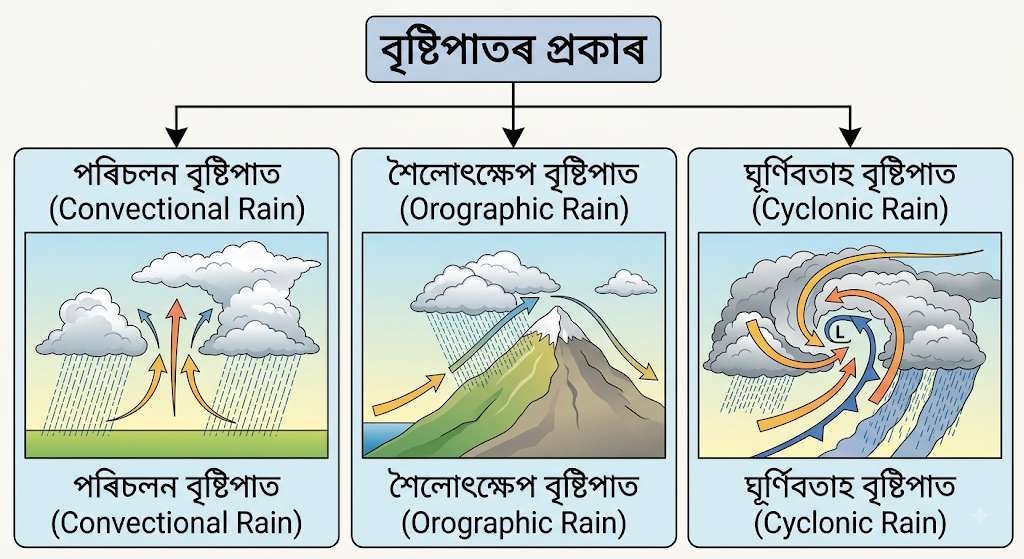
পৰিচলন বৃষ্টিপাত (Convectional Rainfall):
প্ৰচুৰ উত্তাপৰ ফলত ভূপৃষ্ঠৰ বায়ু উত্তপ্ত আৰু প্ৰসাৰিত হৈ পোনে পোনে উলম্বভাৱে ওপৰলৈ উঠে। উচ্চ স্তৰত শীতল হৈ কিউমুল’নিম্বাছ ডাৱৰ সৃষ্টি কৰে আৰু বিজুলী-ঢেৰেকনিৰে মুষলধাৰে বৰষুণ দিয়ে। বিষুৱীয় অঞ্চলত এই বৃষ্টিপাত নিতৌ দেখা যায়।
শৈলোৎক্ষেপ বৃষ্টিপাত (Orographic Rainfall):
জলীয় বাষ্পপূৰ্ণ বায়ু প্ৰৱাহৰ পথত কোনো পৰ্বত বা ওখ পাহাৰ থাকিলে, বায়ু পৰ্বতৰ ঢালেৰে ওপৰলৈ উঠিবলৈ বাধ্য হয়। ওপৰত শীতল হৈ পৰ্বতৰ বায়ু-মুখী ঢালত (Windward side) প্ৰচুৰ বৃষ্টিপাত ঘটায়। আনহাতে পৰ্বত পাৰ হৈ বিপৰীত ঢাললৈ (Leeward side) নামি যাওঁতে শুকান হৈ পৰে, যাক বৃষ্টিছাঁয়া অঞ্চল (Rain-shadow area) বোলে (যেনে: শ্বিলং)।
ঘূৰ্ণিবতাহ বৃষ্টিপাত (Cyclonic Rainfall):
ঘূৰ্ণিবতাহৰ নিম্নচাপ কেন্দ্ৰত বিভিন্ন দিশৰ পৰা অহা উষ্ণ আৰু শীতল বায়ু মিলিত হ’লে উষ্ণ পাতল বায়ু শীতল গধুৰ বায়ুৰ ওপৰেৰে উঠি যায়। ফলত ঘনীভৱন ঘটি বিস্তৃত অঞ্চল জুৰি দীৰ্ঘ সময় ধৰি বৃষ্টিপাত হয়।
One-Mark Questions and Answers
1. What is climatology?
Answer: Climatology is the scientific study of climate, its elements, variations, distribution and controlling factors.
2. What is insolation?
Answer: Insolation means the incoming solar radiation received by the Earth and its atmosphere.
3. What is the main source of energy for the Earth's atmosphere?
Answer: The Sun is the main source of energy for the Earth's atmosphere.
4. What is solar constant?
Answer: Solar constant is the average amount of solar energy received per unit area at the outer boundary of the atmosphere on a surface perpendicular to the Sun's rays.
5. What is heat budget? [2025]
Answer: Heat budget is the balance between the incoming solar radiation received by the Earth and the outgoing terrestrial radiation.
6. What is atmospheric pressure? [2025]
Answer: Atmospheric pressure is the force exerted by the weight of the air on a unit area of the Earth's surface.
7. Which instrument is used to measure atmospheric pressure?
Answer: A barometer is used to measure atmospheric pressure.
8. What is wind?
Answer: Wind is the horizontal movement of air from an area of high pressure towards an area of low pressure.
9. What is weather? [2025]
Answer: Weather is the short-term condition of the atmosphere at a particular place and time.
10. What is climate?
Answer: Climate is the long-term average condition and general pattern of weather of a place.
11. What is pressure gradient?
Answer: Pressure gradient is the rate of change of atmospheric pressure over a given horizontal distance.
12. What is a high-pressure system?
Answer: A high-pressure system is an area where atmospheric pressure is higher than that of the surrounding areas.
13. What is a low-pressure system?
Answer: A low-pressure system is an area where atmospheric pressure is lower than that of the surrounding areas.
14. What is a jet stream? [2025]
Answer: A jet stream is a narrow band of very strong winds occurring near the upper troposphere.
15. What is albedo? [2025]
Answer: Albedo is the proportion of incoming solar radiation reflected by a surface.
B. Short-Answer Questions and Answers
Approximately 50 words each
1. Explain the meaning of climatology.
Answer: Climatology is a branch of atmospheric science that studies climate. It examines the average conditions of temperature, pressure, wind, humidity and precipitation over a long period. It also studies climatic variations, regional differences and the factors responsible for the distribution and changes of climate.
2. What is the scope of climatology?
Answer: The scope of climatology is broad. It includes the study of temperature, atmospheric pressure, winds, humidity, precipitation and other climatic elements. It also examines climatic regions, climate variability, climate change and the relationship between climate and human activities, agriculture, water resources and the environment.
3. Mention the significance of climatological studies. [2025]
Answer: Climatological studies are important for agriculture, water-resource management, urban planning, transport and disaster management. Knowledge of climate helps us understand droughts, floods, storms and heat waves. It also helps in studying environmental changes and planning economic activities according to prevailing climatic conditions.
4. What do you mean by insolation? [2025]
Answer: Insolation means incoming solar radiation received by the Earth. It is the principal source of energy for the Earth's surface and atmosphere. The amount of insolation varies according to latitude, season, duration of sunshine, angle of the Sun's rays, atmospheric conditions and the nature of the surface.
5. Mention two factors affecting the distribution of insolation. [2025]
Answer: Two important factors affecting insolation are latitude and angle of incidence of the Sun's rays. Insolation generally decreases from low latitudes towards the poles because the Sun's rays become more oblique. Season, duration of daylight, atmospheric transparency and cloud cover also influence insolation.
6. What is heat budget? Explain briefly. [2025]
Answer: Heat budget refers to the balance between incoming solar energy and outgoing terrestrial radiation. The Earth receives short-wave radiation from the Sun and loses energy through long-wave terrestrial radiation. Over a long period, this balance maintains the Earth's average temperature, although regional and seasonal differences occur.
7. What is atmospheric pressure? [2025]
Answer: Atmospheric pressure is the force exerted by the weight of the atmosphere on a unit area of the Earth's surface. It is measured with a barometer and generally expressed in millibars or hectopascals. Pressure decreases with increasing altitude and varies with temperature and atmospheric conditions.
8. Explain the relationship between temperature and atmospheric pressure. [2025]
Answer: Temperature and atmospheric pressure are closely related. When air is heated, it expands, becomes lighter and tends to rise, producing lower pressure near the surface. When air cools, it becomes denser and tends to sink, producing higher pressure. Thus, temperature differences help create pressure differences.
9. How do differences in pressure lead to wind formation? [2025]
Answer: Unequal heating of the Earth's surface creates differences in atmospheric pressure. Air moves from areas of higher pressure towards areas of lower pressure. This horizontal movement of air is called wind. The greater the pressure difference over a given distance, the stronger the pressure-gradient force and generally the stronger the wind.
10. Differentiate between weather and climate. [2025]
Answer: Weather refers to the atmospheric condition of a place over a short period, such as hours or days. Climate refers to the average atmospheric conditions and their general pattern over a long period. Weather changes frequently, whereas climate describes the more stable long-term characteristics of a region.
11. What are convergence and divergence of winds? [2025]
Answer: Convergence occurs when winds move towards and meet in a particular area. It usually causes air to rise and may produce clouds and precipitation. Divergence occurs when winds move away from an area. It is generally associated with sinking air and high-pressure conditions.
12. What are planetary winds? Give examples.
Answer: Planetary winds are large-scale, permanent or semi-permanent winds that blow over extensive areas of the Earth due to global pressure belts and the rotation of the Earth. Major examples include trade winds, westerlies and polar easterlies.
13. What are jet streams? [2025]
Answer: Jet streams are narrow belts of very strong winds in the upper atmosphere, mainly near the tropopause. They generally flow from west to east in the middle latitudes. They influence weather systems, temperature patterns and the movement of atmospheric disturbances.
14. What is precipitation?
Answer: Precipitation is the process by which water falls from the atmosphere to the Earth's surface in liquid or solid form. Rain, snow, sleet and hail are common forms. Rising air, cooling, condensation and cloud formation are important processes associated with precipitation.
15. Explain briefly the relationship between atmospheric pressure and precipitation.
Answer: Low-pressure conditions generally encourage air to rise. Rising air cools, causing condensation, cloud formation and often precipitation. High-pressure conditions usually involve descending air, which becomes warmer and drier, making precipitation less likely. Therefore, low-pressure systems are commonly associated with cloudy and rainy weather.
C. Long-Answer Questions and Answers
1. Explain the meaning, scope and significance of climatological studies. [2025]
Answer: Climatology is the scientific study of climate and its characteristics over a long period. It is an important branch of physical geography and atmospheric science. Unlike weather, which describes short-term atmospheric conditions, climatology studies long-term patterns and variations of atmospheric elements.
The scope of climatology is wide. It includes the study of temperature, atmospheric pressure, winds, humidity, precipitation, sunshine and radiation. It also examines the distribution of different climatic conditions over the Earth's surface and the factors controlling them, such as latitude, altitude, distance from the sea, relief, ocean currents and atmospheric circulation. Climatology also studies climatic variability and changes over time.
Climatological studies have great practical significance. Agriculture depends strongly on temperature and rainfall. Knowledge of climate helps farmers select suitable crops and determine sowing and harvesting periods. It is also useful in water-resource management, urban planning, transportation and tourism.
Climatology helps us understand floods, droughts, storms, heat waves and other climate-related hazards. It also provides an important basis for understanding environmental changes and climate change. Thus, climatology is useful not only for geographical studies but also for economic planning, environmental management and human welfare.
2. What is insolation? Explain the factors affecting the distribution of insolation over the Earth. [2025]
Answer: Insolation means incoming solar radiation received by the Earth. Solar energy is the fundamental source of heat and energy for the Earth's surface and atmosphere. However, the amount of insolation received is not the same everywhere.
The first important factor is latitude. Places near the Equator generally receive greater insolation because the Sun's rays fall more directly. Towards the poles, the rays become increasingly oblique and spread over a larger area.
The angle of incidence of the Sun's rays is another important factor. Vertical rays concentrate energy over a smaller area, while oblique rays distribute the same energy over a larger area.
Duration of sunshine also affects insolation. Longer days generally provide more incoming solar energy, while shorter days receive less.
The Earth's revolution and seasonal changes alter the position of the Sun and consequently affect insolation. Atmospheric conditions such as clouds, dust, water vapour and gases may absorb, scatter or reflect solar radiation before it reaches the surface.
The nature of the Earth's surface also matters. Surfaces differ in their ability to reflect and absorb solar energy. Snow and ice reflect a large amount of radiation, while darker surfaces absorb more.
Thus, latitude, solar angle, season, duration of sunshine, atmospheric conditions and surface characteristics determine the distribution of insolation.
3. Discuss the heat budget of the Earth with a suitable explanation. [2025]
Answer: The heat budget of the Earth refers to the balance between incoming solar radiation and outgoing radiation from the Earth. The Sun continuously supplies energy to the Earth, while the Earth continuously loses energy to space. This balance is essential for maintaining the general temperature of the planet.
Solar radiation reaching the Earth is mainly in the form of short-wave radiation. A part of this energy is reflected back to space by clouds, atmospheric particles, snow, ice and the Earth's surface. Another part is absorbed by the atmosphere, while the remaining energy is absorbed by the land and oceans.
The Earth's surface becomes warm and releases energy in the form of long-wave terrestrial radiation. Some of this outgoing radiation is absorbed by greenhouse gases and clouds in the atmosphere. The atmosphere then re-radiates energy both towards space and back towards the Earth's surface.
Over the Earth as a whole and over a sufficiently long period, incoming and outgoing energy remain approximately balanced. However, the balance is not equal at every place or in every season. Low latitudes generally receive more solar energy than high latitudes. Atmospheric and oceanic circulation helps redistribute this energy from warmer regions towards colder regions.
Therefore, the heat budget is fundamental to understanding the Earth's temperature and global climatic system.
4. Explain the relationship between temperature and atmospheric pressure. [2025]
Answer: Temperature and atmospheric pressure are closely related because changes in temperature affect the density and vertical movement of air. When air is heated, it expands and becomes less dense. The warm air tends to rise, reducing the weight of air near the surface and creating a low-pressure condition.
On the other hand, when air is cooled, it contracts and becomes denser. The heavier air tends to sink towards the surface, producing high pressure. Thus, warm and cold air masses can create differences in atmospheric pressure.
Unequal heating of the Earth's surface is one of the main reasons for the development of pressure differences. Land and water do not heat and cool at the same rate. This produces local and regional pressure differences, particularly in coastal areas.
Pressure differences are important because they produce air movement. Air generally moves from high-pressure areas towards low-pressure areas, and this movement creates wind.
However, temperature is not the only factor affecting pressure. Altitude, water vapour, density and the general circulation of the atmosphere also influence atmospheric pressure.
Therefore, temperature and pressure are closely connected elements of the atmosphere. Their relationship plays an important role in the formation of winds, pressure systems, clouds and precipitation and is therefore fundamental to the study of climatology.
5. Explain atmospheric pressure and discuss its role in the formation of winds. [2025]
Answer: Atmospheric pressure is the force exerted by the weight of air on a unit area of the Earth's surface. It is commonly measured using a barometer and expressed in millibars or hectopascals. Atmospheric pressure is not uniform over the Earth's surface.
Differences in pressure are mainly produced by unequal heating of the Earth's surface. Warm air expands, becomes lighter and rises, generally producing low pressure. Cold air becomes denser and sinks, producing high pressure.
The difference in atmospheric pressure between two places creates a pressure gradient. Air moves from high-pressure areas towards low-pressure areas. This horizontal movement of air is called wind. The pressure-gradient force is therefore an important force responsible for wind movement.
The strength of wind is influenced by the difference in pressure over a given distance. A large pressure difference over a short distance produces a stronger pressure gradient and generally stronger winds.
The Earth's rotation also affects the direction of moving air. This effect is known as the Coriolis force. Friction near the Earth's surface further modifies wind speed and direction.
Thus, atmospheric pressure differences provide the basic driving force for wind. Pressure systems and wind circulation are closely related to weather conditions, cloud development and precipitation.
6. Discuss the pressure and wind systems of the Earth. [2025]
Answer: The Earth's pressure and wind systems are produced mainly by unequal heating of the Earth's surface and the rotation of the Earth. They form an important part of the global atmospheric circulation.
The major pressure belts include the equatorial low-pressure belt, subtropical high-pressure belts, subpolar low-pressure belts and polar high-pressure belts. These pressure belts are distributed roughly according to latitude, although their position changes seasonally.
Air moves between different pressure belts and produces major planetary wind systems. The principal planetary winds are trade winds, westerlies and polar easterlies. Trade winds blow from the subtropical high-pressure belts towards the equatorial low-pressure belt. Westerlies generally move from subtropical high-pressure areas towards subpolar low-pressure areas. Polar easterlies blow from polar high-pressure areas towards subpolar low-pressure areas.
The Earth's rotation causes moving air to be deflected. This is known as the Coriolis effect. As a result, winds do not move in a perfectly straight line from high to low pressure.
Pressure systems also produce local and regional winds. Convergence of winds is generally associated with rising air, clouds and precipitation, while divergence is often associated with descending air and clearer conditions.
Therefore, pressure belts and wind systems together form the basic framework of global atmospheric circulation.
7. Explain the relationship between atmospheric pressure and precipitation. [2025]
Answer: Atmospheric pressure has an important relationship with cloud formation and precipitation. Areas of low and high pressure generally have different atmospheric conditions.
In a low-pressure system, air tends to rise. As the air rises, it expands and cools. When the temperature falls sufficiently, water vapour condenses and forms clouds. Continued uplift and condensation may produce precipitation. Therefore, low-pressure conditions are commonly associated with cloudy and rainy weather.
In a high-pressure system, air generally moves downward. Descending air becomes compressed and warmer. This reduces relative humidity and discourages condensation and cloud formation. Consequently, high-pressure conditions are usually associated with relatively clear and dry weather.
The relationship is particularly important in understanding cyclones and anticyclones. Cyclonic or low-pressure systems are often associated with upward movement of air and precipitation. Anticyclonic or high-pressure systems are generally associated with downward movement and more stable weather.
However, precipitation does not depend on pressure alone. Moisture availability, temperature, uplift, atmospheric instability and local geographical conditions also influence rainfall.
Thus, pressure systems help determine whether air rises or sinks, making atmospheric pressure an important factor in the development of clouds and precipitation.
8. Explain convergence and divergence of winds and their climatic significance. [2025]
Answer: Convergence and divergence describe the horizontal movement of air towards or away from a particular area.
Convergence occurs when winds from different directions move towards the same region. Since air cannot continue accumulating indefinitely at the surface, it generally rises. Rising air expands and cools, which may lead to condensation, cloud formation and precipitation. Therefore, convergence is commonly associated with low-pressure conditions and unsettled or rainy weather.
Divergence occurs when air moves away from a particular region. At the surface, divergence is generally associated with high-pressure conditions. To replace the air moving outward, air from above tends to descend. Descending air becomes warmer and drier, which discourages cloud formation and precipitation.
Convergence and divergence are important parts of atmospheric circulation. They help explain the distribution of rainfall and dry conditions across different regions. For example, strong convergence in equatorial regions contributes to frequent cloud development and rainfall, while subtropical regions often experience descending air associated with high pressure and relatively dry conditions.
These processes also operate in weather systems. Cyclonic conditions are associated with convergence and rising air, whereas anticyclonic conditions are commonly associated with divergence and sinking air.
Thus, convergence and divergence play an important role in controlling atmospheric circulation, cloud formation, precipitation and regional climatic conditions.
9. Explain the formation and characteristics of planetary wind systems. [2025]
Answer: Planetary winds are large-scale winds that operate over extensive areas of the Earth. They are mainly produced by the global distribution of pressure belts, which themselves develop because of unequal heating of the Earth's surface. The rotation of the Earth also influences their direction.
The three major planetary wind systems are trade winds, westerlies and polar easterlies.
Trade winds blow from the subtropical high-pressure belts towards the equatorial low-pressure belt. They are important features of the tropical circulation.
Westerlies generally blow from the subtropical high-pressure belts towards the subpolar low-pressure belts. They are dominant in the middle latitudes and generally have a west-to-east direction.
Polar easterlies originate in the polar high-pressure regions and move towards the subpolar low-pressure belts. They generally blow from east to west.
The Coriolis effect causes these winds to be deflected from their direct path. The direction of deflection differs between the Northern and Southern Hemispheres.
Planetary winds help distribute heat and moisture across the Earth. They transport energy from warmer to colder regions and influence ocean currents, cloud formation and precipitation.
Thus, planetary winds are an essential component of global atmospheric circulation and play a major role in determining the world's climatic patterns.
10. Discuss the importance of climatology in understanding the Earth's environment and human activities. [2025]
Answer: Climatology is important because climate influences almost every part of the Earth's natural environment and human life. It provides a scientific understanding of atmospheric conditions and their long-term patterns.
In agriculture, knowledge of temperature, rainfall, humidity and seasonal conditions helps in selecting crops, determining sowing periods and managing irrigation. In water-resource management, climatological information is used to understand rainfall patterns, droughts, floods and water availability.
Climatology is also important for settlement and urban planning. Knowledge of climatic conditions helps planners consider heat, rainfall, wind and drainage while developing cities. It contributes to the planning of buildings, roads and other infrastructure.
In disaster management, understanding climatic patterns helps identify areas vulnerable to floods, droughts, cyclones, heat waves and other hazards. Early knowledge of atmospheric conditions can reduce damage and protect human lives.
Climatology also helps explain the relationship between the atmosphere, oceans, land surface and living organisms. It is therefore closely connected with environmental studies.
Modern climatological studies are particularly important for understanding climatic variability and climate change. They help society assess environmental risks and develop suitable adaptation and management strategies.
Therefore, climatology is not merely the study of weather patterns. It is an important scientific field for understanding the Earth's environment and making informed decisions about human activities and natural-resource management.