অতি চমু প্ৰশ্নোত্তৰ (১ নম্বৰীয়া) — ১৫ টা
১. প্ৰশ্ন: জীৱ ভূগোল (Biogeography) কি?
উত্তৰ: পৃথিৱীৰ বুকুত উদ্ভিদ আৰু প্ৰাণীৰ ভৌগোলিক বিস্তাৰ, বিতৰণ আৰু সেইবোৰৰ ওপৰত প্ৰাকৃতিক পৰিৱেশৰ প্ৰভাৱ সম্পৰ্কে কৰা বৈজ্ঞানিক অধ্যয়নেই হ'ল জীৱ ভূগোল।
২. প্ৰশ্ন: 'Ecology' (বাস্তুবিদ্যা/পাৰিৱেশিক বিজ্ঞান) শব্দটো কোনে কেতিয়া পোনপ্ৰথমে ব্যৱহাৰ কৰিছিল? [২০২৫]
উত্তৰ: জাৰ্মান জীৱবিজ্ঞানী আৰ্নষ্ট হেকেলে (Ernst Haeckel) ১৮৬৬ চনত 'Ecology' শব্দটো পোনপ্ৰথমে ব্যৱহাৰ কৰিছিল।
৩. প্ৰশ্ন: 'Ecology' শব্দটো কোন দুটা গ্ৰীক শব্দৰ পৰা আহিছে? [২০২৫]
উত্তৰ: গ্ৰীক শব্দ 'Oikos' (যাৰ অৰ্থ ঘৰ বা বাসস্থান) আৰু 'Logos' (যাৰ অৰ্থ অধ্যয়ন বা জ্ঞান)-ৰ পৰা আহিছে।
৪. প্ৰশ্ন: জীৱমণ্ডল (Biosphere) কি? [২০২৫]
উত্তৰ: পৃথিৱীৰ শিলামণ্ডল, জলমণ্ডল আৰু বায়ুমণ্ডলৰ যিটো সংকীৰ্ণ অঞ্চলত সকলো প্ৰকাৰৰ জীৱ বসবাস কৰে, তাকে জীৱমণ্ডল বোলে।
৫. প্ৰশ্ন: পৰিস্থিতিতন্ত্ৰ (Ecosystem) শব্দটো পোনপ্ৰথমে কোনে ব্যৱহাৰ কৰিছিল?
উত্তৰ: ব্ৰিটিছ পৰিৱেশবিদ এ. জি. টানচ্লেই (A.G. Tansley) ১৯৩৫ চনত 'Ecosystem' শব্দটো পোনপ্ৰথমে ব্যৱহাৰ কৰিছিল।
৬. প্ৰশ্ন: পৰিস্থিতিতন্ত্ৰৰ সূত্ৰ দিয়া। [২০২৫]
উত্তৰ: কোনো এক নিৰ্দিষ্ট ভৌগোলিক অঞ্চলত বাস কৰা জৈৱিক সম্প্ৰদায় (জীৱ) আৰু অজৈৱিক পৰিৱেশৰ মাজত শক্তি আৰু পুষ্টিৰ পাৰস্পৰিক আদান-প্ৰদানৰ জৰিয়তে গঢ়ি উঠা কাৰ্যকৰী একককে পৰিস্থিতিতন্ত্ৰ বোলে।
৭. প্ৰশ্ন: খাদ্য শৃংখল (Food Chain) কি? [২০২৫]
উত্তৰ: পৰিস্থিতিতন্ত্ৰ এটাত উৎপাদকৰ (সেউজীয়া উদ্ভিদ) পৰা ক্ৰমান্বয়ে বিভিন্ন স্তৰৰ উপভোক্তালৈ খোৱা আৰু খোৱা হোৱা প্ৰক্ৰিয়াৰ যোগেদি শক্তিৰ যি একমুখী প্ৰবাহ ঘটে, তাকে খাদ্য শৃংখল বোলে।
৮. প্ৰশ্ন: খাদ্য জাল (Food Web) কাক বোলে?
উত্তৰ: পৰিস্থিতিতন্ত্ৰত একাধিক খাদ্য শৃংখল যেতিয়া পৰস্পৰৰ লগত জটিলভাৱে সংযুক্ত হৈ জালৰ দৰে গঠন সৃষ্টি কৰে, তাকে খাদ্য জাল বোলে।
৯. প্ৰশ্ন: জৈৱ বৈচিত্ৰ্য (Biodiversity) শব্দটো কোনে জনপ্ৰিয় কৰি তুলিছিল?
উত্তৰ: বিজ্ঞানী ৱাল্টাৰ জি. ৰোজেন (Walter G. Rosen) আৰু পিছলৈ ডব্লিউ. ডি. হেমিল্টন আৰু ই. অ'. উইলছনে ইয়াক বহুলভাৱে জনপ্ৰিয় কৰিছিল।
১০. প্ৰশ্ন: জৈৱ বৈচিত্ৰ্যৰ প্ৰধান স্তৰ তিনিটা কি কি?
উত্তৰ: ক) জিনীয় বৈচিত্ৰ্য (Genetic diversity), খ) প্ৰজাতি বৈচিত্ৰ্য (Species diversity) আৰু গ) পৰিস্থিতিতান্ত্ৰিক বৈচিত্ৰ্য (Ecosystem diversity)।
১১. প্ৰশ্ন: পৰিস্থিতিতন্ত্ৰৰ শক্তিৰ মূল উৎস কি?
উত্তৰ: সূৰ্যৰ পোহৰ (সৌৰ শক্তি)।
১২. প্ৰশ্ন: উদ্ভিদ ভূগোল (Phytogeography) কাক বোলে?
উত্তৰ: জীৱ ভূগোলৰ যি শাখাত পৃথিৱীৰ বিভিন্ন প্ৰান্তত উদ্ভিদৰ বাসস্থান, বিতৰণ আৰু পৰিৱেশৰ সৈতে সম্পৰ্ক আলোচনা কৰা হয়, তাকে উদ্ভিদ ভূগোল বোলে।
১৩. প্ৰশ্ন: প্ৰাণী ভূগোল (Zoogeography) বুলিলে কি বুজা?
উত্তৰ: পৃথিৱীৰ বুকুত বিভিন্ন প্ৰাণী প্ৰজাতিৰ বিস্তাৰ, প্ৰব্ৰজন আৰু ইহঁতৰ ভৌগোলিক বিতৰণ অধ্যয়ন কৰা শাখাটোক প্ৰাণী ভূগোল বোলে।
১৪. প্ৰশ্ন: বিয়োজক (Decomposer) কাক বোলে?
উত্তৰ: যিবোৰ অণুজীৱই (যেনে- বেক্টেৰিয়া, ভেঁকুৰ) মৃত উদ্ভিদ আৰু প্ৰাণীৰ দেহাৱশেষ পচাই সৰল অজৈৱিক পদাৰ্থলৈ ৰূপান্তৰ কৰে, সেইবোৰক বিয়োজক বোলে।
১৫. প্ৰশ্ন: পৰিৱেশৰ দুটা অজৈৱিক (Abiotic) উপাদান উল্লেখ কৰা।
উত্তৰ: সূৰ্যৰ পোহৰ আৰু মাটি (মৃত্তিকা)।
২) চমু উত্তৰৰ প্ৰশ্ন (প্ৰতিটো প্ৰায় ৫০ শব্দত) — ১৫ টা
১. প্ৰশ্ন: জীৱ ভূগোলৰ অধ্যয়নৰ প্ৰধান তাৎপৰ্য কি? [২০২৫]
উত্তৰ: জীৱ ভূগোলে পৃথিৱীৰ জলবায়ু, মাটি আৰু ভূ-প্ৰকৃতিৰ লগত জীৱকুলৰ নিবিড় সম্বন্ধ ব্যাখ্যা কৰে। ই আমাক জৈৱ বৈচিত্ৰ্য সংৰক্ষণ, বিলুপ্তপ্ৰায় প্ৰজাতি ৰক্ষা, পৰিৱেশৰ ভাৰসাম্য ৰক্ষা আৰু গোলকীয় উষ্ণতাৰ প্ৰভাৱত প্ৰাকৃতিক বাসস্থান সলনি হোৱাৰ ধাৰা বুজাত বিজ্ঞানসন্মত সহায় আগবঢ়ায়।
২. প্ৰশ্ন: পৃথিৱীত জীৱকুল বৰ্তাই ৰখাত জীৱমণ্ডলৰ ভূমিকা চমুকৈ ব্যাখ্যা কৰা। [২০২৫]
উত্তৰ: জীৱমণ্ডল হৈছে পৃথিৱীৰ একমাত্ৰ জীৱন্ত মণ্ডল, যিয়ে শিলামণ্ডলৰ মাটি, জলমণ্ডলৰ পানী আৰু বায়ুমণ্ডলৰ বায়ুৰ মাজত এক সুন্দৰ যোগসূত্ৰ ৰক্ষা কৰে। ই জীৱক প্ৰয়োজনীয় পুষ্টি, বাসস্থান আৰু অক্সিজেন যোগান ধৰি সমগ্ৰ পৃথিৱীৰ জীৱন ধাৰণ প্ৰক্ৰিয়া সক্ৰিয় কৰি ৰাখে।
৩. প্ৰশ্ন: বাস্তুবিদ্যা (Ecology) বুলিলে কি বুজা? ইয়াৰ মূল উদ্দেশ্য কি? [২০২৫]
উত্তৰ: বাস্তুবিদ্যা হ'ল জীৱ আৰু তাৰ চৌপাশৰ ভৌতিক আৰু জৈৱিক পৰিৱেশৰ পাৰস্পৰিক সম্পৰ্কৰ অধ্যয়ন। ইয়াৰ মূল উদ্দেশ্য হৈছে প্ৰকৃতিত বিভিন্ন প্ৰজাতি কিদৰে মিলি থাকে, শক্তিৰ আদান-প্ৰদান কেনেদৰে ঘটে আৰু পৰিৱেশৰ পৰিৱৰ্তনে জীৱৰ জীৱনচক্ৰত কি প্ৰভাৱ পেলায়, সেই বিষয়ে স্পষ্ট ধাৰণা লোৱা।
৪. প্ৰশ্ন: জৈৱ বৈচিত্ৰ্যৰ প্ৰতি দেখা দিয়া দুটা প্ৰধান ভাবুকি উল্লেখ কৰা। [২০২৫]
উত্তৰ: ক) প্ৰাকৃতিক বাসস্থান ধ্বংস: বনাঞ্চল ধ্বংস, নগৰীকৰণ আৰু কৃষি সম্প্ৰসাৰণৰ ফলত বন্যপ্ৰাণীয়ে নিজৰ বাসস্থান হেৰুৱাই পেলাইছে।
খ) জলবায়ু পৰিৱৰ্তন আৰু প্ৰদূষণ: গোলকীয় উষ্ণতা বৃদ্ধি আৰু প্ৰদূষণৰ ফলত বহু প্ৰজাতিৰ জীৱনধাৰণ বিপন্ন হৈ পৰিছে।
৫. প্ৰশ্ন: পৰিস্থিতিতন্ত্ৰত উৎপাদক আৰু উপভোক্তাৰ ভূমিকা কি?
উত্তৰ: উৎপাদকে (সেউজীয়া উদ্ভিদ) সালোক সংশ্লেষণৰ জৰিয়তে সৌৰ শক্তিক ৰাসায়নিক শক্তিলৈ ৰূপান্তৰ কৰি খাদ্য প্ৰস্তুত কৰে। আনহাতে, উপভোক্তাসকলে (তৃণভোজী আৰু মাংসভোজী প্ৰাণী) নিজৰ পুষ্টি আৰু শক্তিৰ বাবে প্ৰত্যক্ষ বা পৰোক্ষভাৱে এই উৎপাদকৰ ওপৰত নিৰ্ভৰ কৰি জীয়াই থাকে।
৬. প্ৰশ্ন: ইক'লজিকেল পিৰামিড (Ecological Pyramid) কি?
উত্তৰ: পৰিস্থিতিতন্ত্ৰ এটাত বিভিন্ন পুষ্টি স্তৰৰ (Trophic levels) উৎপাদক আৰু বিভিন্ন শ্ৰেণীৰ উপভোক্তাৰ মাজত থকা সম্পৰ্ক— যেনে সংখ্যা, জৈৱভৰ (Biomass) বা শক্তিৰ পৰিমাণক যেতিয়া লেখচিত্ৰৰ সহায়ত পিৰামিডৰ আকাৰত প্ৰকাশ কৰা হয়, তাকে ইক'লজিকেল পিৰামিড বোলে।
৭. প্ৰশ্ন: খাদ্য শৃংখল আৰু খাদ্য জালৰ মাজত মূল পাৰ্থক্য কি? [২০২৫]
উত্তৰ: খাদ্য শৃংখল হৈছে খাদ্য আৰু শক্তি প্ৰবাহৰ এক সৰল আৰু ৰৈখিক (একমুখী) পথ। ইয়াৰ বিপৰীতে, খাদ্য জাল হৈছে পৰিস্থিতিতন্ত্ৰ এটাত আন্তঃসংযোগী হৈ থকা বহুতো খাদ্য শৃংখলৰ এক জটিল নেটৱৰ্ক, যিয়ে জীৱক খাদ্য সংগ্ৰহৰ একাধিক বিকল্প পথ প্ৰদান কৰে।
৮. প্ৰশ্ন: জীৱমণ্ডলৰ মূল উপাদানসমূহ কি কি?
উত্তৰ: জীৱমণ্ডল মূলতঃ তিনিটা পৰিৱেশীয় মণ্ডলৰ সংযোগস্থলত গঠিত: ক) শিলামণ্ডল (Lithosphere)— যিয়ে মাটি আৰু খনিজ যোগায়; খ) জলমণ্ডল (Hydrosphere)— যিয়ে জীৱনৰ আধাৰ পানী যোগায়; আৰু গ) বায়ুমণ্ডল (Atmosphere)— যিয়ে প্ৰয়োজনীয় গেছ (অক্সিজেন, কাৰ্বন ডাই-অক্সাইড) যোগান ধৰে।
৯. প্ৰশ্ন: জিনীয় বৈচিত্ৰ্য (Genetic Diversity) বুলিলে কি বুজা?
উত্তৰ: একেটা প্ৰজাতিৰ অন্তৰ্গত বিভিন্ন জীৱৰ জিনীয় গঠনৰ মাজত থকা ভিন্নতাকে জিনীয় বৈচিত্ৰ্য বোলে। উদাহৰণস্বৰূপে, ধানৰ বিভিন্ন জাত বা মানুহৰ মাজত থকা শাৰীৰিক ভিন্নতা। এই বৈচিত্ৰ্যই প্ৰজাতিক প্ৰাকৃতিক পৰিৱৰ্তন আৰু ৰোগ প্ৰতিৰোধ কৰাত সহায় কৰে।
১০. প্ৰশ্ন: পৰিস্থিতিতন্ত্ৰত শক্তিৰ প্ৰবাহ কিয় একমুখী হয়? [২০২৫]
উত্তৰ: সৌৰ শক্তি উদ্ভিদৰ দ্বাৰা খাদ্য শক্তিলৈ ৰূপান্তৰিত হোৱাৰ পিছত ক্ৰমান্বয়ে উচ্চ পুষ্টি স্তৰলৈ গতি কৰে। তাপগতিবিজ্ঞানৰ দ্বিতীয় নিয়ম অনুসৰি প্ৰতিটো স্তৰতে কিছু শক্তি তাপ হিচাপে অপচয় হয়। এই শক্তি পুনৰ কেতিয়াও পূৰ্বৰ স্তৰ বা সূৰ্যলৈ ঘূৰি যাব নোৱাৰে, সেয়ে ই একমুখী।
১১. প্ৰশ্ন: জৈৱ বৈচিত্ৰ্যৰ হটস্পট (Biodiversity Hotspot) কি?
উত্তৰ: জৈৱ বৈচিত্ৰ্যৰ হটস্পট হৈছে পৃথিৱীৰ এনে কিছুমান জৈৱিকভাৱে অত্যন্ত চহকী অঞ্চল, য'ত প্ৰচুৰ পৰিমাণে স্থানিক (Endemic) প্ৰজাতি পোৱা যায় কিন্তু সেই অঞ্চলসমূহ মানুহৰ ক্ৰিয়াকলাপৰ ফলত গুৰুতৰ সংকট বা ধ্বংসৰ মুখামুখী হৈছে (যেনে— ভাৰতৰ উত্তৰ-পূৰ্বাঞ্চল)।
১২. প্ৰশ্ন: ইন-চিটু (In-situ) আৰু এক্স-চিটু (Ex-situ) সংৰক্ষণৰ মাজত পাৰ্থক্য কি?
উত্তৰ: কোনো জীৱক যেতিয়া তাৰ প্ৰাকৃতিক বাসস্থানতে সংৰক্ষণ কৰা হয় (যেনে— ৰাষ্ট্ৰীয় উদ্যান, অভয়াৰণ্য), তাক ইন-চিটু সংৰক্ষণ বোলে। আনহাতে, যেতিয়া জীৱক প্ৰাকৃতিক পৰিৱেশৰ বাহিৰলৈ আনি কৃত্ৰিমভাৱে ৰখা হয় (যেনে— চিৰিয়াখানা, উদ্ভিদ উদ্যান), তাক এক্স-চিটু সংৰক্ষণ বোলে।
১৩. প্ৰশ্ন: জীৱ ভূগোলত পৰিৱেশ বিজ্ঞানৰ (Ecology) ভূমিকা কি? [২০২৫]
উত্তৰ: বাস্তুবিদ্যায় জীৱ ভূগোলাবিদসকলক জানিবলৈ সহায় কৰে যে নিৰ্দিষ্ট ভৌগোলিক পৰিৱেশত প্ৰাণীকুলে কেনেকৈ অভিযোজন কৰে। পৰিৱেশৰ ভৌতিক কাৰকসমূহৰ (উত্তাপ, বৃষ্টিপাত) সৈতে জীৱৰ আন্তঃক্ৰিয়া বিশ্লেষণ কৰি জীৱৰ ভৌগোলিক বিস্তাৰ বুজিবলৈ বাস্তুবিদ্যা অপৰিহাৰ্য।
১৪. প্ৰশ্ন: স্থানিক প্ৰজাতি (Endemic Species) কাক বোলে? উদাহৰণ দিয়া।
উত্তৰ: যিবোৰ উদ্ভিদ বা প্ৰাণীৰ প্ৰজাতি পৃথিৱীৰ কেৱল এটা নিৰ্দিষ্ট ভৌগোলিক অঞ্চলতে সীমাবদ্ধ হৈ থাকে আৰু প্ৰাকৃতিকভাৱে আন ক'তো পোৱা নাযায়, সেইবোৰক স্থানিক প্ৰজাতি বোলে। যেনে— অসমৰ কাজিৰঙাত পোৱা এশিঙীয়া গঁড়।
১৫. প্ৰশ্ন: জৈৱ বৈচিত্ৰ্যৰ অৰ্থনৈতিক গুৰুত্ব কি?
উত্তৰ: জৈৱ বৈচিত্ৰ্যই মানৱ সমাজক প্ৰত্যক্ষভাৱে খাদ্য, কাঠ, ঔষধি গছ, আঁহ আৰু উদ্যোগিক কেঁচামাল যোগান ধৰে। ইয়াৰ উপৰিও কৃষি শস্যৰ পৰাগযোগ, মাটিৰ উৰ্বৰতা বৃদ্ধি আৰু প্ৰাকৃতিক পৰ্যটনৰ দ্বাৰা অৰ্থনৈতিক উন্নয়নত অগাধ অৱদান যোগায়।
৩) বহল উত্তৰৰ প্ৰশ্ন (প্ৰতিটো প্ৰায় ২০০ শব্দত) — ১০ টা
১. জীৱ ভূগোলৰ অৰ্থ, অধ্যয়নৰ পৰিসৰ আৰু তাৎপৰ্য আলোচনা কৰা। [২০২৫]
উত্তৰ: অৰ্থ: জীৱ ভূগোল (Biogeography) হৈছে প্ৰাকৃতিক ভূগোল আৰু জীৱবিজ্ঞানৰ এটি অতি গুৰুত্বপূৰ্ণ আন্তঃশাখা। পৃথিৱীৰ স্থলমণ্ডল, জলমণ্ডল আৰু বায়ুমণ্ডলত বিভিন্ন প্ৰজাতিৰ উদ্ভিদ আৰু প্ৰাণীৰ ভৌগোলিক বিতৰণ, বসতি আৰু বিকাশ সম্পৰ্কে কৰা বৈজ্ঞানিক অধ্যয়নেই হ'ল জীৱ ভূগোল।
অধ্যয়নৰ পৰিসৰ: জীৱ ভূগোলৰ পৰিসৰ অত্যন্ত ব্যাপক:
উদ্ভিদ আৰু প্ৰাণী ভূগোল: উদ্ভিদ আৰু প্ৰাণীৰ গোলকীয় বিস্তাৰ আৰু সিহঁতৰ প্ৰাকৃতিক পৰিৱেশ বিশ্লেষণ কৰা।
ঐতিহাসিক জীৱ ভূগোল: ভূতাত্ত্বিক সময়ত মহাদেশীয় সঞ্চাৰণ (Continental Drift) আৰু জলবায়ু পৰিৱৰ্তনৰ ফলত জীৱৰ ক্ৰমবিকাশ আৰু বিস্তাৰ অধ্যয়ন।
পৰিৱেশীয় জীৱ ভূগোল: বৰ্তমানৰ ভৌতিক পৰিৱেশৰ কাৰকসমূহৰ (মাটি, তাপ, পানী) লগত জীৱৰ দৈনন্দিন সম্বন্ধ নিৰ্ণয়।
সংৰক্ষণ ভূগোল: বিপন্ন প্ৰজাতি আৰু সিহঁতৰ বাসস্থান সংৰক্ষণৰ কৌশল নিৰূপণ।
তাৎপৰ্য: গোলকীয় উষ্ণতা বৃদ্ধি, বনাঞ্চল ধ্বংস আৰু বাসস্থান সংকোচনৰ ফলত বৰ্তমান জীৱজগত চৰম ভাবুকিৰ সন্মুখীন হৈছে। জীৱ ভূগোলৰ জ্ঞানে প্ৰাকৃতিক ভাৰসাম্য বজাই ৰখা, জৈৱ বৈচিত্ৰ্য সংৰক্ষণ পৰিকল্পনা যুগুত কৰা আৰু পৰিৱেশৰ বহনক্ষম ব্যৱস্থাপনাত মুখ্য পথপ্ৰদৰ্শক হিচাপে কাম কৰে।
২. পৰিস্থিতিতন্ত্ৰ (Ecosystem) কি? উপযুক্ত উদাহৰণসহ ইয়াৰ কাৰ্যপ্ৰণালী বা কাৰ্যকৰিতা ব্যাখ্যা কৰা। [২০২৫]
উত্তৰ: পৰিস্থিতিতন্ত্ৰৰ ধাৰণা: পৰিস্থিতিতন্ত্ৰ হৈছে জীৱমণ্ডলৰ কাৰ্যকৰী একক, য'ত কোনো এক নিৰ্দিষ্ট ভৌগোলিক এলেকাত বসবাস কৰা সকলো জৈৱ উপাদান (উদ্ভিদ, প্ৰাণী, অণুজীৱ) আৰু অজৈৱ উপাদানৰ (মাটি, পানী, বায়ু, সূৰ্যৰ পোহৰ) মাজত আন্তঃক্ৰিয়া ঘটি এক স্বাৱলম্বী গতিশীল ব্যৱস্থা গঢ়ি উঠে।
কাৰ্যপ্ৰণালী (Functioning): পৰিস্থিতিতন্ত্ৰৰ কাৰ্যপ্ৰণালী প্ৰধানকৈ দুটা প্ৰক্ৰিয়াৰ ওপৰত নিৰ্ভৰশীল:
শক্তিৰ প্ৰবাহ (Energy Flow): সেউজীয়া উদ্ভিদে (উৎপাদক) সালোক সংশ্লেষণৰ দ্বাৰা সৌৰ শক্তিক ৰাসায়নিক শক্তিলৈ ৰূপান্তৰ কৰে। এই শক্তি ক্ৰমান্বয়ে প্ৰাথমিক উপভোক্তা (হৰিণা), গৌণ উপভোক্তা (শিয়াল) আৰু উচ্চ উপভোক্তালৈ (বাঘ) খাদ্য শৃংখলৰ জৰিয়তে প্ৰবাহিত হয়। প্ৰতিটো স্তৰত শক্তিৰ অপচয় ঘটি ওপৰলৈ ই ক্ৰমে হ্ৰাস পায়।
পুষ্টি চক্ৰ (Nutrient Cycling): পৰিস্থিতিতন্ত্ৰত জৈৱ আৰু অজৈৱ উপাদানৰ মাজত নাইট্ৰ'জেন, কাৰ্বন, ফছফৰাছ আদিৰ চক্ৰাকাৰ গতি চলি থাকে। জীৱৰ মৃত্যুৰ পিছত বিয়োজকে সেইবোৰ পচাই মাটিত খনিজ পদাৰ্থ মিহলাই দিয়ে, যি পুনৰ উদ্ভিদে গ্ৰহণ কৰে।
উদাহৰণ: এখন ঘাঁহনি বা পুখুৰীৰ পৰিস্থিতিতন্ত্ৰত শেলাই আৰু জলজ উদ্ভিদে খাদ্য তৈয়াৰ কৰে, সৰু মাছে সেইবোৰ খায়, ডাঙৰ মাছে সৰু মাছক খায় আৰু অৱশেষত সিহঁতৰ দেহাৱশেষ বেক্টেৰিয়াই ভাঙি পুষ্টি চক্ৰ অক্ষুণ্ণ ৰাখে।
৩. পৰিস্থিতিতন্ত্ৰত শক্তিৰ প্ৰবাহ (Flow of Energy) ব্যাখ্যা কৰা আৰু খাদ্য শৃংখল, খাদ্য জাল আৰু ইক'লজিকেল পিৰামিডৰ ধাৰণা স্পষ্ট কৰা। [২০২৫]
উত্তৰ: শক্তিৰ প্ৰবাহ: সূৰ্য হৈছে পৃথিৱীৰ সকলো পৰিস্থিতিতন্ত্ৰৰ শক্তিৰ মূল উৎস। সেউজীয়া উদ্ভিদে সৌৰ শক্তিৰ সহায়ত কাৰ্বহাইড্ৰেট প্ৰস্তুত কৰে। তাপগতিবিজ্ঞানৰ প্ৰথম সূত্ৰ অনুসৰি শক্তি সৃষ্টি বা ধ্বংস নহয়, কেৱল ৰূপান্তৰ হয়; আৰু দ্বিতীয় সূত্ৰ অনুসৰি প্ৰতিটো পুষ্টি স্তৰলৈ শক্তি যাওঁতে ৯০% শক্তি কাৰ্য আৰু তাপ হিচাপে ব্যৱহাৰ হয় আৰু মাত্ৰ ১০% শক্তিহে পৰৱৰ্তী স্তৰলৈ যায় (Lindeman's 10% Law)। সেয়ে শক্তিৰ প্ৰবাহ সদায় একমুখী।
সৌৰ শক্তি → উৎপাদক: উদ্ভিদ → প্ৰাথমিক উপভোক্তা →গৌণ উপভোক্তা → তৃতীয়ক উপভোক্তা]
খাদ্য শৃংখল: পৰিস্থিতিতন্ত্ৰত খাদ্য শক্তি উৎপাদকৰ পৰা বিভিন্ন শ্ৰেণীৰ জীৱলৈ পৰ্যায়ক্ৰমে একমুখীভাৱে স্থানান্তৰিত হোৱা শৃংখলাটোৱেই খাদ্য শৃংখল (যেনে: ঘাঁহ → ফৰিং → ভেকুলী → সাপ → চিলা)।
খাদ্য জাল: বাস্তৱ প্ৰকৃতিত কোনো জীৱই কেৱল এটা খাদ্যৰ ওপৰত নিৰ্ভৰ নকৰে। যেতিয়া একাধিক খাদ্য শৃংখল পৰস্পৰ সংযোগ হৈ এটা জালিকাৰ সৃষ্টি কৰে, তাক খাদ্য জাল বোলে। ই পৰিস্থিতিতন্ত্ৰৰ স্থিৰতা বৃদ্ধি কৰে।
ইক'লজিকেল পিৰামিড: বিভিন্ন পুষ্টি স্তৰৰ মাজত থকা সংখ্যাকৃতি, জৈৱভৰ বা শক্তিৰ পৰিমাণ অনুক্ৰমে সজাই প্ৰস্তুত কৰা ত্ৰিকোণীয় চিত্ৰই হ'ল পৰিস্থিতিতান্ত্ৰিক পিৰামিড। সাধাৰণতে শক্তিৰ পিৰামিড সদায়েই উৰ্ধমুখী (Upright) হয়।
৪. জৈৱ বৈচিত্ৰ্য হ্ৰাস পোৱাৰ মূল কাৰণসমূহ আলোচনা কৰা আৰু ইয়াৰ সংৰক্ষণৰ কৌশল বৰ্ণনা কৰা। [২০২৫]
উত্তৰ: জৈৱ বৈচিত্ৰ্যৰ ক্ষিপ্ৰ অৱক্ষয় বৰ্তমান পৃথিৱীৰ অন্যতম গুৰুতৰ পৰিৱেশিক সমস্যা।
জৈৱ বৈচিত্ৰ্য ধ্বংসৰ কাৰণসমূহ (Evil Quartet):
বাসস্থান ধ্বংস আৰু খণ্ডীকৰণ: কৃষি সম্প্ৰসাৰণ, নগৰীকৰণ আৰু পথ নিৰ্মাণৰ বাবে বনাঞ্চল ধ্বংস হোৱাত বন্যপ্ৰাণীৰ আশ্ৰয়স্থল নিঃশেষ হৈছে।
অত্যাধিক ব্যৱহাৰ (Over-exploitation): কাঠ, মাংস, ছাল, দাঁত বা ঔষধি গুণৰ বাবে প্ৰাকৃতিক সম্পদৰ অত্যাধিক আহৰণ আৰু চোৰাং চিকাৰ।
অনুপ্ৰৱেশকাৰী বিদেশী প্ৰজাতি (Alien Species Invasion): বাহিৰৰ পৰা অহা প্ৰজাতিয়ে (যেনে— মেটেকা, কচুগছ) থলুৱা প্ৰজাতিৰ জীৱন বিপন্ন কৰে।
জলবায়ু পৰিৱৰ্তন আৰু প্ৰদূষণ: গোলকীয় উত্তাপ বৃদ্ধি আৰু ৰাসায়নিক প্ৰদূষণৰ ফলত বহু প্ৰজাতি অভিযোজনত ব্যৰ্থ হৈ বিলুপ্ত হৈছে।
সংৰক্ষণ কৌশলসমূহ:
ইন-চিটু (In-situ) সংৰক্ষণ: জীৱক নিজৰ প্ৰাকৃতিক বাসস্থানতে সংৰক্ষণ কৰা ব্যৱস্থা। যেনে— ৰাষ্ট্ৰীয় উদ্যান, অভয়াৰণ্য আৰু জৈৱমণ্ডল সংৰক্ষিত অঞ্চল (Biosphere Reserves)।
এক্স-চিটু (Ex-situ) সংৰক্ষণ: প্ৰাকৃতিক সংকটৰ পৰা ৰক্ষা কৰিবলৈ কৃত্ৰিম স্থানত সংৰক্ষণ। যেনে— চিৰিয়াখানা, জিন বেংক, বীজ বেংক আৰু উদ্ভিদ উদ্যান।
আইন আৰু জনসচেতনতা: বন্যপ্ৰাণী সুৰক্ষা আইনৰ কঠোৰ প্ৰয়োগ আৰু স্থানীয় লোকৰ সক্ৰিয় অংশগ্ৰহণ নিশ্চিত কৰা।
৫. পৰিৱেশৰ ভাৰসাম্য ৰক্ষাত জৈৱ বৈচিত্ৰ্যৰ গুৰুত্ব বহলাই ব্যাখ্যা কৰা। [২০২৫]
উত্তৰ: পৃথিৱীৰ জীৱন ধাৰণ ব্যৱস্থা আৰু পৰিৱেশৰ সুস্থিৰতা বজাই ৰখাত জৈৱ বৈচিত্ৰ্যৰ অপৰিসীম ভূমিকা আছে।
পৰিস্থিতিতন্ত্ৰৰ স্থিৰতা ৰক্ষা: বৈচিত্ৰ্যময় প্ৰজাতিৰে ভৰপূৰ পৰিস্থিতিতন্ত্ৰ যিকোনো প্ৰাকৃতিক দুৰ্যোগ বা ৰোগৰ বিৰুদ্ধে অধিক সহনশীল। এটা নিৰ্দিষ্ট প্ৰজাতি বিলুপ্ত হ'লেও আন প্ৰজাতিয়ে খাদ্য জালৰ ভাৰসাম্য বজাই ৰাখে।
জলবায়ু নিয়ন্ত্ৰণ: পৃথিৱীৰ অৰণ্য আৰু সাগৰীয় জৈৱিক উপাদানে বায়ুমণ্ডলৰ কাৰ্বন ডাই-অক্সাইড শোষণ কৰি গোলকীয় উষ্ণতা নিয়ন্ত্ৰণত সহায় কৰে।
মাটি আৰু পানী সংৰক্ষণ: উদ্ভিদৰ শিপাই মাটি খহনীয়া ৰোধ কৰে আৰু ভূগৰ্ভস্থ পানীৰ পুনৰ্ভৰণ ঘটায়। জৈৱিক পচন কাৰ্যই মাটিৰ উৰ্বৰতা বৃদ্ধি কৰে।
পুষ্টি চক্ৰৰ ধাৰাবাহিকতা: অণুজীৱ আৰু অন্যান্য প্ৰাণীয়ে মৃত পদাৰ্থ ভাঙি কাৰ্বন, নাইট্ৰ'জেন আৰু খনিজ পুষ্টি পুনৰ ব্যৱহাৰযোগ্য কৰি তোলে।
পৰাগযোগ আৰু শস্য উৎপাদন: মৌমাখি, পখিলা আৰু বিভিন্ন চৰাই-চিৰিকটিয়ে কৃষি শস্যৰ পৰাগযোগ ঘটাই খাদ্য সুৰক্ষা নিশ্চিত কৰে।
সেয়েহে, মানৱ সভ্যতাৰ অস্তিত্বৰ বাবেই প্ৰকৃতিৰ জৈৱ বৈচিত্ৰ্য অক্ষুণ্ণ ৰখাটো অত্যন্ত প্ৰয়োজনীয়।
৬. বাস্তুবিদ্যা (Ecology) কি? জীৱ আৰু তাৰ পৰিৱেশৰ মাজৰ আন্তঃসম্পৰ্ক বুজাত ইয়াৰ গুৰুত্ব আলোচনা কৰা। [২০২৫]
উত্তৰ: বাস্তুবিদ্যাৰ অৰ্থ: বাস্তুবিদ্যা হ'ল বিজ্ঞানৰ সেই শাখা যিয়ে কোনো এটা ভৌগোলিক পৰিৱেশত বসবাস কৰা জীৱসমূহৰ পাৰস্পৰিক সম্বন্ধ আৰু সিহঁতৰ চৌপাশৰ ভৌতিক (অজৈৱিক) পৰিৱেশৰ সৈতে থকা নিবিড় সম্পৰ্ক অধ্যয়ন কৰে।
গুৰুত্ব আৰু আন্তঃসম্পৰ্ক বুজাৰ ভূমিকা:
অভিযোজন কৌশল অধ্যয়ন: মৰুভূমিৰ উট আৰু কেকটাছে পানী সংৰক্ষণৰ বাবে কিদৰে নিজৰ শৰীৰ অভিযোজন কৰে নাইবা তুন্দ্ৰা অঞ্চলৰ প্ৰাণীয়ে অতিমাত্ৰা শীত কিদৰে সহ্য কৰে, সেয়া বাস্তুবিদ্যাৰ দ্বাৰাহে জানিব পাৰি।
প্ৰজাতিৰ আন্তঃক্ৰিয়া বিশ্লেষণ: প্ৰকৃতিত জীৱসমূহ বিভিন্ন সম্পৰ্কৰ মাজেৰে বান্ধ খাই থাকে— যেনে সহোপকাৰিতা (Mutualism), পৰজীৱিতা (Parasitism), আৰু প্ৰতিযোগিতা। বাস্তুবিদ্যায় দেখুৱায় কিদৰে কোনো এটা প্ৰজাতি ধ্বংস হ'লে সমগ্ৰ খাদ্য শৃংখলত বিঘিনি ঘটে।
পৰিৱেশীয় সংকটৰ সমাধান: প্ৰদূষণ, গোলকীয় উষ্ণতা আৰু বনাঞ্চল ধ্বংসৰ ফলত জৈৱিক সমাজত পৰা বিৰূপ প্ৰভাৱ মূল্যায়ন কৰি বাস্তৱসন্মত সংৰক্ষণ নীতি প্ৰস্তুত কৰাত ই সহায় কৰে।
বাস্তুবিদ্যাৰ জ্ঞানে প্ৰমাণ কৰে যে মানুহ প্ৰকৃতিৰ বাহিৰত নহয়, বৰঞ্চ প্ৰাকৃতিক শৃংখলৰেই এটা অংশ।
৭. জীৱমণ্ডল (Biosphere) কি? জীৱন ধাৰণৰ বাবে ইয়াৰ বিভিন্ন স্তৰ আৰু গুৰুত্ব আলোচনা কৰা। [২০২৫]
উত্তৰ: জীৱমণ্ডলৰ সংজ্ঞা: পৃথিৱীৰ উপৰিভাগ, সাগৰ-মহাসাগৰ আৰু বায়ুমণ্ডলৰ যি অংশত জীৱৰ উপস্থিতি দেখা যায়, সেই সমগ্ৰ জীৱন্ত আৱৰণটোকেই জীৱমণ্ডল বোলে। সমুদ্ৰৰ গভীৰ খাদৰ পৰা আৰম্ভ কৰি হিমালয়ৰ ওখ শৃংগলৈকে এই জীৱন বলয় বিস্তৃত।
জীৱমণ্ডলৰ তিনিটা প্ৰধান মণ্ডলৰ আন্তঃক্ৰিয়া:
শিলামণ্ডল (Lithosphere): পৃথিৱীৰ কঠিন উপৰিভাগ, যিয়ে উদ্ভিদৰ বৃদ্ধিৰ বাবে প্ৰয়োজনীয় মাটি, খনিজ পদাৰ্থ আৰু স্থলচৰ প্ৰাণীৰ বাসস্থান যোগান ধৰে।
জলমণ্ডল (Hydrosphere): পৃথিৱীৰ সকলো নদী, হ্ৰদ আৰু মহাসাগৰ। ই সকলো ধৰণৰ জীৱৰ কোষীয় কাৰ্যৰ বাবে অপৰিহাৰ্য পানী যোগায় আৰু অসংখ্য জলজ জীৱৰ বাসস্থান।
বায়ুমণ্ডল (Atmosphere): পৃথিৱীৰ গেছীয় আৱৰণ। ই জীৱক শ্বাস-প্ৰশ্বাসৰ বাবে অক্সিজেন আৰু কাৰ্বন ডাই-অক্সাইড যোগায় আৰু অ'জন স্তৰৰ জৰিয়তে ক্ষতিকাৰক অতিবেঙুনীয়া ৰশ্মিৰ পৰা জীৱজগতক সুৰক্ষা দিয়ে।
গুৰুত্ব: জীৱমণ্ডলে পুষ্টি চক্ৰ (জৈৱ-ভূ-ৰাসায়নিক চক্ৰ), সালোক সংশ্লেষণ আৰু পানী চক্ৰৰ জৰিয়তে জীৱন আৰু পৰিৱেশৰ মাজত এক নিখুঁত ভাৰসাম্য বৰ্তাই ৰাখে।
৮. জীৱ ভূগোলৰ দুটা প্ৰধান শাখা— উদ্ভিদ ভূগোল আৰু প্ৰাণী ভূগোলৰ বিষয়ে এটি তুলনামূলক আলোচনা আগবঢ়োৱা।
উত্তৰ: জীৱ ভূগোলক মূলতঃ দুটা প্ৰধান ভাগত বিভক্ত কৰা হৈছে— উদ্ভিদ ভূগোল (Phytogeography) আৰু প্ৰাণী ভূগোল (Zoogeography)।
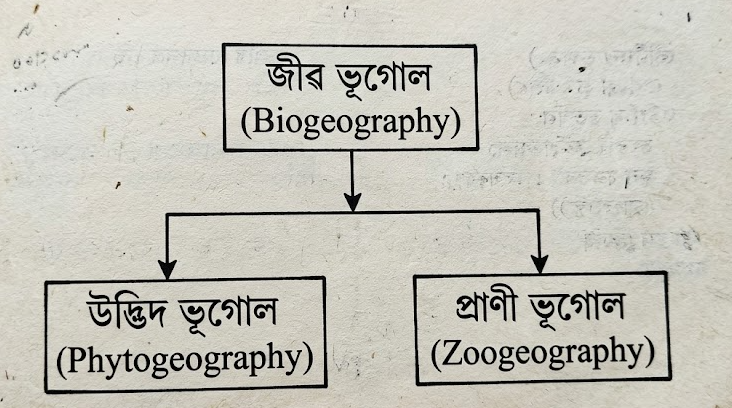
তুলনামূলক বিশ্লেষণ:
| বৈশিষ্ট্য | উদ্ভিদ ভূগোল (Phytogeography) | প্ৰাণী ভূগোল (Zoogeography) |
| ১. অধ্যয়নৰ বিষয় | পৃথিৱীত বিভিন্ন উদ্ভিদ সম্প্ৰদায়ৰ বিস্তাৰ আৰু অৰণ্যৰ বিতৰণ। | পৃথিৱীৰ বিভিন্ন প্ৰান্তত প্ৰাণীকুলৰ বিতৰণ আৰু প্ৰব্ৰজন। |
| ২. গতিশীলতা | উদ্ভিদ স্থানু (অচল), সেয়ে ইহঁত স্থানীয় জলবায়ু আৰু মাটিৰ ওপৰত পোনপটীয়াকৈ নিৰ্ভৰশীল। | প্ৰাণী গতিশীল, সেয়ে প্ৰতিকূল পৰিৱেশত প্ৰাণীকুলে স্থানান্তৰ বা প্ৰব্ৰজন কৰিব পাৰে। |
| ৩. ভৌগোলিক নিৰ্ভৰশীলতা | অঞ্চল এটাৰ উত্তাপ, বৰষুণ আৰু সূৰ্যৰ পোহৰে পোনপটীয়াকৈ উদ্ভিদৰ গঠন নিৰ্ণয় কৰে। | প্ৰাণীৰ বিতৰণ উদ্ভিদৰ উপস্থিতি (খাদ্য) আৰু ভৌগোলিক বাধাৰ (পাহাৰ, সাগৰ) দ্বাৰা নিয়ন্ত্ৰিত হয়। |
| ৪. ভূমিকা | ই পৰিস্থিতিতন্ত্ৰৰ প্ৰাথমিক উৎপাদক স্তৰৰ ভৌগোলিক ভেটি বিশ্লেষণ কৰে। | ই উপভোক্তা স্তৰৰ গতিশীলতা আৰু পাৰস্পৰিক সম্পৰ্ক স্পষ্ট কৰে। |
দুয়োটা শাখাই পৰস্পৰৰ পৰিপূৰক, কিয়নো উদ্ভিদৰ বিতৰণৰ ওপৰতেই প্ৰাণীৰ বসতি আৰু বিস্তাৰ নিৰ্ভৰ কৰে।
৯. পাৰিৱেশিক ব্যৱস্থাপনাত (Environmental Management) জীৱ ভূগোল অধ্যয়নৰ প্ৰয়োজনীয়তা ব্যাখ্যা কৰা। [২০২৫]
উত্তৰ: বৰ্তমান যুগৰ অবাধ প্ৰাকৃতিক শোষণ আৰু জলবায়ু পৰিৱৰ্তনৰ সংকট মোকাৰবল কৰাত জীৱ ভূগোলৰ অধ্যয়ন অপৰিহাৰ্য হৈ পৰিছে।
প্ৰাকৃতিক বাসস্থান চিনাক্তকৰণ: জীৱ ভূগোলে কোনবোৰ প্ৰজাতি বিলুপ্তিৰ পথত আৰু কোনবোৰ অঞ্চল জৈৱিকভাৱে অত্যন্ত সংবেদনশীল (Ecologically Sensitive Areas), সেইবোৰ মেপিং (Mapping) আৰু নিৰ্ণয় কৰাত সহায় কৰে।
ৰাষ্ট্ৰীয় উদ্যান আৰু কৰিড'ৰ নিৰ্মাণ: বন্যপ্ৰাণীৰ সুৰক্ষিত বিচৰণৰ বাবে সংৰক্ষিত বনাঞ্চল আৰু 'বন্যপ্ৰাণী কৰিড'ৰ' (Wildlife Corridors) গঠনৰ ভৌগোলিক পৰিকল্পনা জীৱ ভূগোলৰ অধ্যয়নৰ ওপৰত নিৰ্ভৰ কৰে।
বনাঞ্চল পুনৰুদ্ধাৰ (Reforestation): কোনো এক অঞ্চলত পুনৰ গছপুলি ৰোপণ কৰাৰ সময়ত সেই অঞ্চলৰ জলবায়ু আৰু মাটিৰ উপযোগী থলুৱা উদ্ভিদ নিৰ্বাচনত জীৱ ভূগোলে বৈজ্ঞানিক পথ দেখুৱায়।
গোলকীয় পৰিৱৰ্তনৰ প্ৰভাৱ নিৰীক্ষণ: গোলকীয় উত্তাপ বৃদ্ধিৰ ফলত উদ্ভিদ আৰু প্ৰাণী কিদৰে মেৰু অঞ্চল বা ওখ পৰ্বতৰ দিশে স্থানান্তৰিত হৈছে, তাৰ তথ্য পৰিৱেশ ব্যৱস্থাপনাত ব্যৱহাৰ কৰা হয়।
সেয়েহে, বহনক্ষম উন্নয়ন আৰু প্ৰাকৃতিক সম্পদ সংৰক্ষণৰ বাবে জীৱ ভূগোল এক ব্যৱহাৰিক বিজ্ঞান।
১০. সাম্প্ৰতিক সময়ত জীৱ ভূগোল অধ্যয়নৰ গুৰুত্ব কিয় বৃদ্ধি পাইছে? বহলাই লিখা। [২০২৫]
উত্তৰ: একবিংশ শতিকাত মানৱ সৃষ্ট পৰিৱেশ পৰিৱৰ্তনৰ পৰিপ্ৰেক্ষিতত জীৱ ভূগোলৰ প্ৰাসংগিকতা পূৰ্বতকৈ বহু গুণে বৃদ্ধি পাইছে।
গুৰুত্ব বৃদ্ধিৰ মূল কাৰণসমূহ:
ষষ্ঠ গণ বিলুপ্তিৰ সংকট (Sixth Mass Extinction): ইতিহাসত প্ৰথমবাৰৰ বাবে মানুহৰ ক্ৰিয়াকলাপৰ ফলত অভূতপূৰ্ব গতিত প্ৰজাতি বিলুপ্ত হৈছে। এই সংকটৰ গভীৰতা বুজিবলৈ আৰু প্ৰজাতি সুৰক্ষাৰ ব্যৱস্থা ল'বলৈ জীৱ ভূগোলৰ জ্ঞান অপৰিহাৰ্য।
গোলকীয় জলবায়ু পৰিৱৰ্তন: বায়ুমণ্ডলৰ উত্তাপ বৃদ্ধিৰ লগে লগে পৃথিৱীৰ প্ৰাকৃতিক বায়'মসমূহৰ (Biomes) সীমা সলনি হৈছে। বহুতো প্ৰাণী আৰু উদ্ভিদে নিজৰ ভৌগোলিক বিস্তাৰ সলনি কৰিবলৈ বাধ্য হৈছে, যাৰ নিৰীক্ষণ জীৱ ভূগোলৰ দ্বাৰা কৰা হয়।
বহনক্ষম উন্নয়ন লক্ষ্য (SDGs): ৰাষ্ট্ৰসংঘৰ 'Life on Land' (SDG 15) আৰু 'Climate Action' (SDG 13) লক্ষ্যত উপনীত হ'বলৈ প্ৰাকৃতিক বাসস্থান আৰু জৈৱ বৈচিত্ৰ্যৰ সঠিক ভৌগোলিক মূল্যায়ন প্ৰয়োজন।
নতুন ৰোগ আৰু মহামাৰীৰ উৎস নিৰ্ণয়: বনাঞ্চল ধ্বংসৰ ফলত বন্যপ্ৰাণীৰ পৰা মানুহৰ শৰীৰলৈ জুন'টিক ৰোগ (Zoonotic diseases) সংক্ৰমিত হোৱাৰ ভৌগোলিক কাৰণসমূহ বুজাত জীৱ ভূগোলৰ ভূমিকা আছে।
প্ৰকৃতি আৰু মানৱ সমাজৰ মাজত সমন্বয় স্থাপন কৰি পৃথিৱীক ভৱিষ্যত প্ৰজন্মৰ বাবে বাসোপযোগী কৰি ৰাখিবলৈ জীৱ ভূগোল অধ্যয়ন আজিৰ সময়ত অত্যন্ত সময়োপযোগী।
One-Mark Questions with Answers
1. What is Biogeography?
Answer: Biogeography is the branch of geography that studies the spatial distribution of living organisms, including plants and animals, and their relationship with the physical environment.
2. What is the biosphere? [2025 PYQ]
Answer: The biosphere is the zone of the Earth where life exists. It includes parts of the atmosphere, hydrosphere and lithosphere that support living organisms.
3. Who coined the term ‘Ecology’? [2025 PYQ]
Answer: The term Ecology was coined by the German biologist Ernst Haeckel in 1866.
4. What is Ecology?
Answer: Ecology is the scientific study of the relationships between living organisms and their physical and biological environment.
5. What is an ecosystem?
Answer: An ecosystem is a functional unit in which living organisms interact with one another and with the non-living components of their environment.
6. What is biodiversity?
Answer: Biodiversity means the variety and variability of living organisms, including diversity of genes, species and ecosystems.
7. What is a food chain? [2025 PYQ]
Answer: A food chain is a sequence through which food, energy and nutrients pass from one organism to another.
8. Name the three major components of an ecosystem.
Answer: Producers, consumers and decomposers.
9. What is a producer?
Answer: A producer is an organism, mainly a green plant, that prepares its own food through photosynthesis.
10. What is a consumer?
Answer: A consumer is an organism that obtains food by feeding on plants or other organisms.
11. What is a decomposer?
Answer: A decomposer is an organism such as a bacterium or fungus that breaks down dead organic matter.
12. What is species diversity?
Answer: Species diversity refers to the variety and relative abundance of different species in a particular area.
13. What is genetic diversity?
Answer: Genetic diversity is the variation in genes among individuals of the same species.
14. Mention two major threats to biodiversity. [2025 PYQ]
Answer: Habitat destruction and overexploitation of biological resources are two major threats to biodiversity.
15. What is an ecological pyramid?
Answer: An ecological pyramid is a graphical representation of the number, biomass or energy present at different trophic levels of an ecosystem.
PART B — 15 Short-Answer Questions
Approximately 50 words each
1. What is the meaning of Biogeography?
Answer: Biogeography is the study of the geographical distribution of plants, animals and other living organisms over the Earth's surface. It explains why particular organisms occur in particular places and how climate, relief, soil, water and human activities influence their distribution.
2. Explain the scope of Biogeography.
Answer: The scope of biogeography is broad. It includes the study of the distribution of plants and animals, ecosystems, biodiversity, ecological relationships and environmental changes. It also helps in understanding conservation, habitat management, biodiversity protection and the effects of human activities on living organisms.
3. Why is the study of Biogeography important?
Answer: Biogeography helps us understand the distribution and diversity of living organisms. It is useful for biodiversity conservation, environmental management, wildlife protection and ecosystem planning. It also helps explain how climate change, deforestation, pollution and other human activities affect plants, animals and their habitats.
4. What is the biosphere? Explain briefly. [2025 PYQ]
Answer: The biosphere is the life-supporting zone of the Earth. It includes parts of the atmosphere, land and water where living organisms can survive. Plants, animals and microorganisms interact with one another and with their physical surroundings within the biosphere.
5. What is Ecology? Explain its importance. [2025 PYQ]
Answer: Ecology is the study of relationships between organisms and their environment. It helps us understand interactions among plants, animals, microorganisms and physical factors such as soil, water and climate. Ecological knowledge is important for environmental management, conservation and maintaining ecological balance.
6. What is an ecosystem? Mention its major components.
Answer: An ecosystem is a functional unit where living organisms interact with one another and with non-living surroundings. Its major components are biotic components, such as producers, consumers and decomposers, and abiotic components, such as sunlight, air, water, soil, minerals and temperature.
7. What is a food chain? [2025 PYQ]
Answer: A food chain shows the transfer of food and energy from one organism to another. It usually begins with producers, followed by herbivores and then carnivores. For example: Grass → Grasshopper → Frog → Snake → Eagle. Energy decreases as we move to higher trophic levels.
8. What is a food web?
Answer: A food web is a network of interconnected food chains within an ecosystem. Since most organisms eat more than one type of food and may be eaten by several organisms, many food chains become interconnected. Food webs provide greater stability to ecosystems.
9. What are trophic levels?
Answer: Trophic levels are the different feeding positions occupied by organisms in a food chain. Producers form the first trophic level, herbivores the second, primary carnivores the third and higher carnivores occupy subsequent levels. Energy is transferred from one trophic level to another.
10. What is biodiversity?
Answer: Biodiversity refers to the variety of living organisms found on Earth. It includes diversity at three main levels: genetic diversity, species diversity and ecosystem diversity. Biodiversity provides food, medicines, raw materials and ecological services and is essential for maintaining healthy ecosystems.
11. Mention two major threats to biodiversity. [2025 PYQ]
Answer: Two major threats to biodiversity are habitat destruction and overexploitation. Deforestation, urbanisation and agricultural expansion destroy natural habitats. Excessive hunting, fishing and collection of biological resources reduce species populations. Pollution, invasive species and climate change are also important threats.
12. What is genetic diversity?
Answer: Genetic diversity refers to variations in genes among individuals belonging to the same species. It helps species adapt to environmental changes, diseases and other pressures. Greater genetic diversity increases the ability of a population to survive changing environmental conditions.
13. What is species diversity?
Answer: Species diversity refers to the variety of species present in a particular geographical area and their relative abundance. An area containing many different plant and animal species has high species diversity. Tropical forests are well-known examples of areas with high species diversity.
14. What are the main components of an ecosystem?
Answer: An ecosystem consists of abiotic and biotic components. Abiotic components include sunlight, temperature, water, air, soil and minerals. Biotic components include producers, consumers and decomposers. These components interact continuously through energy flow and nutrient cycling.
15. How does Biogeography help in environmental management?
Answer: Biogeography provides information about the distribution of species, habitats and ecosystems. This knowledge helps identify areas requiring protection, plan wildlife reserves and manage natural resources. It also helps assess the effects of deforestation, pollution, climate change and other environmental problems.
PART C — 10 Long-Answer Questions
Approximately 200 words each
1. What is Biogeography? Discuss its scope and significance.
Answer: Biogeography is a branch of geography that studies the geographical distribution of living organisms, particularly plants and animals, over the Earth's surface. It also examines the relationship between organisms and their physical environment. The distribution of organisms is influenced by climate, relief, soil, water, latitude, altitude and human activities.
The scope of biogeography is very wide. It includes the study of the distribution of plants and animals, ecosystems, biodiversity, ecological relationships and environmental changes. It also considers the historical and geographical factors responsible for the present distribution of organisms. Biogeography is closely related to ecology, environmental science, geology and climatology.
The significance of biogeography is especially important in the present period of environmental change. It helps identify biodiversity-rich regions and areas containing rare or endangered species. It provides useful information for wildlife conservation, national parks, protected areas and habitat management. It also helps understand the effects of deforestation, urbanisation, pollution and climate change on living organisms.
Thus, biogeography helps us understand the relationship between life and place and provides a scientific basis for conservation and sustainable environmental management.
2. Describe the meaning and importance of the biosphere. [2025 PYQ]
Answer: The biosphere is the life-supporting zone of the Earth where living organisms exist. It includes the portions of the atmosphere, hydrosphere and lithosphere that are suitable for life. Plants, animals and microorganisms form an interconnected living system within the biosphere.
The biosphere is important because it provides the basic conditions required for life. Plants obtain sunlight, water, carbon dioxide and minerals for growth. Animals depend directly or indirectly on plants for food. Microorganisms help decompose dead organic matter and return nutrients to the environment.
The biosphere also maintains important ecological processes. Oxygen and carbon dioxide are continuously exchanged between organisms and the atmosphere. Water and nutrients circulate through natural cycles. Ecosystems within the biosphere also regulate environmental conditions and support human life.
However, human activities such as deforestation, pollution, overpopulation, industrialisation and excessive exploitation of natural resources are putting pressure on the biosphere. Climate change is also affecting ecosystems and species distribution.
Therefore, understanding the biosphere is essential for protecting ecological balance. Proper conservation of forests, water bodies, wildlife and other natural resources is necessary for maintaining a healthy biosphere.
3. What is Ecology? Discuss its importance in understanding the relationship between organisms and their environment. [2025 PYQ]
Answer: Ecology is the scientific study of the relationships between living organisms and their environment. The term Ecology was coined by Ernst Haeckel in 1866. Ecology studies both the relationships among organisms and their relationships with physical factors such as climate, soil, water, light and temperature.
Every organism depends on its environment for survival. Green plants require sunlight, water, carbon dioxide and minerals for photosynthesis. Herbivores depend on plants for food, while carnivores depend on other animals. Decomposers break down dead organisms and return nutrients to the environment.
Ecology helps us understand important processes such as food chains, food webs, energy flow, nutrient cycling, population relationships and ecological balance. It also explains how changes in one component of an ecosystem can affect other components.
The study of ecology is highly important for environmental management. It helps us understand the effects of deforestation, pollution, habitat destruction and climate change. Ecological knowledge is also useful for conserving biodiversity and managing forests, wetlands, wildlife and other natural resources.
Thus, ecology provides a scientific understanding of the complex relationship between organisms and their surroundings and helps humans maintain a balanced and sustainable environment.
4. Describe the components and structure of an ecosystem.
Answer: An ecosystem is a functional unit in which living organisms interact with one another and with the non-living environment. A pond, forest, grassland and lake are common examples of ecosystems.
An ecosystem has two broad components: abiotic and biotic.
The abiotic components include sunlight, temperature, rainfall, water, air, soil, minerals and nutrients. These factors provide the physical conditions necessary for organisms to survive.
The biotic components consist of living organisms. They can be divided into three major groups:
- Producers: Green plants and other autotrophs prepare food using sunlight through photosynthesis.
- Consumers: Animals and other organisms depend directly or indirectly on producers for food. Herbivores, carnivores and omnivores are consumers.
- Decomposers: Bacteria and fungi break down dead plants and animals and return nutrients to the environment.
Energy generally enters an ecosystem through sunlight and passes from producers to consumers. Decomposers help recycle nutrients.
The components of an ecosystem are therefore closely interconnected. A change in one component may affect the others. Proper functioning of these relationships is necessary for maintaining ecological balance and ecosystem stability.
5. Explain the flow of energy in an ecosystem. Discuss food chain, food web and ecological pyramid. [2025 PYQ]
Answer: Energy flow is one of the most important processes in an ecosystem. The main source of energy is the Sun. Green plants capture solar energy through photosynthesis and convert it into chemical energy stored in food.
Energy then moves through different trophic levels. Producers form the first trophic level. Herbivores that feed on plants form the second level, while carnivores occupy higher levels.
A simple food chain can be shown as:
Grass → Grasshopper → Frog → Snake → Eagle
A food chain represents a single pathway of energy transfer. However, in nature, organisms usually have several food sources. Therefore, many interconnected food chains form a food web.
An ecological pyramid represents the trophic structure of an ecosystem. It may be a pyramid of number, biomass or energy. The energy pyramid is always upright because energy decreases as it moves from one trophic level to the next.
Only a small proportion of energy is transferred to the next trophic level, while much energy is lost as heat during metabolic activities.
Thus, food chains, food webs and ecological pyramids help us understand the movement of energy and the feeding relationships within an ecosystem.
6. Explain the concept of biodiversity and discuss its major levels.
Answer: Biodiversity means the variety and variability of living organisms on Earth. It includes plants, animals and microorganisms and the ecosystems in which they live. Biodiversity is not limited to the number of species; it also includes genetic variation and ecosystem variation.
There are three major levels of biodiversity:
1. Genetic diversity:
It refers to variation in genes among individuals of the same species. For example, different varieties of rice may have different characteristics. Genetic diversity helps species adapt to environmental changes.
2. Species diversity:
It refers to the variety of species found in a particular region. A tropical forest containing many species of plants, birds, mammals and insects has high species diversity.
3. Ecosystem diversity:
It refers to the variety of ecosystems found in a region or on Earth. Forests, grasslands, wetlands, deserts, rivers and marine ecosystems are examples.
Biodiversity is important for maintaining ecological balance and providing food, medicine, timber, fibres and other resources. It also supports pollination, soil formation, nutrient cycling and climate regulation.
Therefore, biodiversity is a valuable natural resource and its conservation is essential for both environmental stability and human welfare.
7. Explain the major factors responsible for the loss of biodiversity and describe strategies for its conservation. [2025 PYQ]
Answer: Biodiversity is declining rapidly due to both natural and human-induced factors. The major causes of biodiversity loss include habitat destruction, overexploitation, pollution, invasive species and climate change.
Habitat destruction is one of the most serious causes. Deforestation, agricultural expansion, mining, roads and urbanisation destroy or fragment natural habitats. Overexploitation through excessive hunting, fishing, logging and collection of biological resources reduces species populations. Pollution of air, water and soil also damages ecosystems. Invasive species may compete with native species for food and space. Climate change can alter temperature and rainfall patterns and force species to shift their geographical ranges.
Biodiversity can be conserved through both in-situ and ex-situ conservation. In-situ conservation protects organisms within their natural habitats through national parks, wildlife sanctuaries, biosphere reserves and protected forests. Ex-situ conservation protects species outside their natural habitats through zoos, botanical gardens, seed banks and gene banks.
Other measures include controlling illegal wildlife trade, reducing pollution, restoring degraded habitats, promoting sustainable resource use and increasing public awareness.
Thus, effective biodiversity conservation requires cooperation between governments, local communities and individuals.
8. Describe the importance of Biogeographic studies in conservation and environmental management. [2025 PYQ]
Answer: Biogeographic studies are important because they explain the geographical distribution of plants, animals and ecosystems and the factors controlling their distribution. This information is essential for both conservation and environmental management.
Biogeography helps identify areas with high species diversity, rare species and endangered organisms. Such information is useful in selecting suitable locations for national parks, wildlife sanctuaries, biosphere reserves and other protected areas.
Biogeographic studies also help understand the relationship between species and their habitats. When a habitat is destroyed or fragmented, scientists can assess which species are likely to be affected. This makes it possible to develop suitable conservation strategies.
Biogeography is also useful for understanding environmental changes. Changes in temperature, rainfall, land use and vegetation can alter the distribution of species. Therefore, biogeographic information helps assess the possible effects of climate change and human activities.
It also contributes to sustainable management of forests, wetlands, grasslands and other natural resources. Mapping the distribution of organisms can help prevent overexploitation and protect important habitats.
Thus, biogeography provides a scientific foundation for biodiversity conservation, habitat protection and proper environmental planning and management.
9. Discuss the relationship between biodiversity, ecosystem and ecology.
Answer: Biodiversity, ecosystem and ecology are closely related concepts in the study of the natural environment.
Biodiversity refers to the variety of life at the genetic, species and ecosystem levels. It describes the richness and variation of living organisms. An area containing many different species and ecosystems generally has high biodiversity.
An ecosystem is a functional unit where living organisms interact with one another and with non-living components such as soil, water, air, sunlight and temperature. Forests, lakes, grasslands and wetlands are examples of ecosystems.
Ecology is the scientific study of the relationships between organisms and their environment. It explains how organisms interact with each other and how they depend on physical factors.
These three concepts are interconnected. Ecology helps us understand the functioning of ecosystems, while ecosystems provide habitats in which biodiversity exists. Biodiversity, in turn, contributes to ecosystem functioning and stability. For example, different plants, animals and microorganisms perform different roles in a forest ecosystem.
When biodiversity declines, ecosystem functioning may also be affected. Therefore, ecological understanding is necessary for conserving biodiversity and maintaining healthy ecosystems.
Together, these concepts help us understand the complex relationship between living organisms and their environment.
10. Discuss the major threats to biodiversity and suggest suitable measures for its protection. [2025 PYQ]
Answer: Biodiversity is under increasing pressure because of rapid human activities and environmental changes. The major threats include habitat destruction, overexploitation, pollution, invasive species and climate change.
Habitat destruction occurs when forests, wetlands, grasslands and other natural areas are converted for agriculture, industries, settlements, roads and mining. Habitat fragmentation further isolates populations. Overhunting, excessive fishing and illegal wildlife trade reduce the populations of many species. Pollution affects air, water and soil and may cause death or reproductive problems in organisms. Invasive species can displace native species. Climate change can also alter habitats and disturb the natural distribution of species.
Several measures can be adopted to protect biodiversity. Natural habitats should be protected through national parks, wildlife sanctuaries, biosphere reserves and other protected areas. In-situ conservation should be encouraged for protecting species in their natural habitats, while ex-situ conservation can be used for endangered species through zoos, botanical gardens and gene or seed banks.
Sustainable use of forests, fisheries and other biological resources should be promoted. Illegal hunting and wildlife trade must be controlled. Environmental education and community participation are also important.
Therefore, biodiversity protection requires long-term planning, scientific management and public cooperation.