Very Short Answer Questions (1 Mark Each) :
Q1. Name the ancient tree mentioned in Sujata Bhatt’s poem prescribed for your study. [GU 2023]
Answer: The Oak tree (in So Many Oaks).
Q2.The palanquin bearers sing gaily. (True / False) [GU 2023]
Answer: True.
Q3. Name the person referred to as 'her' in Yeats' poem, 'No Second Troy'. [GU 2023]
Answer: Maud Gonne.
Q4. What was Prafulla's greatest ambition in the story 'Audition'? [GU 2023]
Answer: To become an approved, regular broadcast singer on All India Radio.
Q5. Name the narrator's uncle in the story, 'The Ring'. [GU 2023]
Answer: Uncle Con.
Q6. What does the figure of the witch symbolize in the poem, 'So Many Oaks'? [GU 2024]
Answer: Intuitive, ancient feminine wisdom and deep ecocritical harmony with nature.
Q7. In which verse collection is the poem 'This Is a Photograph of Me' included? [GU 2024]
Answer: The Circle Game (1966).
Q8. What was the Hindi song that Prafulla intended to sing in 'Audition'? [GU 2024]
Answer: "Tasveer Banata Hoon, Tasveer Nahin Banti" (from the film Baradari).
Q9. What does W.B. Yeats build on the island in 'The Lake Isle of Innisfree'? [GU Model]
Answer: A small cabin made of clay and wattles.
Q10. Where did the scorpion hide to escape the rain in Ezekiel’s 'Night of the Scorpion'? [GU Model]
Answer: Beneath a sack of rice.
Q11. What is the central ritualistic site depicted in Jayanta Mahapatra’s 'Dawn at Puri'? [GU Model]
Answer: The cremation ground on the holy Puri sea beach, facing the Jagannath Temple.
Q12. In Jacinta Kerketta’s poetry, what does the 'Bazaar' represent? [GU Model]
Answer: Ruthless commercial exploitation and the erasure of indigenous tribal ecology.
Q13. According to Margaret Atwood's 'The Moment', who actually owns the trees and the earth? [GU Model]
Answer: No human does; nature itself reclaims total autonomy and ownership.
Q14. What physical defect did Tara and Chandan share from birth in Mahesh Dattani’s play? [GU Model]
Answer: They were conjoined twins sharing three legs between them.
Q15.Which language does Ngũgĩ wa Thiong'o advocate for African literature in Decolonising the Mind? [GU Model]
Answer: Native African indigenous languages, particularly Gikuyu, rather than colonial English.
Short Conceptual Questions (2 Marks ) :
Q1. Where is the speaker in the poem 'This Is a Photograph of Me'? [GU 2023]
Answer: The speaker exists submerged under the water at the center of the photograph. Having drowned the day before the picture was taken, her spectral presence lies beneath surface reflections, urging the reader to look deeply past blurred physical landscapes to perceive marginalized feminine existence.
Q2. Explain: “With beauty like a tightened bow” ('No Second Troy'). [GU 2023]
Answer: Yeats characterizes Maud Gonne’s aristocratic beauty as severe, noble, and weaponized. Unlike soft feminine aesthetics, her presence resembles an archer’s drawn bow—taut with political tension, fierce heroism, and revolutionary capacity, destined to cause inevitable disruption and psychological torment rather than tranquil domestic peace.
Q3. What is the significance of the title of Yeats' poem, 'No Second Troy'? [GU 2023]
Answer: The title draws a classical parallel between Maud Gonne and Helen of Troy. Yeats implies that while Gonne possessed the destructive grandeur to burn a civilization, contemporary Ireland lacked heroic stature, leaving no epic "Troy" worthy of her tragic, fiery revolutionary zeal.
Q4. Mention any two comparisons used to describe the palanquin in Naidu’s 'The Palanquin Bearers'. [GU 2023]
Answer: Sarojini Naidu compares the palanquin’s swaying motion to “a flower in the wind of our song” and likens its gentle glide over foam to “a bird that skims on the foam of a stream,” emphasizing rhythm, weightlessness, and delicate protective movement.
Q5. What was Prafulla's 'Bhishma Pratigya' in the story 'Audition'? [GU 2023]
Answer: Humiliated by the indifferent, bureaucratic radio audition judges who interrupted his performance abruptly, Prafulla took an unyielding, solemn vow (Bhishma Pratigya) never to sing again in his life, abandoning his lifelong artistic passion due to wounded middle-class pride.
Q6. What were the two things that reminded the narrator of his grandmother in the story 'The Ring'? [GU 2023]
Answer: The narrator was poignantly reminded of his grandmother by the familiar scent of lavender from her stored linen and the worn silver mesh purse containing keepsakes, both symbolizing her silent endurance, elegance, and enduring domestic devotion.
Q7. What is the effect of water on the light in 'This Is a Photograph of Me'? [GU 2024]
Answer: The water acts as an optical distorter, refracting light and creating blurred, elusive contours. This watery distortion visually obscures the speaker’s drowned body, representing how historical and patriarchal structures obscure feminine trauma and true artistic identity under quiet, everyday surfaces.
Q8. State the reason why human beings are called blind and deaf in 'So Many Oaks'. [GU 2024]
Answer: Bhatt describes humans as blind and deaf because they have severed their sensory and spiritual kinship with nature. Blinded by technological modernity, they can neither decipher the ancient language of whispering oak branches nor heed ecological forewarnings.
Q9. How did the grandmother feel after finding her ring in 'The Ring'? [GU 2024]
Answer: She felt a quiet, profound sense of emotional restoration. Finding the ring resolved decades of unspoken distress, vindicating personal loyalty and recovering an irreplaceable symbol of marital memory and maternal heritage from temporary oblivion.
Q10. Explain the contrast between the mother and the peasants in 'Night of the Scorpion'.
Answer: While superstitious peasants chant mantras, analyze past karmic sins, and search for the scorpion with lanterns, the suffering mother remains stoic. Upon recovering, her selfless maternal instinct shines as she simply thanks God the scorpion bit her instead of her children.
Q11. Analyze the symbolic importance of the 'widows' in Mahapatra’s 'Dawn at Puri'.
Answer: The austere, white-clad widows waiting at Puri’s dawn symbolize bleak cultural entrapment, spiritual desperation, and societal abandonment. Their fragile existence at the temple gates exposes the stark tension between institutionalized religious dogma and persistent human impoverishment.
Q12. What ecocritical conflict does Jacinta Kerketta highlight in 'The River, The Mountain, and The Bazaar'?
Answer: Kerketta illustrates the commodification of indigenous landscapes. The river and mountain represent organic harmony, sacred ancestral sustainment, and tribal identity, which the encroaching capitalist 'Bazaar' systematically devalues into mere commercial commodities and extracted raw materials.
Q13. How does Margaret Atwood demystify human ownership in 'The Moment'?
Answer: Atwood exposes anthropocentric hubris. Just as humans proclaim triumph over land and domestic conquest, nature reclaims itself: the trees un-sign themselves, the air withdraws, and the indifferent earth reminds humanity that they are merely temporary, uninvited occupants.
Q14. Why was the healthy third leg given to Chandan instead of Tara in Dattani’s play?
Answer: Despite the medical reality that the leg had better vascular matching with Tara, the family (led by the grandfather and mother) chose Chandan solely due to patriarchal preference, deliberately sacrificing a girl child's physical future for the male heir.
Q15.What constitutes the 'cultural bomb' according to Ngũgĩ wa Thiong'o?
Answer: The cultural bomb is the imperialist imposition of colonial language and culture. It obliterates a colonized people's belief in their names, languages, environment, and heritage, making them perceive their own rich history as a wasteland of non-achievement.
Analytical Long Answer Questions (5 Marks) :
Q1. Discuss the poet’s feelings of admiration and frustration as they appear in 'No Second Troy'. [GU 2024]
Answer: In 'No Second Troy', W.B. Yeats articulates a poignant dialectic between personal heartache and political awe toward Maud Gonne. The poem opens with an attempt to justify the emotional devastation she inflicted upon his life. Yeats acknowledges her radical Irish nationalist campaigning, which stirred "ignorant men" toward violent political upheaval. Yet, his resentment quickly transitions into boundless, classical veneration.
Yeats views Gonne not as an ordinary mortal, but as a tragic, monumental figure transplanted into an unheroic epoch. Her character possesses a high, aristocratic solitude: "With beauty like a tightened bow, a kind / That is not natural in an age like this." Her fiery temperament and revolutionary devotion parallel Helen of Troy. However, Yeats observes the existential tragedy of her situation: Ireland is not an imperial Troy capable of matching her grandeur, nor are the masses equipped for her noble passion. Consequently, Yeats reconciles his romantic frustration by recognizing that her destructive force was elemental and inevitable. She could not have acted otherwise, for her heroic, uncompromising spirit was inherently destined to set minds on fire.
Q2. Comment on the significance of the title in the short story 'Audition'. [GU 2024]
Answer: The title 'Audition' serves as both the central narrative axis and an extended metaphor for socio-artistic validation in post-independence India. On a literal plane, the story revolves around Prafulla’s long-cherished dream of singing for All India Radio, Guwahati. An audition at the radio station represents the pinnacle of cultural legitimacy and middle-class artistic achievement.
Metaphorically, the "audition" becomes an unequal trial between pure creative aspiration and unfeeling institutional bureaucracy. When Prafulla enters the studio, his passion is met with clinical indifference from the judges, who cut his rendition short without understanding the artist's soul. The audition strips him of his dignity rather than elevating his art. This encounter exposes the rigid gatekeeping inherent in institutionalized art forms. Prafulla’s subsequent Bhishma Pratigya—his absolute refusal to ever sing again—transforms a routine radio screening into a permanent crisis of identity and pride. Thus, the title ironically critiques how mechanized administrative evaluations can permanently silence genuine, vulnerable human talent.
Q3. Assess the significance of imagery and ecological consciousness in Sujata Bhatt’s 'So Many Oaks'. [GU 2024]
Answer: Sujata Bhatt’s 'So Many Oaks' establishes an ecofeminist dialogue where arboreal landscapes represent deep memory, intuitive knowledge, and ecological permanence. The poem uses contrasting sensory imagery to juxtapose nature's ancient wisdom against modern humanity's sensory blindness. The oak trees are not passive greenery; they stand as living ancestors, embodying historic resilience and whispering truths that the industrialized world fails to register.
Bhatt weaves folklore and magical realism into the verse through the figure of the witch and symbolic color motifs. The speaker’s intimate alignment with the oaks challenges patriarchal and utilitarian approaches to nature. By depicting humans as "blind and deaf," Bhatt condemns the anthropocentric hubris that views flora merely as timber or vacant space. The dense imagery of spreading roots, textured bark, and protective canopies illustrates that non-human life possesses agency and spiritual interiority. Ultimately, Bhatt uses the oak tree to advocate for ecocritical healing, urging humanity to dismantle modern alienation, recover sensory receptivity, and restore sacred communion with the earth.
Q4. Critically evaluate Sarojini Naidu's 'Palanquin Bearers' as an interplay of rhythm, folk tradition, and protective duty. [GU 2023]
Answer: Sarojini Naidu’s 'Palanquin Bearers' is celebrated for its musicality, lyric fluidity, and evocation of traditional Indian folklore. The poem's dactylic and anapestic rhythms mirror the swaying, synchronized gait of the palanquin bearers as they carry a newly wedded bride across rural pathways.
Rather than portraying their physical labor as oppressive toil, Naidu romanticizes the task through communal affection and protective tenderness. The bearers celebrate the bride’s journey through a cascade of ethereal similes: she sways like "a flower in the wind," skims like "a bird on the foam," and floats like "a laugh from the lips of a dream." These images convey weightlessness, purity, and reverence. The second stanza deepens this emotional spectrum by comparing her to a "star in the dew of our song" and a "tear on the lips of a bride," acknowledging the bittersweet transitional grief of matrimonial departure. Naidu synthesizes rhythm and folk sentiment, turning a traditional chore into a graceful lyrical dance of collective community duty.
Q5. Examine the themes of alienation, death, and spectral identity in Margaret Atwood’s 'This Is a Photograph of Me'. [GU Model]
Answer: Margaret Atwood’s 'This Is a Photograph of Me' subverts traditional pastoral poetry and portraiture to expose themes of gendered erasure, domestic violence, and alienation. Structurally divided between a descriptive outer frame and a parenthetical revelation, the poem begins with a blurry, mundane snapshot of a rural Canadian landscape featuring trees, a slope, and a quiet lake.
The core meaning shifts dramatically in the parenthetical lines, where the speaker reveals that she drowned the day before the photograph was taken. Her body rests invisibly beneath the lake's surface: "I am in the lake, in the center / of the picture, just under the surface." This spectral voice disrupts the pastoral tranquility. The water’s distortion of light symbolizes how patriarchal culture smooths over the erasure and marginalization of women under benign domestic surfaces. The speaker demands active interpretation from the reader, asserting that with careful looking, her presence can still be perceived. Atwood crafts a feminist critique of representation, suggesting that conventional history conceals trauma behind seemingly peaceful vistas.
Q6. Discuss Nissim Ezekiel's 'Night of the Scorpion' as a realistic portrait of Indian rural ethos and maternal sacrifice.
Answer: Nissim Ezekiel’s 'Night of the Scorpion' presents a vivid sociological study of rural Indian life alongside an emotional tribute to maternal love. Set on a rain-drenched night, the poem chronicles the chaotic community response after a scorpion stings the speaker’s mother.
Ezekiel balances detachment with empathy. The arrival of the villagers—"swarming like flies"—highlights collective rural solidarity intermingled with deep-seated superstition. The peasants chant mantras to paralyze the Evil One, interpreting the sting through philosophical fatalism: burning away sins of past births and balancing future fortunes. Meanwhile, the speaker’s father embodies the Westernized, skeptical rationalist who, in desperation, abandons his intellect to try powders, mixtures, and paraffin against the venom.
The poem's emotional climax cuts through this philosophical and superstitious discord. After twenty hours of excruciating pain, the venom subsides, and the mother breaks her silence with a classic statement of selfless devotion: "My mother only said / Thank God the scorpion picked on me / And spared my children." Ezekiel celebrates pure, instinctual maternal love rising far above academic rationale and rural superstition alike.
Q7. Analyze Jayanta Mahapatra’s 'Dawn at Puri' as an interrogation of Indian spirituality, decay, and mortality. [GU Model]
Answer: In 'Dawn at Puri', Jayanta Mahapatra deconstructs romanticized notions of Hindu mysticism, offering a gritty, somber meditation on death, poverty, and institutional faith. Set against the holy coastal city of Puri, the dawn does not bring spiritual renewal, but instead exposes bleak human vulnerabilities.
Mahapatra’s imagery is raw and haunting. The shore is populated by "endless crow noises" and frail, white-clad widows whose eyes carry the "shoddy secret" of desperate survival and religious resignation. Rather than divine liberation, the holy temple city represents the site where societal outcasts wait for mortality. The poem culminates at the cremation ground (Swargadwara), where the speaker watches the burning pyres on the beach, remembering his own mother's final wish to be cremated there. Mahapatra avoids devotional nostalgia, presenting Puri as a space where faith, impoverished realities, and burning human remains collide. Through sparse, evocative modernist verse, Mahapatra reveals the quiet despair lingering beneath the surface of sacred religious rituals.
Q8. Explore the ideological clash between indigenous identity and modern commercialism in Jacinta Kerketta’s poetry. [GU Model]
Answer: Jacinta Kerketta stands as a vital voice in contemporary Indian Adivasi literature, articulating the cultural and ecological dislocation forced upon indigenous communities. In poems such as 'The River, The Mountain, and The Bazaar', Kerketta critiques neo-liberal development models that displace tribal populations and ravage ancestral lands.
For indigenous cultures, the river, mountain, and forest are not exploitable capital; they are sacred living companions that sustain tribal identity, language, and spiritual memory. Kerketta contrasts this holistic existence with the 'Bazaar', which symbolizes consumerist globalization and unbridled resource extraction. The market economy reduces ancient sacred forests to commercial timber and clear-cut mines, while reducing proud self-reliant communities to displaced urban laborers. Kerketta’s poetry laments the erosion of tribal self-determination, sounding an urgent alarm against ecological destruction and cultural assimilation. Her verse reclaims the subaltern voice, asserting that safeguarding indigenous ecological balance is inseparable from preserving human dignity and planetary survival.
Q9. Evaluate the theme of gender bias and systemic medical betrayal in Mahesh Dattani’s play 'Tara'. [GU Model]
Answer: Mahesh Dattani’s 'Tara' examines deeply ingrained patriarchal bias within the modern, educated Indian middle class. The play dramatizes the emotional and physical consequences suffered by conjoined twins, Tara and Chandan, following their surgical separation.
The central tragedy turns on an unforgivable medical betrayal. The twins shared three legs, with the third leg receiving its primary blood supply from Tara's system. Medically, the leg had the highest chance of survival if grafted onto Tara. However, the parents—instigated by the influential maternal grandfather and supported by Dr. Thakkar's compliant ethics—deliberately chose to graft the leg onto Chandan simply because he was the male child. Predictably, the leg withered on Chandan, leaving both children permanently disabled, while Tara was denied her natural right to physical wholeness.
Dattani reveals that patriarchal prejudice is not confined to rural or uneducated spaces; it thrives within modern, sophisticated households. Tara’s eventual death and Chandan’s lingering guilt-ridden exile highlight how systemic misogyny cripples both the victim and the beneficiary of patriarchal privilege.
Q10. Explain Ngũgĩ wa Thiong'o's central thesis on language and cultural imperialism in Decolonising the Mind. [GU Model]
Answer: In Decolonising the Mind, Ngũgĩ wa Thiong'o argues that language is the ultimate vehicle for cultural transmission, collective memory, and psychological sovereignty. He asserts that colonial powers succeeded not merely through military force, but through the deliberate imposition of European languages over native African tongues.
Ngũgĩ explains that language performs a dual role: it serves as a communication tool and carries the entire weight of a people's culture and worldview. When colonial education forced African children to abandon their mother tongues (such as Gikuyu) and rewarded mastery of English, it created a severe psychological rupture. The child learned to associate their native reality, songs, and heritage with backwardness, while viewing the colonial tongue as the sole medium of intellect and civilization.
This process, termed the "cultural bomb," alienates the colonized subject from their immediate environment and history. Ngũgĩ argues that genuine postcolonial liberation cannot occur solely through political independence; African writers and thinkers must decolonize their minds by returning to indigenous languages to articulate their struggles, reclaim cultural dignity, and challenge linguistic hegemony.
1-Mark Objective & Direct Questions :
Question: Name the ancient tree mentioned in Sujata Bhatt’s poem prescribed for your study. [GU 2023-24]
Answer: The Oak tree (in So Many Oaks).
Question: State whether true or false: The palanquin bearers sing gaily. [GU 2023-24]
Answer: True.
Question: Name the person referred to as 'her' in W.B. Yeats’ poem 'No Second Troy'. [GU 2023-24]
Answer: Maud Gonne.
Question: What was Prafulla's greatest ambition in the story Audition? [GU 2023-24]
Answer: To perform as an approved radio singer for All India Radio.
Question: Name the narrator's uncle in the story 'The Ring'. [GU 2023-24]
Answer: Uncle Con.
Question: In which verse collection is Margaret Atwood’s poem This Is a Photograph of Me included? [GU 2024]
Answer: The Circle Game (1964/1966).
Question: What does the figure of the witch symbolize in the poem So Many Oaks? [GU 2024]
Answer: Persecuted female wisdom, misunderstood intuition, and the tragic alienation of humanity from nature.
Question: What was the title of the masterpiece painted by Old Behrman in O. Henry’s The Last Leaf?
Answer: A single ivy leaf painted on the brick wall.
Question: Who is the open French window supposed to be kept waiting for in Saki’s The Open Window?
Answer: Mrs. Sappleton’s husband and her two young brothers (along with their spaniel).
Question: What does the trunk/empty box symbolize in Indira Goswami’s The Empty Box?
Answer: The emotional void, socio-economic destitution, and suppressed grief of the protagonist.
Question: Who is Mr. Pink in Satyajit Ray’s short story The Maths Teacher, Mr. Pink and Tipu?
Answer: An eccentric, kind-hearted alien who befriends Tipu and possesses fantastical abilities.
Question: According to Ngũgĩ wa Thiong'o in Decolonising the Mind, what is the primary vehicle through which a culture transmits its values?
Answer: Language.
Question: Who is the narrator in Mahesh Dattani’s play Tara?
Answer: Chandan (later known as Dan in London).
Question: In Jacinta Kerketta’s poetry collection Angor, what does the word 'Angor' literally signify?
Answer: An ember or a burning piece of coal (symbolizing Adivasi struggle, identity, and inner fire).
Question: What is the disease personified as a cold, unseen stranger in O. Henry’s The Last Leaf?
Answer: Pneumonia ("Mr. Pneumonia").
Short Questions (Approx. 50 Words Each) :
Q. Explain the line: "With beauty like a tightened bow" (No Second Troy). [GU 2023-24]
Answer: Yeats uses this striking simile to depict Maud Gonne’s beauty not as gentle or passive, but as austere, tense, and intrinsically dangerous. Like a drawn weapon ready to release an arrow, her aristocratic grace and fiery revolutionary nature inevitably provoke political unrest and emotional turmoil.
Q. What does the word 'gaily' suggest about the palanquin bearers' attitude in Sarojini Naidu's poem? [GU 2024]
Answer: The word 'gaily' underscores that the bearers carry the bride with genuine joy, rhythmic ease, and reverence rather than viewing their labor as a burdensome task. It reflects traditional communal pride, harmonizing their physical stride with celebratory devotion to ensure the bride's journey remains smooth and joyous.
Q. Where is the speaker in Margaret Atwood's poem This Is a Photograph of Me? [GU 2023-24]
Answer: The speaker is located submerged under the surface of the lake, having drowned the day before the photograph was taken. She exists beneath the blurry landscape, challenging the viewer to look past superficial visual representations to perceive her submerged, marginalized, and silenced presence.
Q. Why was the lost ring precious to the narrator’s grandmother in The Ring? [GU 2023-24]
Answer: The ring was precious because it carried immense sentimental, familial, and emotional value. Far beyond its physical cost, the heirloom stood as a repository of personal history, marital fidelity, and cherished memories of loved ones, making its loss deeply distressing to her stoic spirit.
Q. Why did Prafulla vow never to sing again in the story Audition? [GU 2024]
Answer: Prafulla took his solemn vow (Bhishma Pratigya) after facing profound humiliation and bureaucratic indifference during his audition at All India Radio. The dismissive callousness of the selectors shattered his lifelong artistic pride and dignity, driving him to silence his talent forever.
Q. State the reason why human beings are described as blind and deaf in Sujata Bhatt's So Many Oaks. [GU 2024]
Answer: Humans are termed blind and deaf because they have severed their spiritual connection with the natural world. Blinded by mechanistic modernity and rationalism, they can no longer perceive the ancient wisdom of the trees or hear the subtle, living voices of nature and ancestral spirits.
Q. How does Vera fabricate the tragedy of the open window in Saki's The Open Window?
Answer: Vera exploits Mr. Nuttel’s nervous disposition by inventing a false family tragedy. She tells him that her aunt keeps the French window open because her husband and brothers vanished in a bog three years earlier on that exact date and are expected to return through it.
Q. What role does Johnsy’s psychological state play in her illness in O. Henry’s The Last Leaf?
Answer: Johnsy’s decline is worsened by her loss of will to live. Convinced that she will die when the last ivy leaf falls, she ties her survival to an external, fragile object. Her recovery occurs only when Behrman's painted leaf restores her hope and mental resilience.
Q. How is gender bias manifested in the surgical separation of the twins in Mahesh Dattani’s Tara?
Answer: The medical decision to favor Chandan over Tara reveals entrenched patriarchal values. Despite the third leg being anatomically compatible with Tara, the family and surgeon allot it to the male child, sacrificing Tara’s physical vitality to ensure Chandan’s social advancement.
Q. What is the central theme of Indira Goswami’s short story The Empty Box?
Answer: The story deals with loneliness, unfulfilled emotional desires, and socioeconomic marginalization. Goswami captures the pathos of human vulnerability and patriarchal neglect through a desolate woman’s clinging to an empty trunk as a physical vessel for her hidden pain and shattered dreams.
Q. Explain the significance of the alien Mr. Pink in Satyajit Ray’s story.
Answer: Mr. Pink serves as an outsider who reveals the limitations of rigid human pedantry and conventional education. Through his whimsical, compassionate intervention in Tipu’s life, Ray contrasts mechanical rote learning, embodied by the strict maths teacher, with imaginative, benevolent wonder.
Q. What does Ngũgĩ wa Thiong'o mean by the "cultural bomb" in Decolonising the Mind?
Answer: Ngũgĩ describes the "cultural bomb" as imperialist education that destroys a colonized people's belief in their names, languages, heritage, and capacities. It makes them view their past as a wasteland of non-achievement and encourages them to identify exclusively with the colonizer's linguistic and cultural systems.
Q. How does Jacinta Kerketta portray nature and displacement in Angor? [GU Syllabus]
Answer: Kerketta portrays nature as the ancestral mother and lifeblood of Adivasi identity. She condemns corporate exploitation, deforestation, and state-sponsored industrialization, showing how physical uprooting from forests leads directly to cultural erasure and the loss of indigenous autonomy.
Q. How do the palanquin bearers convey a sense of light movement through their rhythm in Naidu's poem?
Answer: Through anapestic and dactylic rhythms, Naidu creates a buoyant cadence matching the carriers' steps. Images like swaying like a flower, skimming like a bird, and floating like a laugh reflect their careful, weightless suspension of the bride across the landscape.
Q. Discuss the symbolic meaning of Behrman's sacrifice in The Last Leaf.
Answer: Old Behrman’s sacrifice represents the ultimate triumph of selfless art. By enduring a freezing storm to paint the leaf that saves Johnsy’s life, he transforms his lifelong artistic failure into a true masterpiece of human empathy and life-giving love.
Analytical Long Questions (Approx. 200 Words Each) :
Q. Discuss W.B. Yeats’ conflicted feelings of admiration and frustration in 'No Second Troy'. [GU 2024]
Answer: In No Second Troy, Yeats wrestles with his complex relationship with Maud Gonne, balancing bitter personal grievance with awe at her heroic persona. The poem opens with a defensive rhetorical question, asking why he should blame her for filling his days with misery and breaking his heart. He recognizes that her revolutionary politics stoked violent agitation among Dublin's working class. Yet, as the poem unfolds, Yeats shifts from personal resentment to mythic idealization.
He realizes that Maud Gonne cannot be judged by ordinary moral standards. Her mind is characterized as "high and solitary and most stern," endowed with a "beauty like a tightened bow". By comparing her to Helen of Troy, Yeats elevates her beyond standard condemnation; her destructive energy was not a deliberate flaw but an inevitable product of her aristocratic nature living in an unheroic age. He concludes that Dublin was simply too small and mediocre to provide a worthy stage for her revolutionary power, asking, "Was there another Troy for her to burn?" The poem stands as a testament to tragic romantic disillusionment elevated to classical grandeur.
Q. Critically evaluate Sarojini Naidu's 'The Palanquin Bearers' with focus on its figurative language and rhythm. [GU 2023-24]
Answer: Sarojini Naidu's The Palanquin Bearers offers a lyric portrayal of traditional Indian cultural practices, defined by melodic cadence and vivid imagery. The poem presents the palanquin bearers carrying a newlywed bride to her marital home, transforming manual labor into a devotional rite of passage. Naidu’s poetic craft is evident in the dynamic rhythmic cadence, which mimics the physical swaying of the palanquin poles upon the bearers' shoulders.
The poem relies on a series of rapid similes that emphasize weightlessness, elegance, and transition. The bride is described as swaying "like a flower on the wind of our song," skimming "like a bird on the foam of a stream," and floating "like a laugh from the lips of a dream." These metaphors distance the bride from heavy physical reality, presenting her as delicate and ethereal. Additionally, contrasting images such as hanging "like a star in the dew of our song" and falling "like a tear from the eyes of a bride" capture the emotional shift from bridal joy to melancholy as she departs her childhood home.
Q. Analyze the themes of voice, identity, and submerged reality in Margaret Atwood's 'This Is a Photograph of Me'. [GU 2024]
Answer: Margaret Atwood’s This Is a Photograph of Me uses an unconventional visual metaphor to explore themes of female erasure, poetic gaze, and hidden trauma. The poem begins with a detached description of an old, smeared landscape photograph showing blurred lines, a slope, a tree, and a small frame house. However, a sudden shift occurs in the parenthetical stanzas, where the speaker reveals that she drowned in the lake the day before the picture was captured.
This revelation transforms a conventional nature setting into a site of unresolved trauma. The speaker's submerged position serves as a metaphor for the systemic silencing and marginalization of women within patriarchal and colonial frameworks. Her presence is invisible on the physical surface of the print, yet it permeates the scene. Atwood emphasizes that perceiving truth requires looking past dominant representations into deep, murky waters where marginalized voices reside: "if you look long enough... eventually you will be able to see me." The poem challenges passive observation, urging the reader to confront hidden histories.
Q. Discuss the significance of the title and thematic treatment of disillusionment in the story 'Audition'. [GU 2024]
Answer: The title Audition carries deep thematic resonance, serving as the central axis for its critique of bureaucratic apathy and the vulnerability of provincial artists. In its literal sense, the title points to the radio audition at All India Radio that Prafulla, a passionate small-town vocalist, undertakes with great hope and earnest preparation. Symbolically, however, the audition represents the confrontation between authentic artistic devotion and the unfeeling, institutional machinery of cultural judgment.
Prafulla views the audition not merely as a test of skill, but as the validation of his life’s dedication to music. When the selectors dismiss him with callous indifference, his dreams are crushed. The title becomes ironic: it does not mark the beginning of an artistic career, but the painful disillusionment of an aspiring singer. The humiliating experience drives him to take his Bhishma Pratigya, resolving never to sing again. Through this trajectory, the story shows how bureaucratic insensitivity can stifle creative expression, making Audition a critique of systemic gatekeeping.
Q. Examine the depiction of stoicism, memory, and dignity in the character of the grandmother in 'The Ring'. [GU 2023-24]
Answer: In The Ring, the narrator’s grandmother represents endurance, quiet dignity, and emotional resilience. She serves as the moral anchor of the family, embodying traditional values marked by silent fortitude rather than outward complaint. Her character is tested when her cherished ring—an heirloom carrying deep emotional and ancestral history—goes missing.
Rather than giving way to panic or anger, the grandmother conducts her search with calm, deliberate determination. Her attachment to the ring is not driven by material greed, but by the memories, relationships, and lineage it preserves. Even while confronting the distress of its loss, she maintains her domestic composure, shielding her family from turmoil. When the ring is eventually recovered, her reaction reveals deep gratitude and relief rather than shallow victory. Through her, the narrative explores the preservation of personal heritage, demonstrating how grace and inner resolve sustain an individual across life's uncertainties.
Q. Assess the ecocritical themes and symbolic color imagery in Sujata Bhatt’s 'So Many Oaks'. [GU 2024]
Answer: Sujata Bhatt’s So Many Oaks is an ecocritical poem that critiques humanity’s growing estrangement from the natural world while celebrating nature's enduring power. Bhatt establishes a contrast between human myopia and the quiet wisdom of ancient oak trees. Humans are portrayed as spiritually impaired—"blind and deaf"—because their focus on mechanistic progress has severed their kinship with nature and living ecosystems.
Color imagery plays a key role in structuring the poem’s thematic architecture. Bhatt uses distinct shades to represent vitality, intuition, and spiritual communion. The green of the forest and the changing hues of the foliage represent the living earth, while specific garments worn by the speaker align her with primal, intuitive knowledge. The witch archetype is reclaimed not as a figure of malice, but as an emblem of persecuted wisdom that understands the voices of the trees and reads the wind. Bhatt warns that destroying ancient trees erodes both ecological stability and human spiritual memory.
Q. Analyze the narrative irony and dramatic tension in Saki’s 'The Open Window'.
Answer: Saki’s The Open Window is a masterpiece of narrative economy, dramatic irony, and deceptive storytelling. The plot operates through a story-within-a-story framework, in which Vera, a self-possessed fifteen-year-old girl, crafts an impromptu tale of terror tailored specifically to exploit the vulnerabilities of Framton Nuttel, a hypochondriac visiting the countryside for a rest cure.
The irony lies in the differing awareness of the characters and the reader. Vera presents the open French window as a tragic memorial to her aunt’s husband and brothers, who allegedly disappeared in a treacherous bog. When the hunters return alive in the evening, exactly as they usually do, Nuttel believes he is witnessing vengeful apparitions and flees the house in terror. Saki withholds Vera's deception from the reader until the final lines, aligning the audience's shock with Nuttel's before revealing Vera's habit of inventing wild stories: "Romance at short notice was her specialty." The narrative satirizes both Edwardian social propriety and the fragile nervous state of the protagonist.
Q. Examine the intertwining of disability, patriarchy, and domestic complicity in Mahesh Dattani’s 'Tara'.
Answer: Mahesh Dattani’s Tara exposes deep-rooted gender bias within the modern, educated Indian family. The drama centers on conjoined twins, Tara and Chandan, who are surgically separated in infancy. The central conflict lies in the revelation that the surgical decision was manipulated: although the third shared leg had a significantly higher chance of survival if left with the female twin, the family and the surgeon allotted it to the male child, leading to its eventual waste and Tara’s physical decline.
Dattani critiques how patriarchy functions through familial complicity. Tara’s mother, Bharati, driven by patriarchal pressure and her father’s political influence, actively consents to the injustice, later suffering devastating maternal guilt. Tara's father, Patel, reinforces traditional gender roles by investing all social and intellectual ambitions in Chandan while treating Tara as an eventual invalid. Chandan’s guilt drives him to flee to London and rewrite their story, demonstrating that patriarchal oppression harms everyone involved and leaves lifelong emotional fractures.
Q. Discuss the politics of language and cultural resistance in Ngũgĩ wa Thiong'o's 'Decolonising the Mind'.
Answer: In Decolonising the Mind, Ngũgĩ wa Thiong'o argues that language is the primary medium through which colonial domination is established and maintained. He asserts that imperialism conquered territory not only through military force, but through the deliberate imposition of European languages over indigenous tongues. By suppressing native African languages in schools and public life, the colonial apparatus created an alienated intellectual elite detached from their ancestral culture.
Ngũgĩ explains that language performs a dual function: it serves as a communication tool and acts as a carrier of collective culture and values. When children are taught that foreign languages are civilizing while their mother tongues are backward, their worldview is systematically distorted. This "cultural bomb" causes colonized peoples to disassociate from their environment, literature, and indigenous history. Ngũgĩ advocates for a complete return to indigenous African languages as an essential act of political emancipation, intellectual self-determination, and genuine post-colonial freedom.
Q. Evaluate the themes of sacrifice, art, and hope in O. Henry’s 'The Last Leaf'.
Answer: O. Henry’s The Last Leaf is a moving story set in Greenwich Village that explores the transformative intersection of artistic devotion, human compassion, and self-sacrifice. The narrative unfolds against the backdrop of a pneumonia epidemic, focusing on Johnsy, a young artist who loses her will to live and ties her survival to the falling leaves of an ivy vine outside her window. Her neighbor, Old Behrman—a struggling painter who has spent decades seeking to create a masterpiece—refuses to let her surrender to despair.
The climax of the story highlights O. Henry’s signature use of dramatic irony and poignant resolution. During a freezing, stormy night, Behrman braves the weather to paint a single ivy leaf directly onto the brick wall. When Johnsy discovers that the leaf has survived the storm, her optimism and vitality return. However, Behrman contracts pneumonia from his exposure to the rain and cold and dies shortly after. His painted leaf becomes the masterpiece he had always sought: a work of art that not only imitated life, but directly saved it.
1-Mark Questions with Direct Answers
Question: Name the ancient tree mentioned in Sujata Bhatt’s poem prescribed for your study. [GU 2023]
Answer: The Oak tree (in the poem "So Many Oaks").
Question: The palanquin bearers sing gaily. (True / False)[GU 2023]
Answer: True.
Question: Name the person referred to as 'her' in Yeats' poem, 'No Second Troy'.[GU 2023]
Answer: Maud Gonne.
Question: What was Prafulla's greatest ambition?[GU 2023]
Answer: Prafulla's greatest ambition was to become a renowned radio singer and perform on All India Radio.
Question: Name the narrator's uncle in the story, 'The Ring'.[GU 2023]
Answer: Uncle Con.
Question: What does the figure of the witch symbolize in the poem, So Many Oaks?[GU 2024]
Answer: The witch symbolizes intuitive feminine wisdom, marginalized historical knowledge, and deep communion with nature.
Question: Where was the narrator's grandmother's farm located in the story, The Ring?[GU 2024]
Answer: In the rural countryside near Ballycarron.
Question: What does the word 'gaily' suggest about the palanquin bearers' attitude?[GU 2024]
Answer: It suggests their joyful devotion, lightness of heart, and the ceremonial pride with which they carry the bride.
Question: In which verse collection is the poem, This Is a Photograph of Me included?[GU 2024]
Answer: The Circle Game (1964/1966) by Margaret Atwood.
Question: What was the Hindi song that Prafulla intended to sing in Audition?[GU 2024]
Answer: A classic classical-based Hindi film bhajan/ghazal rehearsed meticulously for the All India Radio audition.
Question: Where did the narrator pick up the 'jockey's crop' in the story, The Ring?[GU 2024]
Answer: In the stable/tack-room corridor on his grandmother’s farm.
Question: What is the core intellectual thesis of Ngugi wa Thiong'o's Decolonising the Mind?
Answer: Language carries culture and identity; hence, genuine African decolonization requires writing and educating in indigenous African languages.
Question: Which historical monastery is the primary destination in Verrier Elwin’s travel narrative Pilgrimage to Tawang?
Answer: The 17th-century Tawang Monastery (Galden Namgey Lhatse) in Arunachal Pradesh.
Question: According to William Hazlitt in On Going a Journey, what is the ideal condition for embarking on a journey?
Answer: Hazlitt asserts that one must go on a journey alone to fully enjoy solitude and liberty.
Question: In Mahesh Dattani’s play Tara, what medical procedure forms the central ethical conflict?
Answer: The surgical separation of conjoined twins Tara and Chandan, in which a shared third leg was unfairly given to the boy.
Short Questions (50-Word Answers) :
Question: Where is the speaker in the poem, This Is a Photograph of Me?[GU 2023]
Answer: The speaker is located beneath the surface of the lake, directly under the water depicted in the center of the blurry photograph. Having drowned sometime before the picture was taken, the speaker exists as an submerged, ghostly consciousness waiting for the viewer to perceive her distorted outline.
Question: Explain the phrase: "With beauty like a tightened bow" (No Second Troy).[GU 2023]
Answer: Yeats uses this martial simile to depict Maud Gonne’s fierce, aristocratic beauty. A tightened bow conveys high tension, lethal grace, and potential violence, illustrating that her physical persona is not gentle or decorative, but an active, unyielding political weapon destined to incite revolutionary unrest among common people.
Question: What is the significance of the title of Yeats' poem, No Second Troy?[GU 2023]
Answer: The title parallels Maud Gonne with Helen of Troy. Yeats suggests that Gonne possessed the destructive grandeur capable of burning an empire, but lived in an unheroic modern Dublin lacking the tragic, mythic scale of Troy, leaving her destructive passions without an equal historical stage.
Question: Mention any two comparisons used to describe the palanquin in Naidu's poem, The Palanquin Bearers.[GU 2023]
Answer: Naidu describes the palanquin as swaying "like a flower in the wind of our song" and skimming "like a bird on the foam of a stream." Both similes emphasize rhythmic weightlessness, ethereal beauty, and the gentle glide of the palanquin as it travels.
Question: What was Prafulla's Bhishma Pratigya in the story Audition?[GU 2023]
Answer: Deeply humiliated by the indifferent, bureaucratic judges at the radio station who dismissed his performance abruptly without letting him showcase his craft, Prafulla took a solemn, irreversible vow—resembling epic warrior Bhishma's resolute pledge—that he would never sing publicly or audition for radio broadcasting ever again.
Question: Why did the radio authorities not invite artists from outside Guwahati? [GU 2023]
Answer: The authorities operated under severe budgetary limits, logistical hurdles, and institutional apathy. They preferred local town artists to avoid travel allowances, reflecting the bureaucratic gatekeeping and structural isolation faced by talented regional performers residing outside major administrative centers like Guwahati.
Question: What is the effect of water on the light in This Is a Photograph of Me?[GU 2024]
Answer: The water creates an optical distortion, causing light to refract, blur, and fracture across the surface. This refraction symbolizes how conventional patriarchal narratives obscure female identity, requiring the reader to look past superficial reflections into deeper levels of vision to perceive the submerged speaker.
Question: State the reason why human beings are called blind and deaf in the poem So Many Oaks. [GU 2024]
Answer: Bhatt characterizes modern humans as blind and deaf because they have severed their spiritual and sensory bonds with the natural world. Preoccupied with industrial exploitation and material rationality, they fail to perceive the living consciousness, communicative whispers, and sacred agency embodied within ancient oak groves.
Question: How did the grandmother feel after finding her ring in the short story The Ring?[GU 2024]
Answer: The grandmother felt a profound sense of quiet relief, emotional validation, and restored dignity. Finding the ring was not merely recovering valuable jewelry; it preserved her sacred connection to ancestral memory, marital fidelity, and personal identity that had sustained her throughout her farm life.
Question: What is the colour worn by the speaker in the poem So Many Oaks, and why does she wear it? [GU 2024]
Answer: The speaker wears green or earthen tones to blend harmoniously into the ancient forest landscape. The colour marks her ritual transformation into an ecological custodian or witch-figure, rejecting modern anthropocentrism to stand in spiritual kinship and solidarity with the endangered woodland.
Question: How does Sarojini Naidu use simile and metaphor in Palanquin Bearers? Provide one example of each. [GU 2024]
Answer: Naidu employs simile when stating the bride "floats like a laugh from the lips of a dream," emphasizing delicate ethereal movement. She uses metaphor in describing the bride as "a pearl on a string," identifying her directly as a precious, luminescent treasure cradled securely by her bearers.
Question: Where was the first child of Uncle Con and Aunt Annie at the time of the story's narration in The Ring? [GU 2024]
Answer: The child had passed away in infancy years earlier and lay buried in the nearby churchyard cemetery. This historical tragedy casts a gentle, nostalgic shadow over the family farm, underscoring the grandmother’s enduring maternal fortitude amid quiet generational grief.
Question: How does Dipak plan to help his friend Prafulla in the story Audition?[GU 2024]
Answer: Dipak uses his personal contacts within the All India Radio station to secure an audition slot for Prafulla. He acts as an encouraging companion, accompanying him to the studio and attempting to shield his fragile, artistic temperament from bureaucratic callousness.
Question: What does William Hazlitt mean by "intellectual liberty" in On Going a Journey?
Answer: Hazlitt defines intellectual liberty as complete detachment from social manners, dispute, and interpersonal expectations. Walking alone allows an individual to meditate freely without feeling pressured to translate private sensory impressions into conversation, thereby achieving uninhibited contemplation in the company of nature.
Question: How does Ngugi wa Thiong’o describe the "cultural bomb" of colonial education in The Language of African Literature?
Answer: Ngugi explains that the colonial education system drops a "cultural bomb" by annihilating a colonized people's belief in their native language, heritage, and identity. By elevating the colonizer’s language, it conditions colonized subjects to perceive their own indigenous history as wasteland and barbarism.
Analytical Long Questions (200-Word Answers) :
Question: Discuss the poet's feelings of admiration and frustration as they appear in Yeats' No Second Troy. [GU 2024]
Answer: In No Second Troy, W.B. Yeats presents a complex psychological portrait of unrequited love intertwined with historical tragedy. Yeats grapples with his turbulent feelings toward Maud Gonne, balancing bitter personal resentment with awe for her revolutionary zeal.
He admires her aristocratic dignity and uncompromising spirit, describing her beauty as having the lethal elegance of a "tightened bow" and character that belongs to an ancient, heroic age rather than ordinary modernity.
Yet, this aesthetic veneration is laced with intense frustration. Yeats blames her for turning innocent minds into agents of radical violence and stirring up common people who lack the capacity for tragic grandeur. Her revolutionary fervor caused him lifelong heartbreak while risking political catastrophe for Ireland.
Ultimately, Yeats reconciles his conflicted passions through mythological fatalism. He absolves her of individual culpability by concluding that her destructive nature was inevitable: she was cast in the mold of Helen of Troy, and because Dublin was no Troy capable of meeting her high tragic demands, catastrophe remained her only natural outlet.
Question: Comment on the significance of the title Audition. [GU 2024]
Answer: The title Audition functions on both literal and satirical levels to expose the friction between genuine artistic devotion and institutional indifference. Literally, it refers to Prafulla’s long-sought, high-stakes tryout before the audition committee at All India Radio. For Prafulla, music represents a sacred discipline; the audition is the singular gateway to public validation and life fulfillment.
Symbolically, however, the title critiques the shallow mechanisms of institutional gatekeeping. Rather than providing an objective assessment of talent, the audition room turns into a bureaucratic trap governed by bored, dismissive officials who reduce a lifetime of artistic dedication to indifferent administrative judgment.
The narrative shifts the meaning of "audition" to expose the judges themselves to moral scrutiny: it is the institutional apparatus and society that fail the test of recognizing true cultural art.
Prafulla's subsequent disillusionment and his absolute Bhishma Pratigya transform the title into an ironic commentary on how rigid state cultural platforms often stifle and humiliate the artists they are intended to nurture.
Question: Assess the significance of different colours referred to in Sujata Bhatt's So Many Oaks.[GU 2024]
Answer: In Sujata Bhatt’s So Many Oaks, colour serves as a central structural and symbolic device that bridges human memory, feminist agency, and ecocritical consciousness. Bhatt weaves rich chromatic descriptions across the poem to contrast the organic vitality of the natural world with modern industrial alienation.
Deep forest greens and earthy tones evoke the undisturbed resilience of the ancient oak forest, embodying sacred space and living heritage. The dark, shadowed tones surrounding the speaker associate her with the historical figure of the witch—a marginalized herbalist and healer whose knowledge was persecuted by patriarchal orthodoxy.
Vivid flashes of red, gold, or silver suggest shifting seasonal time, organic sunlight, and the subtle, communicative life of woodland flora that eludes modern perception.
By deploying this intentional palette, Bhatt builds a sensory sanctuary that rejects cold technocratic monoculture. The changing hues demonstrate that nature possesses its own nuanced symbolic language, urging the reader to move beyond intellectual blindness and listen to the living environment.
Question: How do the palanquin bearers convey a sense of collective responsibility and rhythmic harmony in Sarojini Naidu's Palanquin Bearers?[GU 2024]
Answer: In Sarojini Naidu’s Palanquin Bearers, the bearers are depicted not as oppressed laborers, but as joyful cultural custodians performing a tender, ritual transition. Through communal song and coordinated footsteps, they embody total social and artistic harmony, carrying the bride safely between her past and future life.
Naidu’s alternating dactylic and anapestic rhythm captures their swaying movement, creating an organic link between physical work and lyricism. The bearers treat their passenger as a sacred trust, handling her as carefully as "a tear from the eyes of a bride" and as lightly as "a pearl on a string."
Their collective chant transforms a routine task into an act of communal devotion. The song synchronizes their strides, ensuring the journey over rough terrain remains gentle and steady.
By framing their duty through similes of gentle natural elements—such as laughter, dreams, and birds skimming across water—Naidu illustrates how folk labor can be infused with artistic pride and communal solidarity.
Question: State your views on the image of the speaker's fragmented self in Margaret Atwood's This Is a Photograph of Me.[GU 2024]
Answer: In This Is a Photograph of Me, Margaret Atwood deconstructs traditional portraiture to present a critique of patriarchal representation and the erasure of female identity. The speaker presents a blurred, faded photograph containing conventional landscape features—hills, a slope, a small frame house—which initially appears to exclude any human subject.
The poem pivots in a parenthetical turn: the speaker reveals that she drowned in the lake the day before the picture was taken, lying quietly beneath the water's surface. Her submerged position fractures the assumption that identity can be captured by a photographic lens.
The speaker’s presence is distorted by refracted water and shifting light, requiring the viewer to look carefully beyond surface reality to perceive her outline.
Atwood illustrates how conventional patriarchal systems relegate women to background roles or total invisibility. The speaker's spectral voice challenges the reader to look through cultural distortions, turning the poem into a meditation on reclaiming agency from beneath institutional erasure.
Question: Comment on the grandmother's strength, composure, and traditional values as depicted in the short story The Ring. [GU 2024]
Answer: In The Ring, the grandmother serves as the moral anchor and pillar of resilience within her agrarian family. Her strength is demonstrated not through dramatic conflict, but through her quiet composure, dedication to the farm, and deep emotional steadiness in facing life's hardships.
When her precious gold ring goes missing, she maintains dignified patience rather than descending into panic or recrimination. For her, the ring is an heirloom of ancestral continuity, marital devotion, and personal identity rather than mere material wealth.
Her search for the ring shows her methodical determination and spiritual poise. She balances memories of past family losses—such as the early death of her child—with the daily demands of farm life.
When the ring is recovered, her response is characterized by understated gratitude rather than vanity. Her portrait affirms traditional rural values, where personal integrity, familial love, and domestic work preserve emotional equilibrium across generations.
Question: Examine William Hazlitt’s philosophy of solitary travel and intellectual freedom in his essay On Going a Journey.
Answer: In On Going a Journey, William Hazlitt presents an eloquent Romantic defense of solitary travel, asserting that true freedom of mind requires leaving domestic society behind. For Hazlitt, the primary aim of a journey is not sightseeing, but escaping social roles, constant conversation, and interpersonal obligations.
Hazlitt argues that traveling with a companion spoils the experience because it forces one to articulate private impressions into speech. Nature, he contends, is best experienced through unmediated sensory contemplation. Solitude allows the traveler to lose their daily anxieties and merge with the surrounding landscape.
He contrasts the walking journey with the noise of urban life, noting how modest wayside inns offer simple comfort and genuine peace. At an inn, away from past associations, the traveler becomes a detached observer enjoying pure independence.
Hazlitt's essay celebrates subjective individualism, sensory discovery, and the restorative power of solitude, arguing that we travel alone to recover our inner mental clarity.
Question: Critically evaluate Verrier Elwin’s ethnographic and humanistic perspective in Pilgrimage to Tawang.
Answer: In Pilgrimage to Tawang, anthropologist and administrator Verrier Elwin details his 1956 journey through Arunachal Pradesh (then NEFA) to the historical Tawang Monastery, blending administrative observation with deep humanistic empathy.
Elwin approaches the region's tribal communities without the condescending gaze common to colonial writers. Drawing on his tribal development philosophy, he celebrates the Monpa people's rich cultural life, artistic craft, and community-minded nature. He portrays them as members of an egalitarian culture adapted to a challenging montane environment.
His account of reaching Tawang Monastery highlights its architecture, sacred library, and spiritual atmosphere. Elwin frames his trek not as an administrative inspection, but as a spiritual "pilgrimage" that bridges religious reverence with civic duty.
Elwin argues for a preservationist approach to tribal development—one that integrates modernization with deep respect for indigenous autonomy, cultural heritage, and ecological balance.
Question: Analyze Ngugi wa Thiong’o’s argument regarding the role of European languages in perpetuating mental colonization in The Language of African Literature.
Answer: In The Language of African Literature, Ngugi wa Thiong’o examines language as an instrument of cultural imperialism, asserting that political independence remains incomplete without intellectual decolonization.
Ngugi identifies language as serving a dual role: it is a practical means of communication and a repository of cultural memory, values, and identity. When colonial administrations imposed English and French while penalizing the use of indigenous African languages in schools, they severed the link between children's lived experience and conceptual thought.
This linguistic imposition dropped a "cultural bomb" that alienated colonized subjects from their traditions, leading them to view European literature and thought as inherently superior. The resulting colonized mentality perpetuated economic and ideological dependence long after official colonial rule ended.
Ngugi advocates for writing literature in indigenous African languages, arguing that cultural renaissance requires African writers to ground their work in native idioms to reconnect with popular democratic struggles.
Question: Discuss the exploration of gender discrimination, family complicity, and bioethics in Mahesh Dattani’s play Tara.
Answer: Mahesh Dattani’s Tara explores systemic gender bias in middle-class India, showing how patriarchal prejudice can permeate even domestic spaces and modern medical decisions.
The play centers on conjoined twins Tara and Chandan, who share a single third leg. Although tissue-matching tests showed the leg was medically better suited for Tara, their mother Bharati and grandfather conspired with the surgeon to graft it onto Chandan simply because he was the male heir. The procedure crippled both children: the leg withered on Chandan, while Tara was left physically disabled.
Dattani illustrates how patriarchal attitudes can enlist women in upholding gender hierarchies, as seen in Bharati’s complicity and her subsequent guilt-driven breakdown. The narrative framing by Chandan (now Dan in London) highlights his enduring guilt over benefiting from his sister's sacrifice.
Through this domestic tragedy, Dattani examines the ethical issues surrounding medical autonomy, exposing how traditional prejudices can distort scientific practice and familial affection.
1-Mark Objective Questions & Direct Answers :
Q.Name the person referred to as 'her' in W.B. Yeats' poem, 'No Second Troy'. [GU 2023]
Answer: Maud Gonne.
Q. What does the figure of the witch symbolize in Sujata Bhatt’s poem, So Many Oaks? [GU 2024]
Answer: It symbolizes the historical persecution, marginalization, and silencing of intuitive female wisdom and nature-aligned identities.
Q. State whether the statement is True or False: The palanquin bearers sing gaily. [GU 2023]
Answer: True.
Q. Name the narrator's uncle in the short story, The Ring. [GU 2023]
Answer: Uncle Con.
Q. In which verse collection is Margaret Atwood's poem, This Is a Photograph of Me, included? [GU 2024]
Answer: The Circle Game (1964/1966).
Q. What was Prafulla's greatest ambition in the story Audition? [GU 2023]
Answer: To perform as an approved radio singer at All India Radio, Guwahati.
Q. Name the ancient tree mentioned in Sujata Bhatt’s poem prescribed for your study. [GU 2023]
Answer: The Oak tree.
Q. Where was the narrator's grandmother's farm located in the story, The Ring? [GU 2024]
Answer: In the countryside of County Cork, Ireland.
Q. What was the Hindi song that Prafulla intended to sing in Audition? [GU 2024]
Answer: "Tu Ganga Ki Mauj" from the film Baiju Bawra.
Q. In Mahesh Dattani’s Tara, what field of study does Dan (Chandan) pursue in London?
Answer: Playwriting / Creative Literature.
Q. Who is the buyer of the property in Sacha Guitry’s one-act play Villa for Sale?
Answer: Gaston (bought from Juliette and immediately flipped to Mrs. Al Smith).
Q. According to Ngũgĩ wa Thiong'o in Decolonising the Mind, what is the primary vehicle of culture?
Answer: Language.
Q. In Jacinta Kerketta’s poetry collection Angor, what core subject do the verses primarily defend?
Answer: Adivasi indigenous identity, land rights, and the ecological destruction of forests.
Q. What precious gem was set in the grandmother’s lost family heirloom in The Ring?
Answer: An emerald surrounded by diamonds.
Q. What physical deformity is shared by the conjoined twins Tara and Chandan in Dattani's play?
Answer: They each have only one leg following their surgical separation.
Part B: Short Analytical Questions (50 Words Each) :
Q. Explain the line: "With beauty like a tightened bow" (No Second Troy). [GU 2023]
Answer: Yeats uses this martial simile to portray Maud Gonne’s beauty not as delicate or peaceful, but as tense, aristocratic, and destructive. Like a weapon drawn for battle, her fierce charisma effortlessly drives common people toward political rebellion and inevitable tragedy without personal remorse.
Q. Where is the speaker located in Margaret Atwood's This Is a Photograph of Me? [GU 2023, 2024]
Answer: The speaker is drowned beneath the surface of the lake, located centrally under the water just beyond the depicted tree line. She exists as an obscured, submerged presence who must be perceived through patient, attentive looking through the distorted light of the photograph.
Q. What is the significance of the title of Yeats' poem, No Second Troy? [GU 2023]
Answer: The title alludes to Helen of Troy, suggesting Maud Gonne possesses destructive classical heroism. However, contemporary Dublin lacks the epic grandeur of ancient Troy; hence, her revolutionary energy is tragic and displaced because there is "no second Troy" worthy of her catastrophic nobility.
Q. Mention any two comparisons used to describe the bride in Naidu's The Palanquin Bearers. [GU 2023]
Answer: Sarojini Naidu compares the bride to "a flower in the wind of our song" and "a tear glistening in the eyes of a bride." These delicate similes capture the bride's weightless, fragile state between marital joy and sorrow.
Q. What was Prafulla's Bhishma Pratigya in the story Audition? [GU 2023, 2024]
Answer: Humiliated by the indifferent, bureaucratically callous judges at the Guwahati radio station who interrupted his performance, Prafulla swore a solemn, unbreakable vow—a Bhishma Pratigya—never to sing again for the rest of his life.
Q. State the reason why human beings are called blind and deaf in So Many Oaks. [GU 2024]
Answer: Modern humans have lost their primal, intuitive communion with nature. They are spiritually blind to the living memory embedded in ancient oak trees and deaf to the ancient wisdom and suffering of marginalized historical figures, such as persecuted witches and indigenous spirits.
Q. How does Gaston outwit Juliette and Mrs. Al Smith in Villa for Sale?
Answer: Gaston secretly strikes a deal with the rushed American buyer, Mrs. Al Smith, selling the villa for 300,000 francs before he even owns it. He then purchases it from Juliette for 200,000 francs, effortlessly pocketing a 100,000-franc profit without spending a penny.
Q. Why was the lost ring precious to the narrator's grandmother in The Ring? [GU 2023]
Answer: The emerald ring was an invaluable heirloom gifted by her husband on their wedding day. It symbolized ancestral continuity, enduring love, and personal resilience through decades of family domesticity and rural Irish hardship.
Q. What does the word "gaily" suggest about the palanquin bearers' attitude? [GU 2024]
Answer: "Gaily" underscores the palanquin bearers' buoyant joy, pride, and ritual devotion. They shoulder their traditional labor not as a heavy burden, but as a graceful, rhythmic act of celebration, harmonizing their movements with spontaneous lyrical song.
Q. Explain how Bharti's moral guilt manifests in Mahesh Dattani’s Tara.
Answer: Driven by patriarchal bias, Bharti colluded with her father to give the third leg to Chandan instead of Tara. Her crushing guilt manifests as maternal overprotectiveness, psychological instability, and a desperate, ultimately fatal attempt to donate her kidney to Tara.
Q. What is the central postcolonial argument presented in Ngũgĩ's Decolonising the Mind?
Answer: Ngũgĩ argues that European colonial empires weaponized language to subjugate native minds, alienating African children from their indigenous heritage and environment. True decolonization demands reviving native African tongues for literary and cultural expression.
Q. How does O. Henry depict sacrifice in The Trimmed Lamp?
Answer: O. Henry contrasts Nancy and Lou: Nancy endures low wages while maintaining her dignity and refined moral character, whereas Lou chooses immediate material luxury. Nancy’s eventual romantic choice represents the triumph of genuine integrity over superficial prosperity.
Q. Why did the radio authorities fail to support regional artists in Audition? [GU 2023]
Answer: The station authorities operated under detached, elitist bureaucratic guidelines. They showed little appreciation for raw, rural talent, prioritizing rigid administrative proceduralism and dismissive auditions over genuine cultural mentorship.
Q. What is the significance of the "submerged self" in Atwood's poetry? [GU 2024]
Answer: The submerged speaker represents silenced, marginalized female identity erased by patriarchal representations. By speaking from under the water, she exposes the artificiality of surface domestic tranquility and demands an active, political reinterpretation of female existence.
Q. How does Jacinta Kerketta portray nature in Angor?
Answer: Kerketta portrays nature not merely as scenery, but as the living ancestral body and spiritual sanctuary of the Adivasi people, currently bleeding under industrial exploitation, corporate greed, and state apathy.
Part C: Analytical Long Questions (200 Words Each) :
1. Discuss the poet's conflicting feelings of admiration and frustration in No Second Troy. [GU 2024]
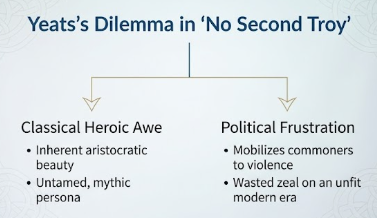
Answer: In "No Second Troy," W.B. Yeats presents a complex emotional landscape torn between unrequited romantic adoration and sharp political frustration toward Maud Gonne. On one hand, Yeats venerates her with classical awe, elevating her persona above ordinary domesticity. Her nobility, high mind, and "beauty like a tightened bow" belong to an epic, heroic age. He absolves her of individual blame for his personal heartbreak, conceding that it was her intrinsic aristocratic nature to be fierce, uncompromising, and commanding.
Conversely, Yeats harbors deep frustration regarding her revolutionary extremism. He laments that she inflamed Dublin’s working-class citizens—whom he dismisses as lacking refinement—with violent nationalist fervor, turning them into instruments of political unrest. Yeats views the contemporary Irish sociopolitical sphere as small-minded and unfit for her sweeping heroism. By framing Ireland’s struggle against the backdrop of the Trojan War, he mourns that her fiery potential produces futile destruction rather than constructive political renewal. Ultimately, his frustration is directed not just at Gonne's rejection of his love, but at a modern world that lacks the heroic canvas required to absorb her volcanic spirit without collapsing into ruins.
2. Comment on the significance of the title in the short story Audition. [GU 2024]
Answer: The title "Audition" operates on literal, social, and psychological levels within the narrative. Literally, it denotes Prafulla’s long-anticipated performance test at All India Radio, Guwahati—a formal gateway for any aspiring singer in post-independence Assam to achieve institutional legitimacy and artistic prestige. To Prafulla, this audition is not merely a bureaucratic appointment; it is the culmination of his lifelong passion and the supreme test of his artistic worth.
On a deeper institutional level, the title critiques the rigid, insensitive mechanisms of cultural gatekeeping. The panel of judges—bored, administrative, and indifferent—treats the audition with mechanical coldness, abruptly cutting off Prafulla’s heartfelt rendition of "Tu Ganga Ki Mauj". The performance space transforms from a temple of artistic expression into an arena of psychological humiliation.
Finally, the title captures an existential trial. The experience leaves Prafulla permanently alienated, culminating in his tragic Bhishma Pratigya never to sing again. The "audition" ceases to be a brief musical evaluation; it becomes a decisive turning point that shatters a simple artist's spirit against the unyielding stone of bureaucratic indifference.
3. Trace the theme of gender discrimination and familial complicity in Mahesh Dattani’s Tara.
Answer: Mahesh Dattani’s Tara explores how deep-seated patriarchal prejudices infiltrate middle-class domesticity, disguised as pragmatic medical decisions. The play revolves around conjoined twins, Tara and Chandan, who share a single kidney and a third leg. Anatomically, the third leg is nourished by Tara's circulatory system, giving her the highest surgical probability of retaining a healthy limb. However, driven by the desire for a male heir to carry the family legacy unencumbered by disability, the family orchestrates a biased surgical separation.
The tragedy deepens through familial complicity, particularly through the mother, Bharti, and her influential father. Rather than protecting her daughter, Bharti acquiesces to the grandfather’s patriarchal machinations and uses political influence to pressure Dr. Thakkar into surgically allocating the leg to Chandan.
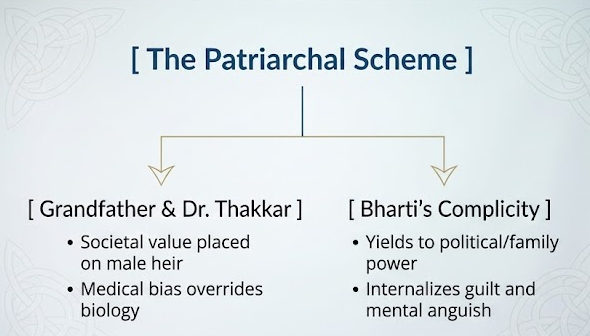
The operation fails; the leg withers on Chandan, leaving both twins physically challenged while emotionally destroying Tara. Dattani demonstrates that the physical severance of the twins mirrors the social severing of the female child from equitable opportunities, exposing how domestic spaces quietly perpetuate institutional misogyny.
4. Examine Sacha Guitry’s Villa for Sale as a satirical critique of social snobbery and commercial greed.
Answer: Sacha Guitry’s one-act play Villa for Sale is a sharp comedy of manners that satirizes bourgeois social pretension, financial opportunism, and commercial gullibility in interwar European society. The narrative centers on Juliette’s desperate attempt to sell her villa at Nogent-sur-Marne, exposing the mercenary calculations that underlie ostensibly polite upper-middle-class interactions.
Guitry exposes two distinct types of commercial hypocrisy:
The French Bourgeoisie: Juliette presents the villa as an artistic, romantic retreat while privately admitting it is an expensive financial burden she is desperate to dump onto an unsuspecting buyer.
The Nouveau Riche American: Mrs. Al Smith embodies the brash, culturally shallow elite who evaluate historic property purely by its proximity to film studios and convenience, treating European architecture as a disposable playground.
Gaston, the cynical realist, navigates this landscape of social posturing with ruthless pragmatism. By intercepting Mrs. Al Smith and selling her the property for 300,000 francs before closing his own purchase from Juliette for 200,000 francs, Gaston exposes the absurdity of their pretensions. His swift, 100,000-franc arbitrage turns the transaction into a satirical commentary on modern business ethics.
5. Analyze the grandmother’s character, inner strength, and composure in The Ring. [GU 2024]
Answer: In The Ring, the grandmother serves as a stoic pillar of emotional equilibrium and moral integrity within the rural household. Unlike the rest of the family, who respond to crises with impulsive panic, the grandmother faces adversity with measured patience, grounded in deep faith and life experience.
When her prized emerald wedding ring goes missing, she avoids dramatic outbursts and destructive finger-pointing. She organizes systematic, patient searches through the farmyard, treating the loss not as a domestic scandal, but as a test of fortitude. Her composure anchors the household during times of internal anxiety.
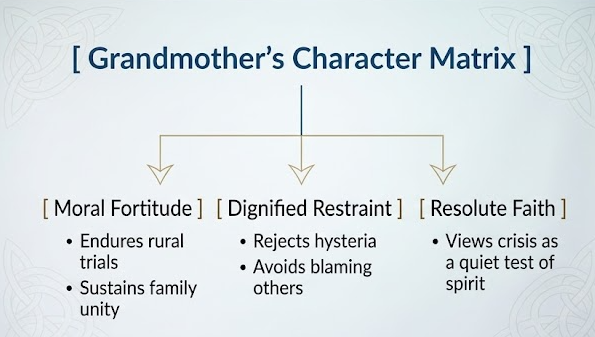
When the ring is recovered, she shows neither smug triumph nor superficial excitement. Instead, she welcomes its return with quiet, dignified gratitude. Through her character, the narrative highlights the resilience of older generations who weathered historical hardships with unyielding grace and self-command.
6. Discuss how Sarojini Naidu conveys collective rhythm and lyrical aestheticism in The Palanquin Bearers. [GU 2024]
Answer: Sarojini Naidu’s The Palanquin Bearers blends musicality, cultural imagery, and collective pride into a portrait of traditional Indian life. The poem captures the rhythmic, swaying movement of palanquin bearers as they carry a bride to her marital home, transforming physical labor into a devotional song.
The poem's power stems from its rich, delicate similes and rhythmic construction:
Fluid Similes: The bride is described as swaying "like a flower," skimming "like a bird," and floating "like a laugh from the lips of a dream."
Rhythmic Unity: The dactylic and anapestic meters mimic the actual physical cadence of the bearers' footsteps, ensuring the sound echoes the action.
Shared Harmony: The bearers sing "gaily" in unhurried unity, emphasizing pride in their custom over the burden of physical weight.
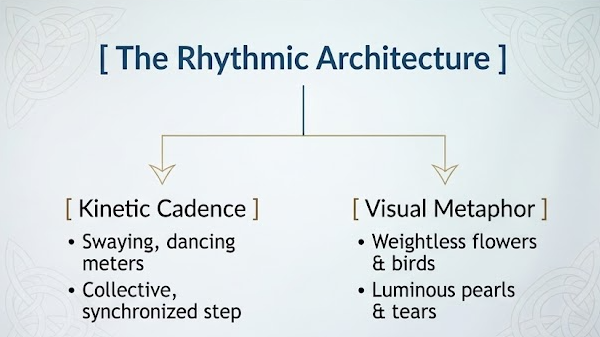
Naidu avoids depicting the labor as oppressive toil, choosing instead to present an idealized folk scene where duty and artistic grace seamlessly intertwine.
7. Critically assess the fragmentation of identity and submerged self in Atwood’s This Is a Photograph of Me. [GU 2024]
Answer: Margaret Atwood’s This Is a Photograph of Me deconstructs traditional conventions of visual portraiture to explore themes of female erasure, domestic isolation, and submerged identity. The poem begins by describing a blurry, aged photograph of a serene Canadian landscape featuring a lake, hills, and a small frame house.
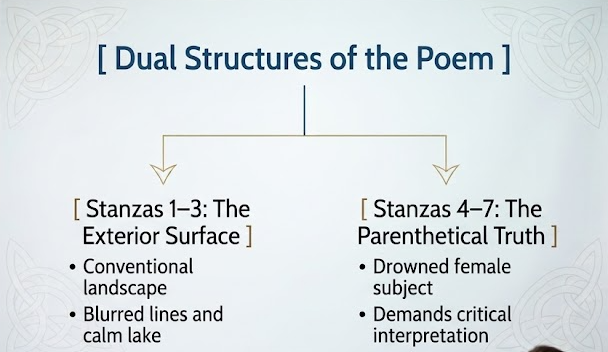
The poem shifts abruptly in the parenthetical stanzas, where the speaker reveals that she drowned in the lake the day before the photograph was taken. By placing the speaker under the water, Atwood turns landscape photography into a site of feminist recovery. The submerged speaker cannot be seen through passive viewing; she requires the reader to look deeply past the surface light. Atwood critiques how patriarchal art often marginalizes female suffering behind comforting depictions of rural order.
8. Discuss the use of indigenous motifs and ecological resistance in Jacinta Kerketta’s Angor. [GU Model]
Answer: In Angor, Jacinta Kerketta gives voice to the resistance of the Adivasi communities of Jharkhand against ecological destruction and industrial exploitation. Her poetry links the preservation of indigenous identity directly to the defense of ancestral forests, rivers, and hills.
Kerketta's poetic strategy focuses on key elements:
The Forest as Living Ancestry: Nature is not real estate; it is a spiritual commons embodying tribal history and sacred memory.
Critique of Industrial "Development": State-sponsored mines and factories are presented as predatory intrusions that poison rivers, uproot villages, and reduce self-sufficient peoples to displaced migrant laborers.
The Motif of Angor (Embers): The burning ember symbolizes both destructive violence against tribal homelands and the enduring, smoldering spirit of indigenous resistance.
Through these poems, Kerketta rejects romanticized tribal stereotypes, asserting Adivasi literature as an urgent political voice for ecological justice and human dignity.
9. How does Ngũgĩ wa Thiong'o conceptualize language as an instrument of cultural imperialism in Decolonising the Mind?
Answer: In Decolonising the Mind, Ngũgĩ wa Thiong'o argues that the most potent weapon of colonial dominance was not military conquest, but linguistic subjugation. While physical violence conquered territory, the systematic imposition of European languages captured the inner mental universe of the colonized.
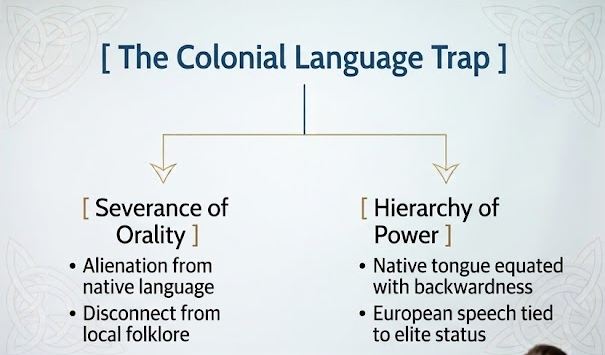
Ngũgĩ illustrates this dynamic through his childhood in Kenya, where Gikuyu storytelling rooted him in his community's values and landscape. Under British colonial schooling, speaking Gikuyu was punished with physical humiliation, while English was elevated as the sole mark of intelligence. This created a profound cultural alienation, teaching children to view their ancestral heritage with shame. Ngũgĩ concludes that true decolonization requires breaking this mental captivity by writing and teaching in indigenous African languages.
10. Examine the role of fate, irony, and the surprise ending in O. Henry’s The Trimmed Lamp.
Answer: In The Trimmed Lamp, O. Henry employs dramatic irony and unexpected plot developments to explore the social mobility, moral choices, and economic pressures faced by working-class women in turn-of-the-century New York. The story follows two young working women, Nancy and Lou, who take sharply contrasting approaches to escaping urban poverty.
Lou seeks immediate material comfort, adopting flashy fashion and accepting the courtship of a wealthy man while looking down on Nancy’s low wages. In contrast, Nancy deliberately endures poverty at her department store counter. She uses her work environment to study genuine culture, manners, and character, carefully "trimming her lamp" in preparation for an authentic romantic and social elevation.
The signature O. Henry twist upends these trajectories:
Lou returns broken-hearted, revealing that her wealthy suitor was superficial and mercenary, leaving her emotionally bankrupt despite her luxuries.
Nancy’s long-term moral cultivation pays off when she earns the genuine love of Dan—Lou's former, hardworking working-class suitor who has found honest success.
O. Henry uses this reversal to demonstrate that genuine character and patience triumph over the glittering illusions of rapid wealth.